
Word of the Day:
maniple
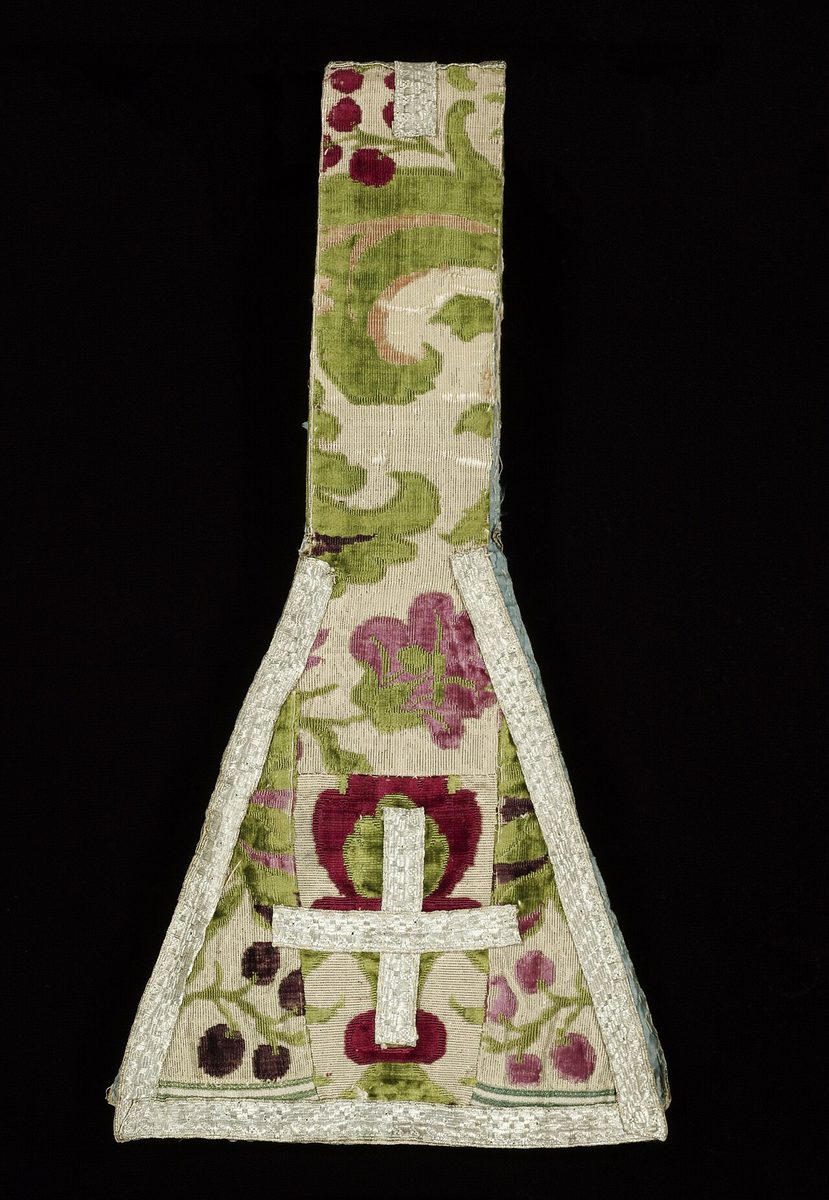

What It Means
A division of the Roman army numbering 120 (or sometimes 60) soldiers exclusive of officers; (generally, obsolete) any small body of soldiers.
In Western Christianity, an ornamental band or scarf worn upon the left arm as a part of the vestments of a priest in the Roman Catholic Church, and sometimes the Church of England.
Maniple in Context
“His poem, however, is meetly enough entituled—Christ Crucified! But the Rev. William Ellis Wall is worse than [Pontius] Pilate. That "wretch," as this miserable calls the Roman governor, was careful to wash his hands of all guilt in the transaction; but the Rev. William Ellis Wall holds forth...”
Did You Know?
From Late Middle English maniple, manyple (“scarf worn as vestment, maniple”), borrowed from Middle French, Old French maniple, manipule (“handful; troop of soldiers; scarf worn as vestment”) (modern French manipule), from Latin manipulus (“bundle, handful; troop of soldiers”), from manus (“hand”) (ultimately from Proto-Indo-European *(s)meh₂- (“to beckon, signal”)) + the weakened root of pleō (“to fill; to fulfil”) (ultimately from Proto-Indo-European *pleh₁- (“to fill”)). The English word is cognate with Italian manipulo (“scarf worn as vestment”) (obsolete), manipolo (“handful; troop of soldiers; scarf worn as vestment”). Sense 2 (“part of a priest’s vestments”) is probably from the fact that the item was originally carried in the hand. It may originate from a handkerchief or napkin worn by Roman consuls as an indication of rank.
Source and license
Adapted from Wiktionary: maniple (page history and authors). Text available under the Creative Commons Attribution-ShareAlike 4.0 license. Word.ws chose the word and reformatted its meaning, examples and origin.
Cite this entry: “maniple.” Word.ws, https://word.ws/maniple. Based on Wiktionary, CC BY-SA 4.0.