
aphantasia
Syllables: a·phan·ta·sia/ˌeɪ.fænˈteɪ.zɪ.ə//ˌeɪˌfænˈteɪ.zi.ə/
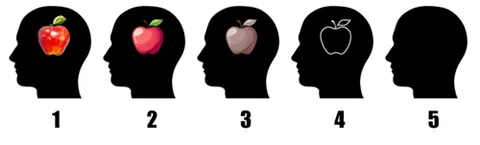
aphantasia noun: a condition where one does not possess a functioning "mind's eye" and cannot visualize imagery.

Noun
aphantasia (uncountable)
- A condition where one does not possess a functioning "mind's eye" and cannot visualize imagery.
- Certain people, researchers have discovered, can't summon up mental images—it's as if their mind's eye is blind. This month in the journal Cortex, the condition received a name: aphantasia, based on the Greek word phantasia, which Aristotle used to describe the power that presents visual imagery to...2015 June 22, Carl Zimmer, “Picture this? Some just can’t”, in The New York Times, New York, N.Y.: The New York Times Company, →ISSN, →OCLC, archived from the original on 04 Apr 2024
- That's when I discovered I had aphantasia, the inability to conjure mental images. Little is known about the condition, but its impact on my education led me to wonder about how it might be impacting others. […] [A]phantasia not only impacts people's learning experiences; it also extends into their...2020 July 15, Serena Puang, “Living with aphantasia, the inability to make mental images”, in The New York Times, New York, N.Y.: The New York Times Company, →ISSN, →OCLC, archived from the original...
aphantasia meaning in Tamil, Arabic, Malay and Indonesian
aphantasia in Tamil
- condition where one cannot visualize imagery
- உளப்படம் அமையாக் குறைபாடு uḷappaṭam amaiyāk kuṟaipāṭu
aphantasia in Arabic
- condition where one cannot visualize imagery
- أفانتازيا
aphantasia in Malay
- condition where one cannot visualize imagery
- aphantasia
aphantasia in Indonesian
- condition where one cannot visualize imagery
- afantasia
More languagesFewer languages
- aphantasia in Persian
- آفانتازیا
Origin of aphantasia
From a- (prefix meaning ‘opposite of; without’) + phantasia, from Ancient Greek ἀ- (a-, prefix forming words having senses opposite to the stems or words to which the prefix is attached) + φᾰντᾰσῐ́ᾱ (phăntăsĭ́ā, “appearance, look; image; impression, perception”). Φᾰντᾰσῐ́ᾱ (Phăntăsĭ́ā) is derived from φᾰ́ντᾰσῐς (phắntăsĭs) + -ῐ́ᾱ (-ĭ́ā, suffix forming feminine abstract nouns); and φᾰ́ντᾰσῐς (phắntăsĭs) from φᾰντᾰ́ζω (phăntắzō, “to make visible, show; to become visible”), from φᾰντός (phăntós, “visible”), from φαίνω (phaínō, “to cause to appear, reveal; to give light, shine”), ultimately from Proto-Indo-European *bʰeh₂- (“to be visible, appear; to shine”). The English word was coined by the British neurologist Adam Zeman (born 1957) and his collaborators Michaela Dewar and the Italian neurologist Sergio Della Sala (born 1955) in a 2015 article published in Cortex.
Words formed from aphantasia
Words that rhyme with aphantasia
Questions about aphantasia
- What does aphantasia mean?
- Aphantasia means a condition where one does not possess a functioning "mind's eye" and cannot visualize imagery.
- What is aphantasia in Tamil?
- Aphantasia in Tamil is உளப்படம் அமையாக் குறைபாடு (uḷappaṭam amaiyāk kuṟaipāṭu). See Aphantasia meaning in Tamil.
- What part of speech is aphantasia?
- Aphantasia is a noun.
- How do you pronounce aphantasia?
- Aphantasia is pronounced /ˌeɪ.fænˈteɪ.zɪ.ə/ (UK).
Words near aphantasia in the dictionary
Source and license
Adapted from Wiktionary: aphantasia (page history and authors). Text available under the Creative Commons Attribution-ShareAlike 4.0 license. Word.ws reformatted the entry and added links. Wiktionary data of 2026-09-02.
Last updated:
Pronunciation audio from Wikimedia Commons, each file under its own free license: LL-Q1860 (eng)-Vealhurl-aphantasia.wav, LL-Q1860 (eng)-Naomi Persephone Amethyst (NaomiAmethyst)-aphantasia.wav.
Cite this entry: “aphantasia.” Word.ws, https://word.ws/aphantasia. Based on Wiktionary, CC BY-SA 4.0.