
baryton
/ˈbæɹɪtɒn/
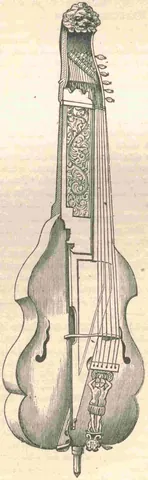
baryton noun: a viol-like stringed instrument (chordophone) mainly played with a bow but with a set of plucked strings as well, originating in European music prior to the 1800s.

Noun (1)
baryton (plural barytons)
- A viol-like stringed instrument (chordophone) mainly played with a bow but with a set of plucked strings as well, originating in European music prior to the 1800s.
- I love his music, but it is a bit disconcerting to realize that you could die in extreme old age and still only be familiar with a mere handful of the baryton trios.2013, Simon Winder, Danubia, Picador, published 2014, page 281
- Synonyms:
- paradon, viola paradon, viola di bordone
Noun (2) capitalized: Baryton
Baryton
Synonyms of baryton
Forms of baryton
| plural | barytons |
|---|---|
| alternative form | bariton |
| alternative form | barydon |
Origin of baryton
From the German Baryton, from bary- + Ton. Doublet of baritone and barytone.
Questions about baryton
- What does baryton mean?
- Baryton means a viol-like stringed instrument (chordophone) mainly played with a bow but with a set of plucked strings as well, originating in European music prior to the 1800s.
- What part of speech is baryton?
- Baryton is a noun.
- How do you pronounce baryton?
- Baryton is pronounced /ˈbæɹɪtɒn/.
- What is the plural of baryton?
- The plural of baryton is barytons.
Words near baryton in the dictionary
Source and license
Adapted from Wiktionary: baryton (page history and authors); Baryton (page history and authors). Text available under the Creative Commons Attribution-ShareAlike 4.0 license. Word.ws reformatted the entry and added links. Wiktionary data of 2026-09-02.
Last updated:
Cite this entry: “baryton.” Word.ws, https://word.ws/baryton. Based on Wiktionary, CC BY-SA 4.0.