
blind
/ˈblaɪ̯nd/
More pronunciations (1)Fewer pronunciations
General South African/ˈblaːnd/
blind adjective: unable to see, or only partially able to see.

Adjective
blind (comparative blinder, superlative blindest)
- Unable to see, or only partially able to see.
- Even a blind hen sometimes finds a grain of corn.
- Braille is a writing system for the blind.
- Synonyms:
- sightless
- Failing to recognize, acknowledge or perceive.
- The lovers were blind to each other’s faults.
- Authors are blind to their own defects.
- Having little or no visibility.
- a blind path
- a blind ditch
- Closed at one end; having a dead end; exitless.
- a blind alley
- a blind fistula
- Having no openings for light or passage; both dark and exitless.
- a blind wall
- a blind alley
- Able to be fixed without access to one end.
- a blind rivet
- Smallest or slightest.
- I shouted, but he didn’t take a blind bit of notice.
- We pulled and pulled, but it didn't make a blind bit of difference.
- Without any prior knowledge.
- He took a blind guess at which fork in the road would take him to the airport.
- I went into the meeting totally blind, so I really didn’t have a clue what I was talking about.
- Unconditional; without regard to evidence, logic, reality, accidental mistakes, extenuating circumstances, etc.
- blind deference
- blind justice
- Using blinded study design, wherein information is purposely limited to prevent bias.
- a blind trial
- Unintelligible or illegible.
- a blind passage in a book; blind writing
- not having a well-defined head.
- There it was, right in the middle of my forehead - the biggest, blindest, reddest pimple I'd ever seen, just hanging there like a limpet mine.1995, Paul Vautin, Turn It Up!, Sydney: Pan Macmillan Australia, page 28
- Abortive; failing to produce flowers or fruit.
- blind buds
- blind flowers
- Uncircumcised.
Noun
blind (plural blinds)
- A movable covering for a window to keep out light, made of cloth or of narrow slats that can block light or allow it to pass.
- It is a piece of wood furnished with two parallel rows of plates, folding over each other, so as to resemble, in some degree, the laths of a blind.1847, editorial staff, “Swimming Skate”, in Scientific American, series 1, Volume 3, Issue 9, page 68
- A blind bearing the monogram G.V.T. is pulled down over the waiting room window as if still in mourning for the passing of the railway.1941 June, “Notes and News: The Derelict Glyn Valley Tramway”, in Railway Magazine, page 279
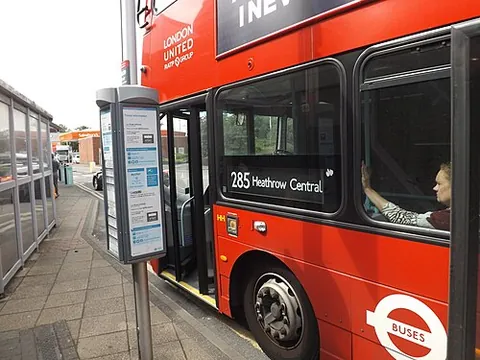
- A destination sign mounted on a public transport vehicle displaying the route destination, number, name and/or via points, etc.
- Synonyms:
- rollsign
- A place where people can hide in order to observe wildlife.
- a duck blind
- Field biologists use blinds, and so do hunters.
- Something to mislead the eye or the understanding, or to conceal some covert deed or design; a subterfuge, deception.
- A blindage.
- A hiding place.
- So, when the watchful shepherd, from the blind,
Wounds with a random shaft the careless hind1697, Virgil, “The Fourth Book of the Æneis”, in John Dryden, transl., The Works of Virgil: Containing His Pastorals, Georgics, and Æneis. […], London: […] Jacob Tonson, […], →OCLC
- So, when the watchful shepherd, from the blind,
- The blindside.
- No score.
- A forced bet: the small blind or the big blind.
- The blinds are $10 and $20, and the ante is $1.
- A player who is forced to pay such a bet.
- The blinds immediately folded when I reraised.
Verb
blind (third-person singular simple present blinds, present participle blinding, simple past and past participle blinded or (nonstandard, humorous) blound)
- To make temporarily or permanently blind.
- The light was so bright that for a moment he was blinded.
- Don’t wave that pencil in my face—do you want to blind me?
- To curse, swear, use foul language
- If you’re cast for fatigue by a sergeant unkind,
Don’t grouse like a woman, nor crack on, nor blind;
Be handy and civil, and then you will find
That it’s beer for the young British soldier.1890, Rudyard Kipling, The Young British Soldier - I could see the unfortunate man felt his position deeply, and I was surprised that he contented himself with a mere ‘Ouch !’ But I suppose these solid citizens have to learn to curb the tongue. Creates a bad impression, I mean, if they start blinding and stiffing as those more happily placed would...1960, P. G. Wodehouse, “Chapter 4”, in Jeeves in the Offing
- If you’re cast for fatigue by a sergeant unkind,
- To darken; to obscure to the eye or understanding; to conceal.
- He ſought, but in the dark tempeſtuous Night
He knew not whither to direct his Sight.
So whirl the Seas, ſuch Darkneſs blinds the Sky,
That the black Night receives a deeper Dye.1717, John Dryden, “Book XI. [The Story of Ceyx and Alcyone.]”, in Ovid’s Metamorphoses in Fifteen Books. […], London: […] Jacob Tonson, […], →OCLC, page 396 - The state of the controversy between us he endeavored, with all his art, to blind and confound.1676, Edward Stillingfleet, A Defence of the Discourse Concerning the Idolatry Practised in the Church of Rome
- He ſought, but in the dark tempeſtuous Night
- To cover with a thin coating of sand and fine gravel, for example a road newly paved, in order that the joints between the stones may be filled.
Adverb
blind (comparative more blind, superlative most blind)
- Without seeing; unseeingly.
- It was just robbery with violence, aggravated murder on a great scale, and men going at it blind - as is very proper for those who tackle a darkness.1899 February, Joseph Conrad, “The Heart of Darkness”, in Blackwood’s Edinburgh Magazine, volume CLXV, number M, New York, N.Y.: The Leonard Scott Publishing Company, […], →OCLC, part I, page 196
- Absolutely, totally.
- to swear blind
- It was just robbery with violence, aggravated murder on a great scale, and men going at it blind - as is very proper for those who tackle a darkness.1899 February, Joseph Conrad, “The Heart of Darkness”, in Blackwood’s Edinburgh Magazine, volume CLXV, number M, New York, N.Y.: The Leonard Scott Publishing Company, […], →OCLC, part I, page 195
- Without looking at the cards dealt.
- As a pastry case only, without any filling.
- Blind bake your pie case for fifteen minutes, then add the filling. This will help avoid a “soggy bottom”.
- If the shell is going to be baked without a filling, “baking the crust blind,” prick the bottom and sides of the crust to allow the steam to escape. Another variation: line the bottom of the crust with parchment paper […]2012, Frank D. Conforti, Food Selection and Preparation: A Laboratory Manual, John Wiley & Sons, →ISBN, page 63
Proper noun capitalized: Blind
Blind (plural Blinds)
- A surname.
blind meaning in Hindi, Tamil, Marathi and Urdu
blind in Hindi
- unable to see
- अंधा andhā, नेत्रहीन netrahīn, दृष्टिहीन dŕṣṭihīn
- covering for a window
- चिक़ ciq
- blind person
- अंधा andhā, दृष्टिहीन dŕṣṭihīn, नेत्रहीन netrahīn
- make temporarily or permanently blind
- अंधा करना andhā karnā
blind in Tamil
- unable to see
- குருடு kuruṭu
blind in Marathi
- blind person
- आंधळा āndhḷā, आंधळी āndhḷī, आंधळे āndhḷe
blind in Urdu
- unable to see
- اندھا andhā
More languagesFewer languages
- blind in Bengali
- অন্ধ ondho
- blind in Telugu
- గుడ్డి guḍḍi
- blind in Malayalam
- അന്ധമായ, അന്ധൻ, വിവേകശൂന്യമായ
- blind in Kannada
- ಕಂಗಳ, ಕಣ್ಣಿಲಿ, ಕುರುಡ, ಕುಚ್ಚ
- blind in Punjabi
- اَنّھا annhā
- blind in Gujarati
- આંધળું ā̃dhaḷũ, જાળી jāḷī
- blind in Odia
- ଅନ୍ଧ andha
- blind in Sanskrit
- अन्ध andha
- blind in Assamese
- অন্ধ ondho, কণা kona
- blind in Pashto
- ړوند ṛund, نابينا nābinã, نګوری ngóray
- blind in Tagalog
- bulag, persiyana
- blind in Arabic
- أَعْمَى ʔaʕmā, عَمْيَاء ʕamyāʔ, كَفِيف kafīf, أعمى ʔáʕma
- blind in Malay
- buta, tunanetra
- blind in Indonesian
- buta
- blind in Persian
- کور kur, نابینا nâbinâ, مکفوفالبصر makfuf-ol-basar, پرده کرکره parde kerkere
- blind in Thai
- ตาบอด dtaa-bɔ̀ɔt, บอด bɔ̀ɔt
- blind in Vietnamese
- mù, đui mù, đui
- blind in Myanmar
- ကန်း kan:
- Sindhi
- انڌو andho
- Kashmiri
- اۆن on
Examples of blind in a sentence
- He that is strucken blind cannot forget / The precious treasure of his eyesight lost.c. 1591–1595 (date written), William Shakespeare, “The Tragedie of Romeo and Ivliet”, in Mr. William Shakespeares Comedies, Histories, &...
- He was plainly blind, for he tapped before him with a stick, and wore a great green shade over his eyes and nose...1881–1882, Robert Louis Stevenson, Treasure Island, London; Paris: Cassell & Company, published 14 November 1883, →OCLC:
- God knows that I tried / Seeing the bright side / (I’m wide awake) / But I’m not blind anymore2012, Katy Perry, Max Martin, Bonnie McKee, Dr. Luke, Cirkut, “Wide Awake”, in Teenage Dream: The Complete Confection, performed by Katy...
- The naric-hypophysial canal was blind at both ends, and paired olfactory sacs opened into it, as well as a narrow canal from the front of the gut.1898, Journal of the Royal Microscopical Society, page 498:
Synonyms of blind
Antonyms
Forms of blind
| Adjective | |
|---|---|
| comparative | blinder |
| superlative | blindest |
| alternative form (obsolete) | blinde |
| Noun | |
| plural | blinds |
| Verb | |
| third-person singular present | blinds |
| present participle | blinding |
| past participle | blinded |
| past | blinded |
| past participle (nonstandard, humorous) | blound |
| past (nonstandard, humorous) | blound |
| Adverb | |
| comparative | more blind |
| superlative | most blind |
| Proper noun | |
| plural | Blinds |
Origin of blind
From Middle English blynd, from Old English blind, from Proto-West Germanic *blind, from Proto-Germanic *blindaz. Cognate with Danish, Dutch, German, Norwegian Bokmål, Norwegian Nynorsk, and Swedish blind, Faroese and Icelandic blindur.
English, German, and Jewish/Yiddish surname, all related to the adjective blind.
Words formed from blind
- a nod is as good as a wink to a blind horse
- are you blind
- bake something blind
- beblind
- blind abscess
- blind alley
- blind as a bat
- blind as a beetle
- blind as an owl
- blind axle
- blind bag
- blind baking
- Blind Bight
- blind bit
- blind boil
- blind box
- blind carbon copy
- blind coal
- blind-copy
- blind curve
- blind date
- blind drunk
- blind ecash
- blind envelope
- blind excuse
- blind faith
- blindfish
- blind-fly
- blindfold
- blind folio
- Blind Freddy
- blindful
- blind grass
- blind gut
- blind hockey
- blind hole
- blindhood
- Blind Hookey
- blindie
- blindish
- blindism
- blind item
- blind lantern
- blind leading the blind
- blind level
- blind loop syndrome
- blindly
- blindman
- blindman's buff
- blind massage
- blind mole-rat
- blind nailing
- blind passenger
- blind person
- blind pig
- blind pocket
- blind pool
- blind quote
- blind rage
- blind reader
Phrases with blind
- big blind
- blind map
- blind rat
- day blind
- fly blind
- I'm blind
- rob blind
- sun blind
- blind bags
- blind goby
- blind guts
- blind maps
129 more phrasesFewer phrases
- blind pigs
- blind rats
- blind side
- blind site
- blind spot
- blind test
- flew blind
- I am blind
- moon blind
- nose blind
- robs blind
- blind axles
- blind boils
- blind boxes
- blind dates
- blind holes
- blind items
- blind piles
- blind pools
- Blind River
- blind rivet
- blind shark
- blind shell
- blind snake
- blind spots
- blind stamp
- blind swipe
- blind tests
- blind tiger
- blind trust
- color blind
- flies blind
- flown blind
- go it blind
- night blind
- small blind
- swear blind
- swore blind
- sworn blind
- blind alleys
- blind curves
- blind folios
- blind levels
- blind pigger
- blind quotes
- blind rivets
- blind scouse
- blind sharks
- blind shells
- blind snakes
- blind stamps
- blind stitch
- blind summit
- blind tigers
- blind trusts
- colour blind
- flying blind
- gender blind
- robbed blind
- roller blind
- swears blind
- triple blind
- blind excuses
- Blind Freddie
- blind piggers
- blind readers
- blind summits
- blind tooling
- eff and blind
- legally blind
- love is blind
- robbing blind
- blind lanterns
- blind massages
- blind mole rat
- blind stitches
- swearing blind
- Venetian blind
- accordion blind
- blind abscesses
- blind as a mole
- blind envelopes
- blind mole-rats
- strike me blind
- blind man's buff
- blind passengers
- Blind Swine Mate
- blind typewriter
- justice is blind
- turn a blind eye
- blind man's bluff
- Blind swine mates
- blind typewriters
- Texas blind snake
- turns a blind eye
- Blind Half-Hundred
- blind thrust fault
- blind with science
- perceptually blind
- Texas blind snakes
- turned a blind eye
- blind carbon copied
- blind carbon copies
- blind man's holiday
- blind thrust faults
- turning a blind eye
- blind carbon copying
- Jamaican blind snake
- sandy blind mole rat
- sandy blind mole-rat
- baked something blind
- bakes something blind
- inattentionally blind
- Jamaican blind snakes
- baking something blind
- I see, said the blind man
- eleven-striped blind snake
- eleven-striped blind snakes
- even a blind pig can find an acorn
- not know whether to shit or go blind
- not know whether to spit or go blind
- an eye for an eye makes the whole world blind
- there's none so blind as those who will not see
- there are none so blind as those who will not see
- even a blind pig can find an acorn once in a while
- even a blind squirrel can find a nut once in a while
- even a blind squirrel finds an acorn every now and then
- even a blind squirrel finds an acorn every once in a while
- if you can't dazzle them with your brilliance, blind them with bullshit
Words that rhyme with blind
48 more rhymesFewer rhymes
- signed
- unbind
- unkind
- unmind
- aligned
- chined
- combined
- defined
- designed
- Glynde
- hind
- inclined
- intertwined
- rebind
- spined
- to one's mind
- unassigned
- undersigned
- uninclined
- unlined
- upwind
- vined
- wynd
- amind
- animalkind
- assigned
- brined
- crined
- declined
- dined
- enshrined
- entwined
- fined
- humankind
- mined
- misaligned
- pined
- presence of mind
- re-signed
- realigned
- reassigned
- redefined
- redesigned
- remind
- resigned
- rined
- shined
- twined
Questions about blind
- What does blind mean?
- Blind means unable to see, or only partially able to see.
- What is blind in Hindi?
- Blind in Hindi is अंधा (andhā), नेत्रहीन (netrahīn), दृष्टिहीन (dŕṣṭihīn). See Blind meaning in Hindi.
- How do you use blind in a sentence?
- He that is strucken blind cannot forget / The precious treasure of his eyesight lost.
- What part of speech is blind?
- Blind can be an adjective, a noun, a verb or an adverb.
- How do you pronounce blind?
- Blind is pronounced /ˈblaɪ̯nd/.
Words near blind in the dictionary
Source and license
Adapted from Wiktionary: blind (page history and authors); Blind (page history and authors); blind (Malayalam Wiktionary) (page history and authors); blind (Kannada Wiktionary) (page history and authors); આંધળું (Gujarati) (page history and authors); অন্ধ (Assamese) (page history and authors). Text available under the Creative Commons Attribution-ShareAlike 4.0 license. Word.ws reformatted the entry and added links. Wiktionary data of 2026-09-02.
Last updated:
Pronunciation audio from Wikimedia Commons, each file under its own free license: en-us-blind.ogg.
Cite this entry: “blind.” Word.ws, https://word.ws/blind. Based on Wiktionary, CC BY-SA 4.0.