
four color theorem
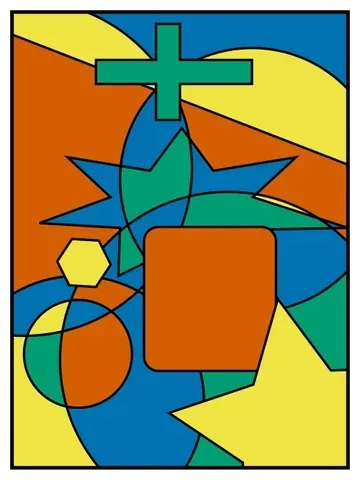
four color theorem proper noun: a theorem stating that given any separation of a plane into contiguous regions, producing a figure called a map, no more than four colors are required to color the regions so that no two adjacent regions have the same color (adjacent being defined as two regions sharing a boundary, not counting corners, in which three or more regions share a boundary).

Proper noun
the four color theorem
- A theorem stating that given any separation of a plane into contiguous regions, producing a figure called a map, no more than four colors are required to color the regions so that no two adjacent regions have the same color (adjacent being defined as two regions sharing a boundary, not counting corners, in which three or more regions share a boundary).
Questions about four color theorem
- What does four color theorem mean?
- Four color theorem means a theorem stating that given any separation of a plane into contiguous regions, producing a figure called a map, no more than four colors are required to color the regions so that no two adjacent regions have the same color (adjacent being defined as two regions sharing a boundary, not counting corners, in which three or more regions share a boundary).
- What part of speech is four color theorem?
- Four color theorem is a proper noun.
Words near four color theorem in the dictionary
Source and license
Adapted from Wiktionary: four color theorem (page history and authors). Text available under the Creative Commons Attribution-ShareAlike 4.0 license. Word.ws reformatted the entry and added links. Wiktionary data of 2026-09-02.
Last updated:
Cite this entry: “four color theorem.” Word.ws, https://word.ws/four_color_theorem. Based on Wiktionary, CC BY-SA 4.0.