
frown
/ˈfɹæʊ̯n/UK/ˈfɹaʊ̯n/
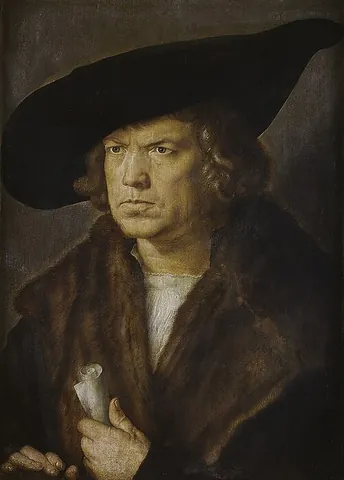
frown noun: a wrinkling of the forehead with the eyebrows brought together, typically indicating displeasure, severity, or concentration.

Noun
frown (plural frowns)
- A wrinkling of the forehead with the eyebrows brought together, typically indicating displeasure, severity, or concentration.
- Philip had once told him of a man who had a horse-shoe frown, and Tom had tried with all his frowning-might to make a horse-shoe on his forehead1860, George Eliot, “V: Maggie's Second Visit”, in The Mill on the Floss, Volume I Book II, Edinburgh; London: William Blackwood, page 336‑337
- He encounters some obstacle in his train of reasoning ... and then a frown passes like a shadow over his brow.1873, Charles Darwin, The Expression of the Emotions in Man and Animals, page 223
- A downturn of the corners of the mouth, typically expressing sadness.
- The smile and the frown are both indicated and the operation of a motor driven flasher causes the face to look happy and sad in turn.1911 December, “Facial Expression Electric Sign”, in Popular Electricity, volume iv, number 8, Chicago, page 714
- Any facial expression that indicates disapproval or displeasure.
Verb
frown (third-person singular simple present frowns, present participle frowning, simple past and past participle frowned)
- To have a frown on one's face.
- She frowned when I told her the news.
- To manifest displeasure or disapprobation; to look with disfavour or threateningly.
- Noisy gossip in the library is frowned upon.
- The sky doth frown and lower upon our army.c. 1593 (date written), William Shakespeare, “The Tragedy of Richard the Third: […]”, in Mr. William Shakespeares Comedies, Histories, & Tragedies […] (First Folio), London: […] Isaac Iaggard, and...
- To repress or repel by expressing displeasure or disapproval; to rebuke with a look.
- Let us frown the impudent fellow into silence.
- To communicate by frowning.
- Frank frowned his displeasure with my proposal.
- Copling glanced at the heading and signature, then read the contents and frowned annoyance.1923, Ernest Bramah [pseudonym; Ernest Brammah Smith], “(please specify the page)”, in The Eyes of Max Carrados, London: Grant Richards, →OCLC
frown meaning in Hindi, Tamil, Marathi and Urdu
frown in Hindi
- frown, grimace
- घूर ghūr
- frown
- अझ़ंग aźaṅg
frown in Tamil
- சிடுசிடுப்பு, கடுநோக்கு, சினக் குறிப்பு, முகச்சுளிப்பு, முகஞ்சுளி, முகக் கோணல்
frown in Marathi
- a frown; an expression of displeasure, worry, or concentration
- आठी āṭhī
frown in Urdu
- frown, pucker, wrinkle
- چین cīn
More languagesFewer languages
- frown in Bengali
- ভ্রু কুঁচকানো, অসন্তোষ প্রকাশ করা
- frown in Malayalam
- നെറ്റിചുളിക്കുക, പുരികംകോട്ടുക, മുഖം ചുളിക്കുക, മുഖം ചുളിച്ചുനോക്കുക
- frown in Kannada
- ಹುಬ್ಬುಗಂಟಿಕ್ಕು, ಮೋರೆಮುರಿ, ಮೋರೆ ಸಿಂಡರಿಸು, ಮುಖ ಸಿಂಡರಿಸು
- frown in Tagalog
- simangot, mungot, busangot, sumimangot
- frown in Arabic
- عُبُوسة ʕubūsa, عُبُوس ʕubūs, عَبَسَ ʕabasa, عَقَدَ حَاجِبَيْهُ ʕaqada ḥājibayhu
- frown in Persian
- اخم axm, اخم کردن axm kardan, پیشانی ترش کردن pišâni torš kardan
- frown in Thai
- ขมวดคิ้ว
- frown in Vietnamese
- cau mày, chau mày
Examples of frown in a sentence
- Though Islam allows polygamy, it is frowned upon in many contemporary Muslim societies.
- In a decidedly petulant manner she sat with crossed arms and a frown.
- Some religious sects frown upon any games of chance, even if no gambling is involved.
Synonyms of frown
Forms of frown
| Noun | |
|---|---|
| plural | frowns |
| Verb | |
| third-person singular present | frowns |
| present participle | frowning |
| past participle | frowned |
| past | frowned |
Origin of frown
From Middle English frown, froun (“a threatening appearance; lowering of the clouds”), from frounen (“to frown”). See below.
From Middle English frounen (“to frown as an expression of disapproval, displeasure, shame, fear, or jealousy”), from Old French froignier, froingnier, frognier (“to wrinkle the mouth or forehead, frown, scowl”), of uncertain and disputed origin. Perhaps from Medieval Latin fruncāre (“to wrinkle, crease, turn up one's nose, make a face, frown”) (compare Old High German fruncetura (“wrinkle”), via Latin), from Frankish *hrunkwittjā (“wrinkle”)/*hrunkwōn (“to wrinkle”), whence Old High German runza (“wrinkle”). See also French froncer (“to frown, scowl”). Alternatively, perhaps from Gaulish *frognā (“nostril”), from Proto-Celtic *srognā (“nose”). Still yet, perhaps of North Germanic origin, related to Swedish fryna (“to frown, frown with one's nose, make a wry face”), Norwegian frøyna (“to wrinkle up one's nose, make a wry face; snort”). Compare also dialectal English frine (“to frown, whine, complain”).
Words formed from frown
Phrases with frown
Words that rhyme with frown
19 more rhymesFewer rhymes
Questions about frown
- What does frown mean?
- Frown means a wrinkling of the forehead with the eyebrows brought together, typically indicating displeasure, severity, or concentration.
- What is frown in Hindi?
- Frown in Hindi is घूर (ghūr), अझ़ंग (aźaṅg). See Frown meaning in Hindi.
- What part of speech is frown?
- Frown can be a noun or a verb.
- How do you pronounce frown?
- Frown is pronounced /ˈfɹaʊ̯n/ (UK).
- What is the plural of frown?
- The plural of frown is frowns.
Words near frown in the dictionary
Source and license
Adapted from Wiktionary: frown (page history and authors); अझ़ंग (Hindi) (page history and authors); frown (Tamil Wiktionary) (page history and authors); आठी (Marathi) (page history and authors); چین (Urdu) (page history and authors); frown (Bengali Wiktionary) (page history and authors); frown (Olam, E.K. Kurup corpus) (dataset and license); frown (Kannada Wiktionary) (page history and authors). Text available under the Creative Commons Attribution-ShareAlike 4.0 license. Word.ws reformatted the entry and added links. Wiktionary data of 2026-09-02.
Last updated:
Pronunciation audio from Wikimedia Commons, each file under its own free license: en-us-frown.ogg.
Cite this entry: “frown.” Word.ws, https://word.ws/frown. Based on Wiktionary, CC BY-SA 4.0.