
Germany
/ˈd͡ʒɜː.mə.ni//ˈd͡ʒɝ.mə.ni/
Germany proper noun: a nation or civilization occupying the country around the Rhine, Elbe, and upper Danube Rivers in Central Europe, taken as a whole under its various governments.
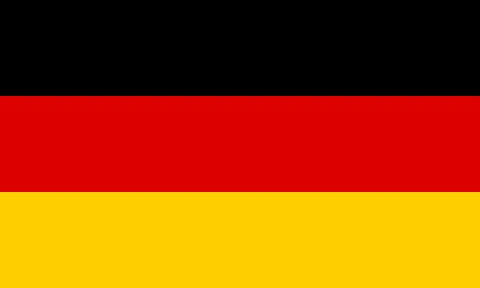

Proper noun
Germany (countable and uncountable, plural Germanys or Germanies)
- A nation or civilization occupying the country around the Rhine, Elbe, and upper Danube Rivers in Central Europe, taken as a whole under its various governments.
- Ancient Germany, excluding from its independent limits the province weſtward of the Rhine, which had ſubmitted to the Roman yoke, extended itſelf over a third part of Europe. Almoſt the whole of modern Germany, Denmark, Norway, Sweden, Finland, Livonia, Pruſſia, and the greater part of Poland, were...1776, Edward Gibbon, The History of the Decline and Fall of the Roman Empire, volume I, page 218
- While the Germans of Gaul, Italy, and Spain became Romans, the Saxons retained their language, their genius, and manners, and created in Britain a Germany outside of Germany.1872, John Fiske, editor, History of English Literature, abridgment of Henri van Laun's translation of Hippolyte Taine's Histoire de la littérature anglaise (1864), page 26
- The German Sprachraum; the countries and territories within Europe where German is or was the primary language.
- A nominal medieval kingdom forming part of the Carolingian and Holy Roman Empires; (metonymic, now uncommon) the Holy Roman Empire in its entirety; (metonymic, obsolete) the Austrian Habsburg empire in its entirety.
- There had been a long bloody war in the empire of Germany for twelve years, between the Emperor, the Duke of Bavaria, the King of Spain, and the Popiſh Princes and Electors, on the one side; and the Proteſtant Princes on the other; and both ſides having been exhauſted by the war, and even the...1759, A Military History of Germany; and of England. From the Year 1631 to the Year 1648. Being the Memoirs of an English Gentleman, who served in the army of Gustavus Adolphus; and afterwards in the...
- I had frequently been told, that the Bohemians were the moſt muſical people of Germany, or, perhaps, of all Europe...1775, Charles Burney, The Present State of Music in Germany, the Netherlands, and United Provinces, volume II, page 3
- An empire formed by Prussia in 1871 with its capital at Berlin.
- A republic formed in 1918 with its capital at Berlin, inclusive of the Nazi regime who controlled it after 1933.
- Severing's belief that trade union workers were the most progressive and democratic element in Germany holds up well under investigation.1996, Paul Bookbinder, Weimar Germany: The Republic of the Reasonable, →ISBN, page 90
- The socialist republic formed in 1949 with its capital at Berlin, more often known in English as East Germany.
- A country in Central Europe, formed in 1949 as West Germany, with its provisional capital Bonn until 1990, when it incorporated East Germany. Official name: Federal Republic of Germany. Capital and largest city: Berlin.
- The win made Germany the first European team to prevail in a World Cup in the Americas and gave the Germans, who have made it to the knockout stage in 16 consecutive World Cups, their first trophy since 1990.2014 July 13, Sam Borden, “Germans End Long Wait: 24 Years and a Bit Extra”, in The New York Times, archived from the original on 13 Jul 2014
- Germans save a lot, produce plenty and spend little. The result is a massive external surplus. Last year, Germany’s current account surplus stood at almost €200 billion ($260 billion), the world's largest.2014 September 25, Michael Heise, “The Myth of the Stupid German Investor”, in The Wall Street Journal, archived from the original on 07 Jan 2015
- Synonyms:
- Federal Republic of Germany, German Republic, Alemania, FRG, BRD, West Germany, East Germany, Nazi Germany, Third Reich, Fascist Germany
- The various states in this country either over time or during periods of disunity and division, sometimes (inexact) inclusive of the Holy Roman Empire and Austria-Hungary's other holdings.
- The differences between England and the Germanies sprang from the absence or presence of ministerial interventions.2007, William Clark, Academic Charisma and the Origins of the Research University, →ISBN, page 84
- In a Renault 14, they drove from one Germany to the other.2010, Ilan Stavans, Gabriel García Márquez: The Early Years, →ISBN
- A male given name.
- A surname.
- A township in Adams County, Pennsylvania, United States.
- An unincorporated community in Clark County, Indiana, United States.
- An unincorporated community in Houston County, Texas, United States.
Germany meaning in Hindi, Tamil, Marathi and Urdu
Germany in Hindi
- country in Central Europe
- जर्मनी jarmanī, अलमानिया almāniyā
Germany in Tamil
- country in Central Europe
- ஜர்மனி jarmaṉi, இடாய்ச்சுலாந்து iṭāycculāntu, ஜெர்மனி jermaṉi, செருமனி cerumaṉi
Germany in Marathi
- country in Central Europe
- जर्मनी jarmanī
Germany in Urdu
- country in Central Europe
- جَرْمَنی jarmanī, اَلْمانِیَہ almāniya
More languagesFewer languages
- Germany in Bengali
- জার্মানি jarmani
- Germany in Telugu
- జర్మనీ jarmanī
- Germany in Malayalam
- ജര്മനി jarmani, ജർമ്മനി jaṟmmani
- Germany in Kannada
- ಜರ್ಮನಿ jarmani
- Germany in Punjabi
- ਜਰਮਨੀ jarmanī, جَرْمَن jarman, جَرْمَنی jarmanī, اَلْمانْیَہ almānya
- Germany in Gujarati
- જર્મની jarmanī
- Germany in Odia
- ଜର୍ମାନୀ jarmāni
- Germany in Sanskrit
- शर्मण्यदेश śarmaṇyadeśa, शार्मण्यदेश śārmaṇyadeśa, शार्मण्य śārmaṇya, शार्मण्यः śārmaṇyaḥ
- Germany in Sinhala
- ජර්මනිය jarmaniya
- Germany in Assamese
- জাৰ্মানী zarmani
- Germany in Nepali
- जर्मनी jarmanī
- Germany in Pashto
- آلمان ālmān, المان almān, جرمني jarmani
- Germany in Tagalog
- Alemanya
- Germany in Arabic
- أَلْمَانْيَا ʔalmānyā
- Germany in Malay
- Jerman
- Germany in Indonesian
- Jerman
- Germany in Thai
- เยอรมนี yəə-rá-má-nii
- Germany in Vietnamese
- Đức
- Germany in Myanmar
- ဂျာမနီ gyama.ni
- Sindhi
- جرمني jrmne
- Dhivehi
- ޖަރުމަނުވިލާތް jarumanuvilāt̊
- Dzongkha
- ཇཱར་མ་ནི jā.r ma ni
Examples of Germany in a sentence
- Ancient Germany, excluding from its independent limits the province weſtward of the Rhine, which had ſubmitted to the Roman yoke, extended itſelf over a third part of Europe.1776, Edward Gibbon, The History of the Decline and Fall of the Roman Empire, volume I, page 218:
- There have been in Germany, as in all other nations, eulogists of aggression, war, and conquest.1944, Ludwig von Mises, Omnipotent Government, page 265:
- There are few cities in Germany beſides Vienna which contain ſo rich and numerous a nobility as this does: there are fome houſes here which have eſtates of 100,000 guilders, or 10,000l. a-year.1797, Colin MacFarquhar, George Gleig, editors, Encyclopædia Britannica, 3rd edition, A. Bell & C. MacFarquhar, "Mentz", page 396:
- Germany can’t afford to stick to the stately plod into decline that Merkel initiated any longer.2025 February 23, Lisa Haseldine, “Whatever happens next, Merkelism is finished”, in The Telegraph, archived from the original on 23 Feb...
Synonyms of Germany
- Federal Republic of Germany
- German Republic
- FRG
- BRD
- West Germany
- East Germany
- Nazi Germany
- Third Reich
- Fascist Germany
- Weimar Republic
20 more synonymsFewer synonyms
- Weimar Germany
- German Empire
- Second Reich
- 1949–1990
- 1933–1945
- 1919–1933
- 1871–1918
- Deutschland
- Germania
- Dutchland
- North German Confederation
- German Confederation
- Confederation of the Rhine
- Holy Roman Empire
- First Reich
- German Reich
- East Francia
- Austria
- Alemania
- Germanland
Forms of Germany
| plural | Germanys |
|---|---|
| plural | Germanies |
Origin of Germany
From Middle English Germanie, from Old English Germanie & Germania, from Latin Germānia (“land of the Germans”), from Germānī, a people living around and east of the Rhine first attested in the 1st century B.C.E. works of Julius Caesar and of uncertain etymology. The exonym was said by Strabo to derive from germānus (“close kin; genuine”), making it cognate with germane and german, but this seems unsupported. Attempts to derive it from Germanic or Celtic roots since the 18th century are all problematic, although it is perhaps cognate with the Old Irish gair (“neighbour”). Doublet of Germania. In reference to a medieval kingdom, English Germany is usually an anachronism using the Roman name to describe the area or calquing various Latin terms like rex Teutonicorum ("king of the Teutons"), which were often derogatory exonyms rather than formal titles.
Words formed from Germany
- Central Germany
- East Germany
- fascist Germany
- Federal Republic of Germany
- Germanistan
- High Germany
- Low Germany
- made in Germany
- Nazi Germany
- Weimar Germany
- West Germany
Questions about Germany
- What does Germany mean?
- Germany means a nation or civilization occupying the country around the Rhine, Elbe, and upper Danube Rivers in Central Europe, taken as a whole under its various governments.
- What is Germany in Hindi?
- Germany in Hindi is जर्मनी (jarmanī), अलमानिया (almāniyā). See Germany meaning in Hindi.
- How do you use Germany in a sentence?
- Ancient Germany, excluding from its independent limits the province weſtward of the Rhine, which had ſubmitted to the Roman yoke, extended itſelf over a third part of Europe.
- What part of speech is Germany?
- Germany is a proper noun.
- How do you pronounce Germany?
- Germany is pronounced /ˈd͡ʒɜː.mə.ni/ (UK).
Words near Germany in the dictionary
Source and license
Adapted from Wiktionary: Germany (page history and authors). Text available under the Creative Commons Attribution-ShareAlike 4.0 license. Word.ws reformatted the entry and added links. Wiktionary data of 2026-09-02.
Last updated:
Pronunciation audio from Wikimedia Commons, each file under its own free license: En-uk-Germany.ogg, en-us-Germany.ogg.
Cite this entry: “Germany.” Word.ws, https://word.ws/germany. Based on Wiktionary, CC BY-SA 4.0.