
in
/ən/
in preposition: contained by; inside. Also the abbreviation of inch.
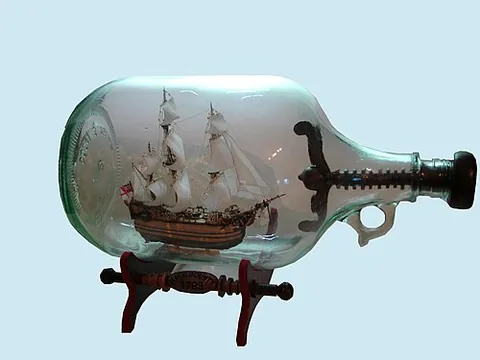

Preposition
in
- Contained by; inside.
- The dog is in the kennel.
- There were three pickles in a jar.
- Within the bounds or limits of.
- I like living in the city.
- There are lots of trees in the park.
- Surrounded by; among; amidst.
- We are in the enemy camp.
- Her plane is in the air.
- Wearing (an item of clothing).
- I glanced over at the pretty girl in the red dress.
- Who’s the blonde in the sunhat over there?
- Expressing abstract containment.
- There wasn't much of interest in her speech.
- He hasn't got an original idea in him.
- Part of; a member of; out of; from among.
- You are one in a million.
- She's in an orchestra.
- During (a period of time or event).
- My birthday is in the first week of December.
- Easter falls in the fourth lunar month.
- Within (a certain elapsed time); by the end of.
- Will you be able to finish this in a week?
- The massacre resulted in over 1000 deaths in three hours.
- At the end of (a period of time).
- They said they would call us in a week.
- Participating in a field, activity or industry.
- I've always worked in plastics.
- She dabbles in Buddhism.
- Characterized by.
- Many English nouns in -is form their plurals in -es, while those in kn- are pronounced just /n/-.
- As to enter; from outside to inside; into.
- Less water gets in your boots this way.
- She stood there looking in the window longingly.
- As to enter a driveway, parking lot, etc.
- Turn in to the second house on the left.
Show 8 more meaningsShow fewer meanings
- By (doing something); indicating action causing an effect or achieving a purpose.
- In replacing the faucet washers, he felt he was making his contribution to the environment.
- In trying to make amends, she actually made matters worse.
- Indicating an order or arrangement.
- My fat rolls around in folds.
- The planes flew over in waves.
- Denoting a state of the subject.
- He stalked away in anger.
- John is in a coma.
- Indicates, connotatively, a place-like form of someone's (or something's) personality, as his, her or its psychic and physical characteristics.
- You've got a friend in me.
- He's met his match in her.
- Pertaining to; with regard to.
- There has been no change in his condition.
- What grade did he get in English?
- As to have sufficient or plentiful amounts of.
- The fruit trees in the yard keep me in apples and pears for most of the year.
- In the form of, in the denomination of.
- Please pay me in cash — preferably in tens and twenties.
- The deposit can be in any legal tender, even in gold.
- Used to indicate a language, script, tone, etc. of a text, speech, etc.
- Beethoven's "Symphony No. 5" in C minor is among his most popular.
- His speech was in French, but was simultaneously translated into eight languages.
Verb
in (third-person singular simple present ins, present participle inning, simple past and past participle inned)
- To enclose.
- To take in; to harvest.
- He that ears my land spares my team and gives me leave to in the crop.c. 1604–1605 (date written), William Shakespeare, “All’s Well, that Ends Well”, in Mr. William Shakespeares Comedies, Histories, & Tragedies […] (First Folio), London: […] Isaac Iaggard, and Ed[ward]...
Adverb
in (not comparable)
- At or towards the interior of a defined space, such as a building or room.
- Suddenly a strange man walked in.
- Would you like that to take away or eat in?
- Towards the speaker or other reference point.
- They flew in from London last night.
- For six hours the tide flows in, then for another six hours it flows out.
- So as to be enclosed or surrounded by something.
- Bring the water to the boil and drop the vegetables in.
- I was tired enough to snuggle in with the dogs on the couch and sleep there.
- After the beginning of something.
- The show still didn't become interesting 20 minutes in.
- The Black Cats had a mountain to climb after James Morrison's header and Shane Long's neat side-foot finish gave Albion a 2-0 lead five minutes in.2011 October 1, Phil Dawkes, “Sunderland 2-2 West Brom”, in BBC Sport
- Denotes a gathering of people assembled for the stated activity, sometimes, though not always, suggesting a protest.
- sing-in, pray-in, hug-in; see also be-in, love-in, sit-in, teach-in.
Noun (1)
in (plural ins)
- A position of power or influence, or a way to get it.
- His parents got him an in with the company.
- Holleran's and White's diminishing capacities as writers does not affect their publishing ins': the writer the house knows is always better than the writer the house doesn't know.1987 February 1, T. R. Witomski, “Zeitgeist or Poltergeist? Why Gay Books Are So Bad”, in Gay Community News, volume 14, number 28, page 9
- One who, or that which, is in; especially, one who is in office.
- This memoir has nothing to do with the question between the ins and the outs; it is intended neither to support nor to assail the administration; it is general in its views upon a general and national subject; […]1827, Benjamin Chew, A Sketch of the Politics, Relations, and Statistics, of the Western World, page 192
- Antonyms:
- out
- The state of a batter/batsman who is currently batting; see innings.
Adjective
in (comparative more in, superlative most in)
- Located indoors, especially at home or at one's office or place of work.
- Is Mr. Smith in?
- Located inside something.
- Little by little I pushed the snake into the basket, until finally all of it was in.
- The bullet is about five centimetres in.
- Falling or remaining within the bounds of the playing area.
- If the tennis ball bounces on the line then it's in.
- Inserted or fitted into something.
- I've discovered why the TV wasn't working – the plug wasn't in!
- Having been collected or received.
- The replies to the questionnaires are now all in.
- In fashion; popular.
- Skirts are in this year.
- Pierce a new hole
If Hell was in you'd give your soul
To the great southern trendkill1996, “The Great Southern Trendkill”, performed by Pantera
- Incoming.
- the in train
- Furled or stowed.
- Of the tide, at or near its highest level.
- You can't get round the headland when the tide's in.
- With privilege or possession; used to denote a holding, possession, or seisin.
- in by descent; in by purchase; in of the seisin of her husband
- Currently batting.
- Having familiarity or involvement with somebody.
- He is very in with the Joneses.
- “[…] He […] took a rifle out of the batch and shot at me. I was lucky he was such a crummy shot.”
“Why would he do that?”
“I think he's in with them, Doctor.”
“Them? You mean Ned and Cody?”
“All of them. Hickok, the split tail, the whole lot.”2010, Joe R. Lansdale, Flaming Zeppelins: The Adventures of Ned the Seal, page 123
Show 3 more meaningsShow fewer meanings
- Having a favourable position, such as a position of influence or expected gain, in relation to another person.
- I need to keep in with the neighbours in case I ever need a favour from them.
- I think that bird fancies you. You're in there, mate!
- (UK, Ireland, Australia, New Zealand) Burning; ablaze.
- Blocks of compressed coal keep the fire in for a long time, but they give out very little heat.1888, H.C. O’Neill, Edith A. Barnett, Our Nurses and the Work They Have to Do, page 81
- “At all events,” said the Doctor, “the fire’s in, and here’s the camp-oven, too. Somebody will be here soon. I will go in and light my pipe.”1894, Henry Kingsley, The Recollections of Geoffry Hamlyn - Volume 2, page 183
- Having used, consumed , or invested a certain amount.
- I'm three drinks in right now.
- I was 500 dollars in when the stock crashed.
Proper noun capitalized: IN
IN
- Abbreviation of Indiana: a state of the United States.
- Initialism of Ilocos Norte: a province of the Ilocos Region, Philippines.
Noun (2) capitalized: IN
IN (uncountable)
- Abbreviation of integrase.
- Abbreviation of internegative; a type of film stock, most commonly used regarding 35mm motion picture negative
Also used as
in is also the abbreviation of inch.
in meaning in Hindi, Tamil, Urdu and Bengali
in in Hindi
- after (a period of time)
- बाद bād, ता tā
- into, towards
- अंदर andar
- contained by
- अन्दर andar, ... में ... mẽ, भीतर bhītar, अंदर andar
- indicating language, script, or tone
- में mẽ
in in Tamil
- contained by
- உள்ளே uḷḷē
- surrounded by
- மத்தியில் mattiyil
in in Urdu
- contained by
- اندر andar, ... میں ... mẽ, بھیتر bhītar
in in Bengali
- contained by
- ভিতর bhitor
More languagesFewer languages
- in in Telugu
- లో lō
- in in Gujarati
- ની અંદર nī andar
- in in Assamese
- ভিতৰ bhitor
- in in Pashto
- په pë, په ... کې
- in in Tagalog
- sa
- in in Arabic
- بَعْدَ baʕda, فِي fī, مِن min
- in in Malay
- dalam, ke dalam, di dalam, di
- in in Indonesian
- di dalam
- in in Persian
- تا tâ, در dar, درون darun, اندر andar
- in in Thai
- หน้า nâa, อีก ìik, ใน nai
- in in Vietnamese
- trong, ở, tại, bằng
- in in Myanmar
- မှာ hma, ၌ hnai., တွင် twang, အထဲ a.htai:
- Sindhi
- ۾ mẽ
Examples of in in a sentence
- He sat in the chair.
- She stood in the spotlight.
- Waiter! There's a fly in my soup!
- The country reached a high level of prosperity in his first term.
- We lost that painting in the move to our new house.
- My aim in travelling there was to find my missing friend.
Antonyms of in
Forms of in
| Preposition | |
|---|---|
| alternative poetic (colloquial) | i' |
| Verb | |
| third-person singular present | ins |
| present participle | inning |
| past participle | inned |
| past | inned |
| Noun | |
| plural | ins |
| plural | in |
| alternative form | in. |
| Adjective | |
| comparative | more in |
| superlative | most in |
Origin of in
PIE word *h₁en Preposition and verb from Middle English in, from Old English in, from Proto-Germanic *in. Adverb, noun and adjective from Middle English in, from Old English inn and inne, from Proto-Germanic *innai. Sense 1/2 "in"/"into" are from the original PIE prefix, with locative/accusative case respectively. Sense 3/4 "qualification"/"means" are from the PIE metaphor of all infinitives coming from locatives.
Words formed from in
- 6in4
- add-in
- bail in
- ben
- built-in
- calcin
- caytaxin
- come in
- drop-in
- end in
- grid-in
- herein
- inable
- inband
- in between
- inbetwixt
- inblown
- inborne
- inbound
- inbox
- inbreath
- inburnt
- inburst
- inclearing
- incross
- indeed
- indegree
- indrift
- indriven
- infill
- in-fill
- in-flight
- in-footed
- inframe
- in funds
- ingate
- ingoer
- ingoing
- inkneed
- inlane
- inlier
- inlink
- inly
- inmeats
- inmost
- innage
- innermost
- inness
- in on
- in one's eyes
- inorder
- inpatient
- inplane
- inroad
- inrun
- inservice
- inshave
- inshoot
- inside
- insole
Phrases with in
184 more phrasesFewer phrases
- ate in
- bat in
- bed in
- bid in
- bit in
- bog in
- bow in
- box in
- bug in
- buy in
- cue in
- cut in
- did in
- dig in
- dob in
- dug in
- eat in
- fit in
- fly in
- geg in
- get in
- got in
- had in
- has in
- hem in
- hoe in
- hop in
- in all
- in bad
- in bed
- in fee
- in for
- in key
- in kid
- in lap
- in one
- in pig
- in pup
- in rem
- in sum
- in tow
- in two
- in ure
- in use
- ink in
- key in
- kip in
- lay in
- led in
- let in
- lie in
- log in
- lug in
- nod in
- opt in
- pen in
- pop in
- put in
- ran in
- rub in
- run in
- sat in
- saw in
- see in
- set in
- sex in
- sit in
- sub in
- tap in
- tax in
- tie in
- toe in
- way in
- ante in
- asks in
- back in
- bake in
- bash in
- bats in
- bear in
- beds in
- bids in
- bite in
- blew in
- blow in
- bogs in
- bolt in
- book in
- bore in
- bows in
- buck in
- bugs in
- bunk in
- burn in
- bust in
- butt in
- buys in
- buzz in
- call in
- came in
- cash in
- cave in
- chip in
- chum in
- clap in
- clip in
- clue in
- coop in
- cued in
- cues in
- cuts in
- deal in
- dial in
- digs in
- dine in
- dive in
- dobs in
- does in
- done in
- drag in
- draw in
- drew in
- drop in
- duke in
- eats in
- edge in
- edit in
- ends in
- fade in
- fall in
- fell in
- file in
- fill in
- find in
- fits in
- flew in
- gave in
- gegs in
- gets in
- give in
- goes in
- gone in
- hand in
- hang in
- haul in
- have in
- held in
- hems in
- hoed in
- hoes in
- hold in
- home in
- hone in
- hook in
- horn in
- hung in
- in arms
- in back
- in banc
- in bend
- in bits
- in book
- in calf
- in case
- in date
- in debt
- in deep
- in dern
- in dies
- in esse
- in fact
- in fawn
- in fief
- in fine
- in form
- in full
- in gear
- in goal
- in half
- in hand
- in heat
- in hell
- in hock
- in idea
Words that rhyme with in
48 more rhymesFewer rhymes
- Flynn
- bin
- Quinn
- sin
- tin
- Bryn
- corinne
- inn
- din
- Finn
- grin
- kin
- lin
- linn
- unpin
- Benin
- min
- shin
- violin
- wherein
- within
- akin
- been
- begin
- brin
- chin-chin
- hin
- lyn
- mandolin
- whin
- zoom in
- agin
- agrin
- Arabian jasmine
- blin
- djinn
- Douyin
- edge in
- gimme some skin
- glyn
- herein
- jinn
- Karin
- kissing kin
- lecithin
- Nguyen
- nin
Questions about in
- What does in mean?
- In means contained by; inside.
- What is in in Hindi?
- In in Hindi is बाद (bād), ता (tā), अंदर (andar). See In meaning in Hindi.
- How do you use in in a sentence?
- He sat in the chair.
- What part of speech is in?
- In can be a preposition, a verb, an adverb or a noun.
- How do you pronounce in?
- In is pronounced /ən/.
Words near in in the dictionary
Source and license
Adapted from Wiktionary: in (page history and authors); IN (page history and authors). Text available under the Creative Commons Attribution-ShareAlike 4.0 license. Word.ws reformatted the entry and added links. Wiktionary data of 2026-09-02.
Last updated:
Pronunciation audio from Wikimedia Commons, each file under its own free license: LL-Q1860 (eng)-Pvanp7-in a while (unstressed).wav, en-us-in.ogg, en-au-in.ogg.
Cite this entry: “in.” Word.ws, https://word.ws/in. Based on Wiktionary, CC BY-SA 4.0.