
lisinopril
/lɪˈsɪn.əˌpɹɪl/
lisinopril noun: a drug of the angiotensin converting enzyme inhibitor class (trademark Prinivil, Zestril), primarily used in the treatment of hypertension, congestive heart failure, heart attacks, and certain complications of diabetes.
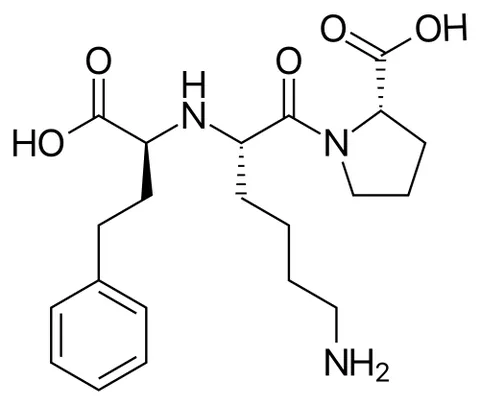

Noun
lisinopril (uncountable)
- A drug of the angiotensin converting enzyme inhibitor class (trademark Prinivil, Zestril), primarily used in the treatment of hypertension, congestive heart failure, heart attacks, and certain complications of diabetes.
Origin of lisinopril
From lysine + -o- + -pril (“angiotensin converting enzyme inhibitor”).
Questions about lisinopril
- What does lisinopril mean?
- Lisinopril means a drug of the angiotensin converting enzyme inhibitor class (trademark Prinivil, Zestril), primarily used in the treatment of hypertension, congestive heart failure, heart attacks, and certain complications of diabetes.
- What part of speech is lisinopril?
- Lisinopril is a noun.
- How do you pronounce lisinopril?
- Lisinopril is pronounced /lɪˈsɪn.əˌpɹɪl/ (US).
Words near lisinopril in the dictionary
Source and license
Adapted from Wiktionary: lisinopril (page history and authors). Text available under the Creative Commons Attribution-ShareAlike 4.0 license. Word.ws reformatted the entry and added links. Wiktionary data of 2026-09-02.
Last updated:
Pronunciation audio from Wikimedia Commons, each file under its own free license: LL-Q1860 (eng)-Naomi Persephone Amethyst (NaomiAmethyst)-lisinopril.wav.
Cite this entry: “lisinopril.” Word.ws, https://word.ws/lisinopril. Based on Wiktionary, CC BY-SA 4.0.