
mask
UK/mɑːsk/
More pronunciations (1)Fewer pronunciations
Northern England/mask/
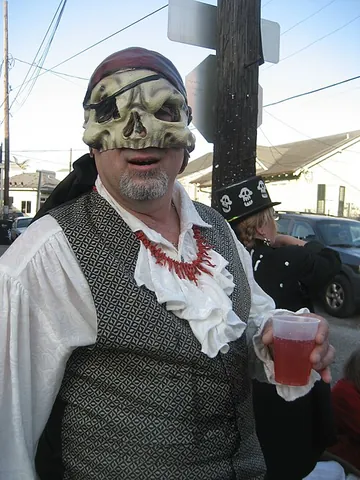
mask noun: a cover, or partial cover, for the face, used for disguise or protection.

Noun (1)
mask (plural masks)
- A cover, or partial cover, for the face, used for disguise or protection.
- a dancer's mask; a fencer's mask; a ball player's mask
- Just a few days ago, the Centers for Disease Control and Prevention—the CDC—issued new mask guidelines.
Under these new guidelines, most Americans in most of the country can now be mask free.
And based on the projections, more of the country will reach that point across the next couple of weeks.2022 March 1, Joe Biden, “Remarks of President Joe Biden – State of the Union Address As Prepared for Delivery”, in whitehouse.gov, archived from the original on 02 Mar 2022
- That which disguises; a pretext or subterfuge.
- Grouchy and wary and tender, he’s a sozzled hedonist seemingly out for himself—though his party-animal facade is just a mask for his bottomless generosity.2021 October 26, Stephanie Zacharek, “The 19 Most Underrated Movies on Netflix”, in Time, archived from the original on 16 Apr 2022
- Appearance, likeness.
- Come then, pure hands, and bear the head
That sleeps or wears the mask of sleep,
And come, whatever loves to weep,
And hear the ritual of the dead.1850, [Alfred, Lord Tennyson], “Canto XVIII”, in In Memoriam, London: Edward Moxon, […], →OCLC, page 30
- Come then, pure hands, and bear the head
- A festive entertainment of dancing or other diversions, where all wear masks; a masquerade.
- This thought might lead me through the world's vain mask.1667, John Milton, “(please specify the page number)”, in Paradise Lost. […], London: […] [Samuel Simmons], and are to be sold by Peter Parker […]; [a]nd by Robert Boulter […]; [a]nd Matthias Walker...
- A person wearing a mask.
- the mask that has the arm of the Indian queen1880, George Washington Cable, The Grandissimes: A Story of Creole Life
- Jones, now taking the mask by the hand, fell to entreating her in the most earnest manner, to acquaint him where he might find Sophia; and when he could obtain no direct answer, he began to upbraid her gently […]1749, Henry Fielding, The History of Tom Jones, a Foundling
- A dramatic performance in which the actors wore masks and represented mythical or allegorical characters.
- A grotesque head or face, used to adorn keystones and other prominent parts, to spout water in fountains, and the like.
- Synonyms:
- mascaron
- In a permanent fortification, a redoubt which protects the caponiere.
- A screen for a battery.
- The lower lip of the larva of a dragonfly, modified so as to form a prehensile organ.
- A flat covering used to block off an unwanted portion of a scene or image.
- A pattern of bits used in bitwise operations; bitmask.
Verb (1)
mask (third-person singular simple present masks, present participle masking, simple past and past participle masked)
- To cover (the face or something else), in order to conceal the identity or protect against injury; to cover with a mask or visor.
- They must all be masked and vizardedc. 1597 (date written), William Shakespeare, “The Merry Wiues of Windsor”, in Mr. William Shakespeares Comedies, Histories, & Tragedies […] (First Folio), London: […] Isaac Iaggard, and Ed[ward]...
- To disguise as something else.
- To conceal from view or knowledge; to cover; to hide.
- Masking the business from the common eyec. 1606 (date written), William Shakespeare, “The Tragedie of Macbeth”, in Mr. William Shakespeares Comedies, Histories, & Tragedies […] (First Folio), London: […] Isaac Iaggard, and Ed[ward] Blount...
- The opponent must not be able to recognize when we inhale and when we exhale. We achieve this by breathing with the diaphragm and we do not raise the shoulders while breathing. In particular we must mask when we are out of breath.1998, Rudolf Jakhel, Modern Sports Karate: Basics of Techniques and Tactics, Meyer & Meyer Sport, →ISBN
- To conceal; also, to intervene in the line of.
- To cover or keep in check.
- to mask a body of troops or a fortess by a superior force, while some hostile evolution is being carried out
- To take part as a masker in a masquerade.
- Come Pentecost as quickly as it will,
Some five and twenty years, and then we mask’d.c. 1591–1595 (date written), William Shakespeare, “The Tragedie of Romeo and Ivliet”, in Mr. William Shakespeares Comedies, Histories, & Tragedies […] (First Folio), London: […] Isaac Iaggard, and... - noble Gentilmen / who daunced & masked wt thes fayer ladyes & gentillwomen1641, George Cavendish, Thomas Wolsey, Late Cardinall, his Lyffe and Deathe
- Come Pentecost as quickly as it will,
- To put on a mask; to wear a mask.
- Dr. Shelita Dattani, director of professional affairs at the Canadian Pharmacists Association, says […]. “The efforts that we’re taking to reduce the spread of COVID are working … people are masking and distancing and staying away from each other and using hand hygiene, so I think all of these...2020 December 30, Jaren Kerr, “Flu almost non-existent this year as coronavirus cases rise across Canada”, in The Globe and Mail
- Synonyms:
- mask up
- To disguise oneself, to be disguised in any way.
- Ioue sometime maſked in a ſhepheards weede,
And by thoſe ſteps that he hath ſcal’d the heauens,
May we become immortall like the Gods.c. 1587–1588 (date written), [Christopher Marlowe], Tamburlaine the Great. […] The First Part […], 2nd edition, part 1, London: […] [R. Robinson for] Richard Iones, […], published 1592, →OCLC...
- Ioue sometime maſked in a ſhepheards weede,
- To conceal or disguise one's neurodivergence, especially autism; to learn, practice, and perform certain behaviors and suppress others in order to appear more neurotypical.
- Masking is exhausting and some autistics require copious amounts of time afterwards to recover from hiding who they are and pretending to be someone they aren't. Even when autistics mask they don't always pass fully as an NT person.2018, Sally Cat, PDA by PDAers: From Anxiety to Avoidance and Masking to Meltdowns, Jessica Kingsley Publishers, →ISBN, page 86
- Masking can leave a person with less energy to handle other aspects of their day, from performing basic housework to processing thoughts and feelings.2020, Sarah Kurchak, I Overcame My Autism and All I Got Was This Lousy Anxiety Disorder, unnumbered page
- To cover or shield something, or a portion of something, so as to prevent reproduction or to safeguard the surface from the colors used when working with an air brush or painting.
- Synonyms:
- mask off
- To set or unset (certain bits, or binary digits, within a value) by means of a bitmask.
- That is, the lower nibble (the 4 bits 1010 = A) has been masked to zero. This is because ANDing anything with a zero produces a zero, while ANDing any bit with a 1 leaves the bit unchanged[…]1993, Richard E. Haskell, Introduction to computer engineering, page 287
- To disable (an interrupt, etc.) by setting or unsetting the associated bit.
- Some hardware interrupts can be masked, or disabled; that is, the CPU is told to ignore them.1998, Rick Grehan, Robert Moote, Ingo Cyliax, Real-Time Programming: A Guide to 32-bit Embedded Development, page 199
Noun (2)
mask (plural masks)
Noun (3)
mask (plural masks)
- Mash.
Verb (2)
mask (third-person singular simple present masks, present participle masking, simple past and past participle masked)
- To mash.
- (brewing) To mix malt with hot water to yield wort.
- To be infused or steeped.
- To prepare tea in a teapot; alternative to brew.
- To prepare (to storm).
- I saw the storm was masking fast, That soon wad fa' on me;[…]1839, Whistle-Binkie; or, the Piper of the party: a collection of songs for the social circle ... Second edition, enlarged. Edited by John D. Carrick, page 108
- ... mirky cluds in the south-wast / Are masking up a blashy blast, ...1876, John Mactaggart, The Scottish Gallovidian encyclopedia, or, The ... curiosities of the south of Scotland, page 364
Verb (3)
mask (third-person singular simple present masks, present participle masking, simple past and past participle masked)
mask meaning in Hindi, Tamil, Marathi and Urdu
mask in Hindi
- cover for the face
- मुखौटा mukhauṭā, मास्क māsk, नक़ाब naqāb
mask in Tamil
- cover for the face
- முகமூடி mukamūṭi
- that which disguises
- முகமூடி mukamūṭi, முகத்திரை mukattirai
- festive entertainment
- கொந்தி konti
mask in Marathi
- cover for the face
- मुखवटा mukhavṭā, मास्क māska
mask in Urdu
- cover for the face
- ماسک māsk, نقاب niqāb
More languagesFewer languages
- mask in Bengali
- মাস্ক masko, মুখোশ mukhōś
- mask in Telugu
- మాస్క్, ముసుగు
- mask in Malayalam
- മുഖാവരണം, മുഖംമൂടി, മറ, മറയ്ക്കുക
- mask in Kannada
- ಮುಸುಕು, ಗವಿಸು
- mask in Punjabi
- ਬੁਰਕਾ burkā
- mask in Gujarati
- મૂમતી mūmtī
- mask in Odia
- ମାସ୍କ
- mask in Assamese
- মুখা mukha
- mask in Nepali
- मास्क
- mask in Pashto
- نقاب neqãb
- mask in Arabic
- قِناع qināʕ, كِمامة kimāma
- mask in Malay
- topeng, kedok, penutup muka, pelitup
- mask in Indonesian
- topeng, masker, kedok
- mask in Persian
- ماسک mâsk, نقاب neqâb
- mask in Thai
- หน้ากาก nâa-gàak
- mask in Vietnamese
- mặt nạ
- mask in Myanmar
- မျက်နှာဖုံး myakhnahpum:
Examples of mask in a sentence
- So, masking seems to be a very poor explanation for the difference in gender diagnosis of autism.2021, Yenn Purkis, Wenn B. Lawson, The Autistic Trans Guide to Life, Jessica Kingsley Publishers, →ISBN, page 132:
- Some group members describe masking during therapy in order to seem more likeable to the therapist, or because they felt it necessary in order to be seen as engaging with the support.2021, Felicity Sedgewick, Laura Hull, Helen Ellis, Autism and Masking: How and Why People Do It, and the Impact It Can Have, page 220:
- Kayleigh, who was finally diagnosed at 18, felt that she masked a lot growing up because she "always felt different and was bullied if [she] showed it both at home and in school".2022, Hannah Louise Belcher, Taking Off the Mask: Practical Exercises to Help Understand and Minimise the Effects of Autistic Camouflaging...
- The whislin' key hole o the door / Fou plainly tells a storm is maskin'.1900, J. Milne, Poems, section 43:
Synonyms of mask
Forms of mask
| Noun | |
|---|---|
| plural | masks |
| alternative form (archaic) | masque |
| Verb | |
| third-person singular present | masks |
| present participle | masking |
| past participle | masked |
| past | masked |
Origin of mask
Borrowed from Middle French masque (“a covering to hide or protect the face”), from Italian maschera (“mask, disguise”), from (a byform of, see it for more) Medieval Latin masca, mascha, a borrowing of Proto-West Germanic *maskā, from which English mesh and mask (“mesh”) (below at Etymology 2) are inherited. Doublet of mascara, masque, and mesh. Replaced Old English grīma (“mask”), whence grime, and displaced non-native Middle English viser (“visor, mask”) borrowed from Old French viser, visier.
From Middle English maske, from Old English max, masċ (“net”), from Proto-West Germanic *maskā (“mesh, netting, mask”). Doublet of mesh and mask above.
From Middle English *mask, masch, from Old English māx, māsc (“mash”). Doublet of mash.
Words formed from mask
- antimask
- anti-mask
- antimasker
- bag valve mask
- bar mask
- beard mask
- bemask
- birdcage mask
- catcher's mask
- comedy mask
- death mask
- deathmask
- demask
- dismask
- diving mask
- domino mask
- drama mask
- dust mask
- eye mask
- eyemask
- face mask
- facemask
- facial mask
- filemask
- finger mask
- flu mask
- gasmask
- gas mask
- hair mask
- half mask
- half-mask
- Hannibal Lecter mask
- hostmask
- immask
- Jason mask
- keymask
- life mask
- lion mask
- maskability
- mask acne
- maskee
- maskery
- maskette
- maskfish
- maskful
- maskhole
- mask house
- maskless
- masklike
- maskmaker
- maskne
- mask-off moment
- mask of pregnancy
- mask shell
- masktard
- maskurbator
- mask work
- Nablus mask-like facial syndrome
- nanomask
- nano mask
Phrases with mask
- mask up
- mask off
- ski mask
- riot mask
- SARS mask
- spit mask
- mask works
- paint mask
- sheet mask
- sleep mask
- mask houses
- mask shells
29 more phrasesFewer phrases
- oxygen mask
- raster mask
- screen mask
- shadow mask
- solder mask
- tragedy mask
- surgical mask
- pregnancy mask
- procedure mask
- Parkinson's mask
- face mask penalty
- take the mask off
- took the mask off
- taken the mask off
- takes the mask off
- face mask penalties
- taking the mask off
- put on one's oxygen mask first
- put one's oxygen mask on first
- puts on one's oxygen mask first
- puts one's oxygen mask on first
- put on one's own oxygen mask first
- put one's own oxygen mask on first
- putting on one's oxygen mask first
- putting one's oxygen mask on first
- puts on one's own oxygen mask first
- puts one's own oxygen mask on first
- putting on one's own oxygen mask first
- putting one's own oxygen mask on first
Words that rhyme with mask
5 more rhymesFewer rhymes
Questions about mask
- What does mask mean?
- Mask means a cover, or partial cover, for the face, used for disguise or protection.
- What is mask in Hindi?
- Mask in Hindi is मुखौटा (mukhauṭā), मास्क (māsk), नक़ाब (naqāb). See Mask meaning in Hindi.
- How do you use mask in a sentence?
- So, masking seems to be a very poor explanation for the difference in gender diagnosis of autism.
- What part of speech is mask?
- Mask can be a noun or a verb.
- How do you pronounce mask?
- Mask is pronounced /mɑːsk/ (UK).
- What is the plural of mask?
- The plural of mask is masks.
Words near mask in the dictionary
Source and license
Adapted from Wiktionary: mask (page history and authors); mask (Telugu, IndicTrans2 machine translation) (model and license); mask (Malayalam Wiktionary) (page history and authors); mask (Kannada Wiktionary) (page history and authors); ਬੁਰਕਾ (Punjabi) (page history and authors); મૂમતી (Gujarati) (page history and authors); mask (Odia, IndicTrans2 machine translation) (model and license); mask (Nepali, IndicTrans2 machine translation) (model and license). Text available under the Creative Commons Attribution-ShareAlike 4.0 license. Word.ws reformatted the entry and added links. Wiktionary data of 2026-09-02.
Last updated:
Pronunciation audio from Wikimedia Commons, each file under its own free license: en-us-mask.ogg.
Cite this entry: “mask.” Word.ws, https://word.ws/mask. Based on Wiktionary, CC BY-SA 4.0.