
off the wagon
off the wagon prepositional phrase: no longer maintaining a program of self-improvement or abstinence from an undesirable habit, especially drinking alcohol.

Prepositional phrase
- No longer maintaining a program of self-improvement or abstinence from an undesirable habit, especially drinking alcohol.
- She kept up her diet for an entire month before falling off the wagon.
- He is off the wagon again.
- Antonyms:
- on the wagon
Antonyms of off the wagon
Origin of off the wagon
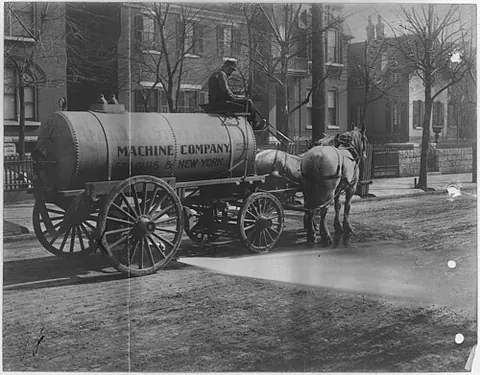
Originally off the water wagon or off the water cart, referring to carts used to hose down dusty roads: see the 1901 quotation below. The suggestion is that a person who is “on the wagon” is drinking water rather than alcoholic beverages. The term may have been used by the early 20th-century temperance movement in the United States; for instance, William Hamilton Anderson (1874 – c. 1959), the superintendent of the New York Anti-Saloon League, is said to have made the following remark about Prohibition: “Be a good sport about it. No more falling off the water wagon. Uncle Sam will help you keep your pledge.”
Questions about off the wagon
- What does off the wagon mean?
- Off the wagon means no longer maintaining a program of self-improvement or abstinence from an undesirable habit, especially drinking alcohol.
- What part of speech is off the wagon?
- Off the wagon is a prepositional phrase.
Words near off the wagon in the dictionary
Source and license
Adapted from Wiktionary: off the wagon (page history and authors). Text available under the Creative Commons Attribution-ShareAlike 4.0 license. Word.ws reformatted the entry and added links. Wiktionary data of 2026-09-02.
Last updated:
Pronunciation audio from Wikimedia Commons, each file under its own free license: En-au-off the wagon.ogg.
Cite this entry: “off the wagon.” Word.ws, https://word.ws/off_the_wagon. Based on Wiktionary, CC BY-SA 4.0.