
Orbison illusion
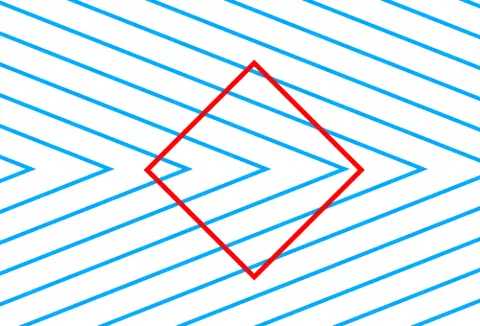
Orbison illusion noun: an optical illusion consisting of a two-dimensional figure superimposed over a background of radial lines or concentric circles, resulting in apparent distortion of both the figure and its background.

Noun
Orbison illusion (plural Orbison illusions)
- An optical illusion consisting of a two-dimensional figure superimposed over a background of radial lines or concentric circles, resulting in apparent distortion of both the figure and its background.
Forms of Orbison illusion
| plural | Orbison illusions |
|---|
Origin of Orbison illusion
First described in 1939 by American psychologist William Orbison.
Questions about Orbison illusion
- What does Orbison illusion mean?
- Orbison illusion means an optical illusion consisting of a two-dimensional figure superimposed over a background of radial lines or concentric circles, resulting in apparent distortion of both the figure and its background.
- What part of speech is Orbison illusion?
- Orbison illusion is a noun.
- What is the plural of Orbison illusion?
- The plural of Orbison illusion is Orbison illusions.
Words near Orbison illusion in the dictionary
Source and license
Adapted from Wiktionary: Orbison illusion (page history and authors). Text available under the Creative Commons Attribution-ShareAlike 4.0 license. Word.ws reformatted the entry and added links. Wiktionary data of 2026-09-02.
Last updated:
Cite this entry: “Orbison illusion.” Word.ws, https://word.ws/orbison_illusion. Based on Wiktionary, CC BY-SA 4.0.