
planet
/ˈplænɪt//ˈplænət/
planet noun: each of the seven major bodies which move relative to the fixed stars in the night sky—the Moon, Mercury, Venus, the Sun, Mars, Jupiter and Saturn.

Noun
planet (plural planets)
- Each of the seven major bodies which move relative to the fixed stars in the night sky—the Moon, Mercury, Venus, the Sun, Mars, Jupiter and Saturn.
- Be they not dreames of humane vanity,[…]to make of our knowne earth a bright shining planet [translating astre]?1603, Michel de Montaigne, chapter 12, in John Florio, transl., The Essayes […], book II, London: […] Val[entine] Simmes for Edward Blount […], →OCLC, page 260
- The moon[…]began to rise from her bed, where she had slumbered away the day, in order to sit up all night. Jones had not travelled far before he paid his compliments to that beautiful planet, and, turning to his companion, asked him if he had ever beheld so delicious an evening?1749, Henry Fielding, Tom Jones, Folio Society, published 1973, page 288
- Any body that orbits the Sun, including the asteroids (as minor planets) and sometimes the moons of those bodies (as satellite planets)
- A Discovrse concerning a New Planet. Tending to prove, That 'tis probable our Earth is one of the Planets1640, John Wilkins, A Discovrse concerning a New Planet. Tending to prove, That 'tis probable our Earth is one of the Planets, title
- Synonyms:
- wandering star, wanderstar
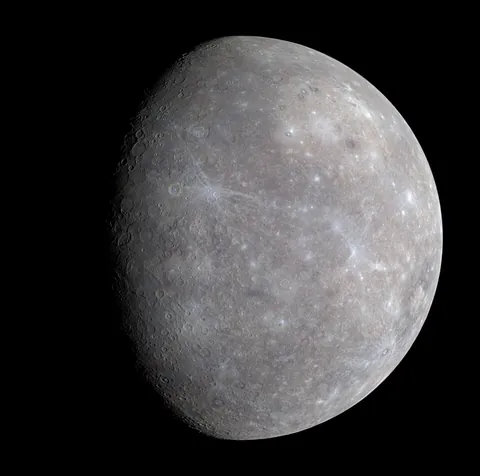
- A body which is massive enough to be in hydrostatic equilibrium (generally resulting in being an ellipsoid) but not enough to attain nuclear fusion and, in IAU usage, which directly orbits a star (or multiple star) and dominates the region of its orbit; specifically, in the case of the Solar system, the eight major bodies of Mercury, Venus, Earth, Mars, Jupiter, Saturn, Uranus, and Neptune.
- Their decision will force a rewrite of science textbooks because the solar system is now a place with eight planets and three newly defined "dwarf planets"—a new category of object that includes Pluto.2006 December 22, Alok Jha, The Guardian
- The closest planet takes just over nine Earth days to complete an orbit around the star, and the most distant takes about 55 days. All of the planets have quicker revolutions around their star than Mercury, which takes 88 days to complete one lap around the sun.2023 November 29, Ashley Strickland, “Astronomers discover nearby six-planet solar system with ‘pristine configuration’”, in CNN
- Synonyms:
- world
- construed with the or this: The Earth.
- "My tastes," he said, still smiling, "incline me to the garishly sunlit side of this planet." And, to tease her and arouse her to combat: "I prefer a farandole to a nocturne; I'd rather have a painting than an etching; Mr. Whistler bores me with his monochromatic mud; I don't like dull colours...1907 August, Robert W[illiam] Chambers, chapter VIII, in The Younger Set, New York, N.Y.: D. Appleton & Company, →OCLC
- It is tempting to speculate about the incentives or compulsions that might explain why anyone would take to the skies in [the] basket [of a balloon]:[…]; perhaps to moralise on the oneness or fragility of the planet, or to see humanity for the small and circumscribed thing that it is;[…].2013 June 7, David Simpson, “Fantasy of navigation”, in The Guardian Weekly, volume 188, number 26, page 36
planet meaning in Hindi, Tamil, Marathi and Urdu
planet in Hindi
- each of the seven major bodies which move relative to the fixed stars in the night sky
- ग्रह grah
- rocky or gaseous spherical bodies orbiting the Sun
- ग्रह grah
- similar body in orbit around a star
- ग्रह grah
planet in Tamil
- each of the seven major bodies which move relative to the fixed stars in the night sky
- கிரகம் kirakam, கோள் kōḷ
- rocky or gaseous spherical bodies orbiting the Sun
- கோள் kōḷ
- similar body in orbit around a star
- கோள் kōḷ
planet in Marathi
- each of the seven major bodies which move relative to the fixed stars in the night sky
- ग्रह grah
- rocky or gaseous spherical bodies orbiting the Sun
- ग्रह grah
- similar body in orbit around a star
- ग्रह grah
planet in Urdu
- each of the seven major bodies which move relative to the fixed stars in the night sky
- سَیّارَہ saiyāra, گْرَہْ grah
More languagesFewer languages
- planet in Bengali
- গ্রহ groho
- planet in Telugu
- గ్రహము grahamu
- planet in Malayalam
- ഗ്രഹം grahaṁ
- planet in Kannada
- ಗ್ರಹ graha
- planet in Punjabi
- ਗ੍ਰਹਿ grhi, ਨਛੱਤਰ nachattar
- planet in Gujarati
- ગ્રહ grah
- planet in Odia
- ଗ୍ରହ graha
- planet in Sanskrit
- ग्रह graha
- planet in Sinhala
- ග්රහ graha
- planet in Assamese
- গ্ৰহ groh
- planet in Nepali
- ग्रह graha
- planet in Pashto
- سياره sayāra
- planet in Tagalog
- planeta, buntala
- planet in Arabic
- كَوْكَب سَيَّار kawkab sayyār, كَوْكَب kawkab, كوكب kawkab
- planet in Malay
- planet, bintang siarah, bintang beredar
- planet in Indonesian
- planet, bintang siarah
- planet in Persian
- سَیَّارِه sayyâre, اَخْتَر axtar, اَباخْتَر abâxtar, هَرْباسْپ harbâsp
- planet in Thai
- ดาวนพเคราะห์ nóp-pá-krɔ́, ดาวเคราะห์ daao-krɔ́, เคราะห์ krɔ́, ดาว daao
- planet in Vietnamese
- hành tinh
- planet in Myanmar
- ဂြိုဟ် gruih
- Dhivehi
- ތަރި tari
- Dzongkha
- གཟའ་སྐར gza' skar
Examples of planet in a sentence
- Humankind has never found any other habitable planets apart from Earth.
- Man's life on this planet has been marked by continual conflict.
- There are habitable planets orbiting many of the stars near our Sun.
Synonyms of planet
Antonyms
Forms of planet
| plural | planets |
|---|
Origin of planet
From Middle English planete, from Old French planete, from Latin planeta, planetes, from Ancient Greek πλανήτης (planḗtēs, “wanderer”) (itself an ellipsis of ἀστέρες πλανῆται (astéres planêtai, “wandering stars”)), from Ancient Greek πλανάω (planáō, “wander about, stray”), of unknown origin. Cognate with Latin pālor (“wander about, stray”), Old Norse flana (“to rush about”), and Norwegian flanta (“to wander about”). More at flaunt. So called because they have apparent motion, unlike the "fixed" stars. Originally including also the moon and sun but not the Earth; modern scientific sense of "world that orbits a star" is from 1630s in English. The Greek word is an enlarged form of πλάνης (plánēs, “who wanders around, wanderer”), also "wandering star, planet", in medicine "unstable temperature." Displaced native Old English tungol.
Words formed from planet
- antiplanet
- aquaplanet
- blanet
- deplanetize
- forbidden planet
- gas giant planet
- homeplanet
- interplanetary
- multiplanet
- nonplanet
- on what planet
- planetal
- planetality
- planetar
- planetarium
- planetary
- planetbound
- planetcide
- planetdom
- planeted
- planeteer
- planetesimal
- planetfall
- planetful
- planet gear
- planethood
- planet-hunting
- planetical
- planetless
- planetlike
- planetographer
- planetography
- planetoid
- planetologist
- planetology
- planetophysics
- planet placement
- planetquake
- planetrise
- planetscape
- planetship
- planetside
- planet-sized
- planet-stricken
- planetward
- planetwards
- planet wheel
- planetwide
- ploonet
- psychroplanet
- quasi-planet
- secondary planet
- sister planet
- sun and planet gear
- sword and planet
- there is no Planet B
- thermoplanet
- Urinal of the Planets
Phrases with planet
- Planet 9
- Planet X
- Planet IX
- ham planet
- Red Planet
- blue planet
- home planet
- mean planet
- Planet Nine
- dwarf planet
- giant planet
- inner planet
48 more phrasesFewer phrases
- major planet
- minor planet
- ocean planet
- outer planet
- Planet Earth
- planet gears
- rocky planet
- rogue planet
- Third Planet
- binary planet
- carbon planet
- double planet
- Jovian planet
- Planet Thanet
- planet wheels
- ruling planet
- Trojan planet
- Captain Planet
- carbide planet
- diamond planet
- Genesis Planet
- malefic planet
- Planet Genesis
- primary planet
- silicon planet
- exosolar planet
- Georgian planet
- inferior planet
- silicate planet
- superior planet
- telluric planet
- tertiary planet
- chthonian planet
- classical planet
- ice giant planet
- Neptunian planet
- satellite planet
- extrasolar planet
- Goldilocks planet
- Methuselah Planet
- Planet Methuselah
- terrestrial planet
- cotton candy planet
- interstellar planet
- panthalassic planet
- transitional planet
- free-floating planet
- sun and planet gears
Words that rhyme with planet
Questions about planet
- What does planet mean?
- Planet means each of the seven major bodies which move relative to the fixed stars in the night sky—the Moon, Mercury, Venus, the Sun, Mars, Jupiter and Saturn.
- What is planet in Hindi?
- Planet in Hindi is ग्रह (grah). See Planet meaning in Hindi.
- What part of speech is planet?
- Planet is a noun.
- How do you pronounce planet?
- Planet is pronounced /ˈplænɪt/ (UK).
- What is the plural of planet?
- The plural of planet is planets.
Words near planet in the dictionary
Source and license
Adapted from Wiktionary: planet (page history and authors). Text available under the Creative Commons Attribution-ShareAlike 4.0 license. Word.ws reformatted the entry and added links. Wiktionary data of 2026-09-02.
Last updated:
Pronunciation audio from Wikimedia Commons, each file under its own free license: En-us-planet.ogg, LL-Q1860 (eng)-Vealhurl-planet.wav.
Cite this entry: “planet.” Word.ws, https://word.ws/planet. Based on Wiktionary, CC BY-SA 4.0.