
scape
/ˈskeɪp/
scape noun: a leafless stalk growing directly out of a root, bulb, or subterranean structure.
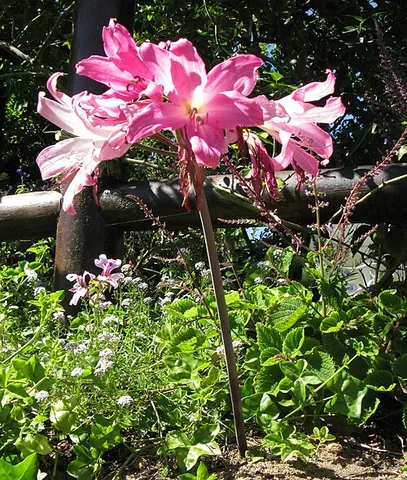

Noun (1)
scape (plural scapes)
Verb
scape (third-person singular simple present scapes, present participle scaping, simple past and past participle scaped)
- To escape (someone or something).
- No spring nor summer beauty hath such grace / As I have seen in one autumnal face. / Young beauties force our love, and that's a rape, / This doth but counsel, yet you cannot scape.c. 1600, John Donne, Elegy IX: The Autumnal, in Poems (1633)
- He (to beguile the ſimple) makes no bone / To ſvvear by God (for he beleeues ther's none); / His Svvord's his Title; and vvho ſcapes the ſame, / Shall haue a Piſtol, or a Poyſonie dram: […]1608, [Guillaume de Salluste] Du Bartas, translated by Iosuah Syluester, “[Du Bartas His Second Weeke, […]. David. […].] The Decay. The IIII. Book of the IIII. Day of the II. Week.”, in W. Salustius...
Noun (2)
scape (plural scapes)
- Escape.
- I spake of most disastrous chances, […] Of hairbreadth scapes in the imminent, deadly breach.c. 1603–1604 (date written), William Shakespeare, “The Tragedie of Othello, the Moore of Venice”, in Mr. William Shakespeares Comedies, Histories, & Tragedies […] (First Folio), London: […] Isaac...
- A means of escape; evasion.
- A freak; a slip; a fault; an escapade.
- Not pardoning so much as the scapes of error and ignorance.1643, J[ohn] M[ilton], The Doctrine and Discipline of Divorce: […], London: […] T[homas] P[aine] and M[atthew] S[immons] […], →OCLC
- A loose act of vice or lewdness.
- though I am not bookish, yyet I can read waiting-gentlewoman in the 'scapec. 1610–1611 (date written), William Shakespeare, “The Winters Tale”, in Mr. William Shakespeares Comedies, Histories, & Tragedies […] (First Folio), London: […] Isaac Iaggard, and Ed[ward] Blount...
Noun (3)
scape (plural scapes)
- The cry of the snipe when flushed.
- The snipe itself.
scape meaning in Tamil and Arabic
scape in Tamil
- தரைப்பூக்காம்பு, மண் வெடிப்பு
scape in Arabic
- leafless stalk
- سُوَيْقَة جِذْرِيَّة
Forms of scape
| Noun | |
|---|---|
| plural | scapes |
| Verb | |
| third-person singular present | scapes |
| present participle | scaping |
| past participle | scaped |
| past | scaped |
Origin of scape
From Latin scāpus, from Doric Greek σκᾶπος (skâpos). Doublet of native English shaft.
From Middle English scapen (whence also atscapen and ofscapen (“to escape”)), formed by aphesis from escapen, ascapen (“to escape”). Compare also Old French scapper, a variant of Old French eschaper, formed via similar process. Doublet of escape and scarper.
Probably imitative.
Words formed from scape
Words that rhyme with scape
21 more rhymesFewer rhymes
Questions about scape
- What does scape mean?
- Scape means a leafless stalk growing directly out of a root, bulb, or subterranean structure.
- What is scape in Tamil?
- Scape in Tamil is தரைப்பூக்காம்பு, மண் வெடிப்பு. See Scape meaning in Tamil.
- What part of speech is scape?
- Scape can be a noun or a verb.
- How do you pronounce scape?
- Scape is pronounced /ˈskeɪp/.
- What is the plural of scape?
- The plural of scape is scapes.
Words near scape in the dictionary
Source and license
Adapted from Wiktionary: scape (page history and authors); scape (Tamil Wiktionary) (page history and authors). Text available under the Creative Commons Attribution-ShareAlike 4.0 license. Word.ws reformatted the entry and added links. Wiktionary data of 2026-09-02.
Last updated:
Pronunciation audio from Wikimedia Commons, each file under its own free license: LL-Q1860 (eng)-Vealhurl-scape.wav.
Cite this entry: “scape.” Word.ws, https://word.ws/scape. Based on Wiktionary, CC BY-SA 4.0.