
tacrine
/ˈtæ.kɹiːn/
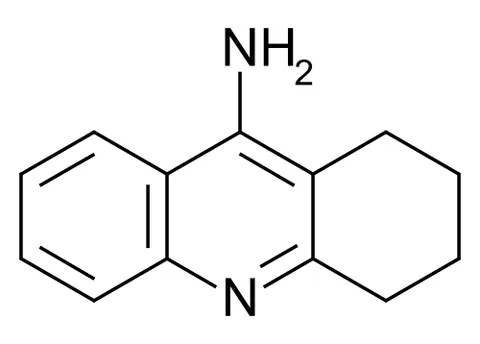
tacrine noun: a synthetic drug used in Alzheimer's disease to inhibit the breakdown of acetylcholine by cholinesterase and thereby enhance neurological function.

Noun
tacrine (uncountable)
- A synthetic drug used in Alzheimer's disease to inhibit the breakdown of acetylcholine by cholinesterase and thereby enhance neurological function.
- In the 1980s, Dr. Thal, a neurologist, helped lead successful clinical trials of tacrine, a cholinesterase inhibitor drug that was approved by the Food and Drug Administration in 1993.2007 February 8, Jeremy Pearce, “Leon J. Thal, Neurologist Who Led Study for Alzheimer’s Drugs, Dies at 62”, in New York Times
Origin of tacrine
From t(etrahydro) + acr(id)ine.
Questions about tacrine
- What does tacrine mean?
- Tacrine means a synthetic drug used in Alzheimer's disease to inhibit the breakdown of acetylcholine by cholinesterase and thereby enhance neurological function.
- What part of speech is tacrine?
- Tacrine is a noun.
- How do you pronounce tacrine?
- Tacrine is pronounced /ˈtæ.kɹiːn/.
Words near tacrine in the dictionary
Source and license
Adapted from Wiktionary: tacrine (page history and authors). Text available under the Creative Commons Attribution-ShareAlike 4.0 license. Word.ws reformatted the entry and added links. Wiktionary data of 2026-09-02.
Last updated:
Cite this entry: “tacrine.” Word.ws, https://word.ws/tacrine. Based on Wiktionary, CC BY-SA 4.0.