
thaw
UK/θɔː/
More pronunciations (1)Fewer pronunciations
Australia/θoː/
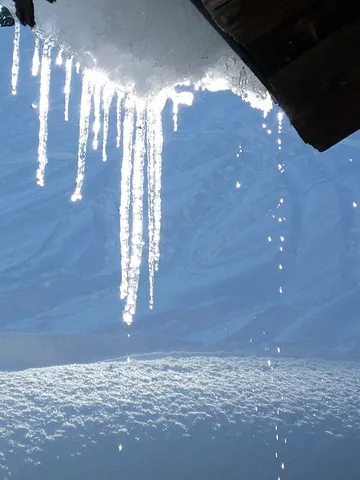
thaw verb: to gradually cause (something frozen, such as earth, ice, or snow) to melt or soften by raising the temperature.

Verb
thaw (third-person singular simple present thaws, present participle thawing, simple past thawed, past participle thawed or (rare, chiefly poetic or nonstandard) thawn)
- To gradually cause (something frozen, such as earth, ice, or snow) to melt or soften by raising the temperature.
- Sette the potte to the fyre to thawe the water: […]1530 July 28 (Gregorian calendar), Iohan Palsgraue [i.e., John Palsgrave], “The Table of Verbes”, in Lesclarcissement de la langue francoyse⸝ […], [London]: […] [Richard Pynson] fynnysshed by Iohan...
- Miſlike me not for my complexion, / The ſhadovved liuery of the burniſht ſunne, / To vvhom I am a neighbour,and neere bred. / Bring me the faireſt creature North-vvard borne, / VVhere Phœbus fire ſcarce thawes the yſicles, / And let vs make inciſion for your loue, / To proue vvhoſe blood is...c. 1596–1598 (date written), W[illiam] Shakespeare, The Excellent History of the Merchant of Venice. […] (First Quarto), [London]: […] J[ames] Roberts [for Thomas Heyes], published 1600, →OCLC, [Act...
- To gradually cause (someone or something that is very cold) to warm up.
- [M]y very lippes might freeze to my teeth, my tongue to the roofe of my mouth, my heart in my belly, ere I ſhould come by a fire to thavv me, […]c. 1590–1592 (date written), William Shakespeare, “The Taming of the Shrew”, in Mr. William Shakespeares Comedies, Histories, & Tragedies […] (First Folio), London: […] Isaac Iaggard, and Ed[ward]...
- I led him ben but any pingle, / And beekt him bravvly at my ingle; / Dighted his face, his handies thovv'd, / 'Til his young cheeks, like roſes, glovv'd.1728, Allan Ramsay, “An Anacreontick on Love”, in Poems, [Edinburgh?]: [s.n.], published 1760, →OCLC, page 278
- To cause (something inactive) to become active; also, to cause (something unfeeling) to have feelings.
- [N]ovv my loue is thavv'd, / VVhich like a vvaxen Image 'gainſt a fire / Beares no impreſſion of the thing it vvas.c. 1590–1591 (date written), William Shakespeare, “The Two Gentlemen of Verona”, in Mr. William Shakespeares Comedies, Histories, & Tragedies […] (First Folio), London: […] Isaac Iaggard, and...
- JENNY pretends an Errand Hame, / Young ROGER draps the reſt, / To vvhiſper out his melting Flame, / And thovv his Laſſie's Breaſt.1725, Allan Ramsay, “Prologue”, in The Gentle Shepherd; a Scots Pastoral Comedy, Edinburgh: […] Mr. Tho[mas] Ruddiman, for the author, […], and by Mr. Thomas Longman […], and Mr. James M‘Ewin, […]...
- To cause (someone or their feelings that are reserved or unfriendly) to become friendly or gentle.
- To cause (something rigid) to become limp.
- "Speak aloud, my lord," said Elizabeth, "and at farther distance, so please you—your breath thaws our ruff. What have you to ask of us?"1821 January 8, [Walter Scott], chapter XV, in Kenilworth; a Romance. […], volume III, Edinburgh: […] Archibald Constable and Co.; and John Ballantyne, […]; London: Hurst, Robinson, and Co., →OCLC...
- Of something frozen, such as earth, ice, or snow: to gradually melt or soften as a result of the temperature being raised.
- the ice thaws
- O that this too too ſallied [sullied] fleſh vvould melt, / Thavv and reſolue it ſelfe into a devve, […]c. 1599–1602 (date written), William Shakespeare, The Tragicall Historie of Hamlet, Prince of Denmarke: […] (Second Quarto), London: […] I[ames] R[oberts] for N[icholas] L[ing] […], published 1604...
- Synonyms:
- de-ice
- Of someone or something that is very cold: to gradually warm up.
- The bog's green harper, thawing from his sleep, / Twangs a hoarse note and tried a shortened leap; […]1850–1856, Oliver Wendell Holmes [Sr.], “[Songs in Many Keys (1849–1861). I. 1849–1856. Pictures from Occasional Poems (1850–1856)]. Spring.”, in The Poetical Works of Oliver Wendell Holmes...
- With the dummy pronoun it: of the weather: to become sufficiently warm for ice, snow, etc., to melt.
- It’s beginning to thaw.
- It Thaweth as the weather dothe whan the froſt breaketh⸝ […] It thaweth a pace: […]1530 July 28 (Gregorian calendar), Iohan Palsgraue [i.e., John Palsgrave], “The Table of Verbes”, in Lesclarcissement de la langue francoyse⸝ […], [London]: […] [Richard Pynson] fynnysshed by Iohan...
- Of a person or their feelings that are reserved or unfriendly: to become friendly or gentle.
- Her anger has thawed.
- The atmosphere at the meeting never really thawed.
- Of something inactive: to become active; also, of something unfeeling: to develop feelings.
Noun
thaw (plural thaws)
- A gradual melting or softening of something frozen (such as earth, ice, or snow) when the temperature rises; the transformation of something frozen into a fluid or semifluid.
- A gradual warming up of someone or something that is very cold.
- raging floods pursue their hasty thaw; / Our thaw was mild , the cold not chased away1660, [John] Dryden, Astraea Redux
- Of something inactive: an act of becoming active; also, of something unfeeling: an act of developing feelings.
- Of a person who is reserved or unfriendly: an act of becoming friendly or gentle.
- A period of relaxation of restrictions in a country or state; also, a period of increased friendliness or understanding, or of reduced hostility or tension in relations, between states.
- A period of weather warm enough to melt ice, snow, etc.
Proper noun (1) capitalized: Thaw
Thaw
- A river in South Wales which flows into the Bristol Channel at Aberthaw.
Proper noun (2) capitalized: Thaw
Thaw (plural Thaws)
- A surname from Burmese.
thaw meaning in Hindi, Tamil, Marathi and Urdu
thaw in Hindi
- (''intransitive'') of something frozen, such as earth, ice, or snow: to gradually melt or soften as a result of the temperature being raised
- पिघलना pighalnā
- gradual melting or softening of something frozen when the temperature rises
- द्रवण dravaṇ, गलन galan, हिमद्रवण himadravaṇ, हिमक्षरण himakṣaraṇ, पिघलाव pighlāv
thaw in Tamil
- உருகுகிற
thaw in Marathi
- (''transitive'') to gradually cause (something frozen, such as earth, ice, or snow) to melt or soften by raising the temperature
- विरघळणे virghaḷṇe
- (''intransitive'') of something frozen, such as earth, ice, or snow: to gradually melt or soften as a result of the temperature being raised
- विरघळणे virghaḷṇe
- gradual melting or softening of something frozen when the temperature rises
- हिमद्रवण himadravaṇ, हिमक्षरण himakṣaraṇ, वितळणे vitaḷṇe, वितळण vitḷaṇ
thaw in Urdu
- برف پگھلنا
More languagesFewer languages
- thaw in Malayalam
- അലിയിക്കുക, മഞ്ഞുരുകാൻ പാകത്തിന് ചൂടേറുക, സൗമ്യമാവുക
- thaw in Kannada
- ಕರಗಿಸು, ದ್ರವೀಕರಿಸು, ಸ್ನೇಹಪರನಾಗು, ಹೆಪ್ಪುಗಟ್ಟದಿರು
- thaw in Arabic
- أَذَابَ ʔaḏāba, ذَابَ ḏāba
- thaw in Thai
- ละลาย lá-laai
Examples of thaw in a sentence
- I weep for Adonais—he is dead! / O, weep for Adonais! though our tears / Thaw not the frost which binds so dear a head!1821, Percy B[ysshe] Shelley, Adonais: An Elegy on the Death of John Keats, […], Pisa, Italy: […] Didot; reprinted London: Noel Douglas...
- He carried his own low temperature always about with him; he iced his office in the dog-days; and didn't thaw it one degree at Christmas.1843 December 19, Charles Dickens, “Stave I. Marley’s Ghost.”, in A Christmas Carol. […], London: Chapman & Hall, […], →OCLC, pages 3–4:
- A further complication is that, in the winter, the ore arrives frozen stiff in the wagons and special arrangements have to be made for thawing it before it can be unloaded.1958 April, M. D. Greville, “Norway’s Most Northerly Railway”, in The Railway Magazine, London: Tothill Press, →ISSN, →OCLC, page 240:
- After I was lodged, thawed, and fed, I fell asleep, and slept for eighteen hours, without waking once; to my mind, it was a miracle that I ever woke again.1829, [Edward Bulwer-Lytton], “The Entrance into Petersburgh—a Recontre with an Inquisitive and Mysterious Stranger—Nothing Like Travel”...
Synonyms of thaw
Forms of thaw
| Verb | |
|---|---|
| third-person singular present | thaws |
| present participle | thawing |
| past | thawed |
| past participle | thawed |
| alternative form | thow |
| past participle poetic (nonstandard, rare) | thawn |
| second-person singular present (archaic) | thawest |
| second-person singular past (archaic) | thawedst |
| third-person singular present (archaic) | thaweth |
| Noun | |
| plural | thaws |
| Proper noun | |
| plural | Thaws |
Origin of thaw
The verb is derived from Middle English thawen, thowen (“to melt (ice, snow, etc.), thaw”), from Old English þāwian, *þāwan (“to thaw”), from Proto-West Germanic *þauwjan (“to melt, thaw; to digest; to dissolve”), from Proto-Germanic *þawjaną (“to thaw”), from Proto-Indo-European *teh₂- (“to melt; to flow, stream”). The noun is derived from Late Middle English thawe, thowe (“melting of ice, snow, etc., thawing”), from thawen, thowen (verb) (see above). cognates * Dutch dooien (“to thaw”) * German tauen (“to thaw”) * German Low German deien (“to thaw”) * Icelandic þeyja (“to thaw”) * Saterland Frisian daie, dauje (“to thaw”) * Swedish töa (“to thaw”) * West Frisian teie (“to thaw”)
Anglicized from Welsh Ddawan, ddaw.
Borrowed from Burmese သော် (sau). It is also an English and Scottish surname, but without a certain origin.
Words formed from thaw
Phrases with thaw
Words that rhyme with thaw
48 more rhymesFewer rhymes
Questions about thaw
- What does thaw mean?
- Thaw means to gradually cause (something frozen, such as earth, ice, or snow) to melt or soften by raising the temperature.
- What is thaw in Hindi?
- Thaw in Hindi is पिघलना (pighalnā), द्रवण (dravaṇ), गलन (galan). See Thaw meaning in Hindi.
- How do you use thaw in a sentence?
- I weep for Adonais—he is dead! / O, weep for Adonais! though our tears / Thaw not the frost which binds so dear a head!
- What part of speech is thaw?
- Thaw can be a verb, a noun or a proper noun.
- How do you pronounce thaw?
- Thaw is pronounced /θɔː/ (UK).
- What is the past tense of thaw?
- The past tense of thaw is thawed.
Words near thaw in the dictionary
Source and license
Adapted from Wiktionary: thaw (page history and authors); Thaw (page history and authors); thaw (Tamil Wiktionary) (page history and authors); thaw (Urdu Wiktionary) (page history and authors); thaw (Malayalam Wiktionary) (page history and authors); thaw (Kannada Wiktionary) (page history and authors). Text available under the Creative Commons Attribution-ShareAlike 4.0 license. Word.ws reformatted the entry and added links. Wiktionary data of 2026-09-02.
Last updated:
Pronunciation audio from Wikimedia Commons, each file under its own free license: En-us-thaw.ogg.
Cite this entry: “thaw.” Word.ws, https://word.ws/thaw. Based on Wiktionary, CC BY-SA 4.0.