
Vayu
Vayu proper noun: the god of wind in Hindu and Vedic religion. A primary deity, father of Bhima and the spiritual father of Lord Hanuman.
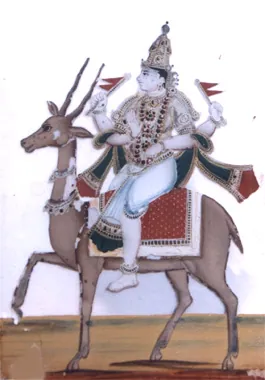

Proper noun
Vayu
Vayu meaning in Hindi, Tamil, Marathi and Urdu
Vayu in Hindi
- Indo-Iranian deity
- वायु vāyu
Vayu in Tamil
- Indo-Iranian deity
- வாயு vāyu
Vayu in Marathi
- Indo-Iranian deity
- वायु vāyu
Vayu in Urdu
- Indo-Iranian deity
- وایو vāyū
More languagesFewer languages
- Vayu in Bengali
- বায়ু baẏu
- Vayu in Telugu
- వాయువు vāyuvu
- Vayu in Malayalam
- വായു vāyu
- Vayu in Kannada
- ವಾಯು vāyu
- Vayu in Punjabi
- ਵਾਯੂ vāyū
- Vayu in Gujarati
- વાયુ vāyu
- Vayu in Odia
- ବାୟୁ bāyu
- Vayu in Sanskrit
- वायु Vāyú
- Vayu in Assamese
- বায়ু bayu
- Vayu in Indonesian
- Bayu
- Vayu in Persian
- وای vây
- Vayu in Thai
- พระพาย
- Vayu in Vietnamese
- phong thiên
Forms of Vayu
| alternative form | Vaayu |
|---|---|
| alternative form | Vāyu |
Origin of Vayu
Borrowed from Sanskrit वायु (Vāyú).
Questions about Vayu
- What does Vayu mean?
- Vayu means the god of wind in Hindu and Vedic religion. A primary deity, father of Bhima and the spiritual father of Lord Hanuman.
- What is Vayu in Hindi?
- Vayu in Hindi is वायु (vāyu). See Vayu meaning in Hindi.
- What part of speech is Vayu?
- Vayu is a proper noun.
Words near Vayu in the dictionary
Source and license
Adapted from Wiktionary: Vayu (page history and authors). Text available under the Creative Commons Attribution-ShareAlike 4.0 license. Word.ws reformatted the entry and added links. Wiktionary data of 2026-09-02.
Last updated:
Cite this entry: “Vayu.” Word.ws, https://word.ws/vayu. Based on Wiktionary, CC BY-SA 4.0.