
mass
UK/mæs/
More pronunciations (1)Fewer pronunciations
British/mas/
mass noun: a quantity of matter cohering so as to make one body, or an aggregation of particles or things which collectively make one body or quantity, usually of considerable size.
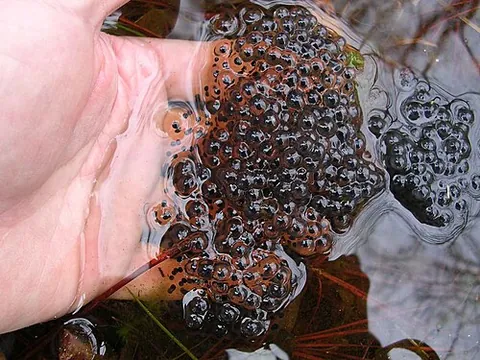

Noun (1)
mass (countable and uncountable, plural masses)
- A quantity of matter cohering so as to make one body, or an aggregation of particles or things which collectively make one body or quantity, usually of considerable size.
- And if it were not for theſe Principles the Bodies of the Earth, Planets, Comets, Sun, and all things in them would grow cold and freeze, and become inactive Maſſes ; […].1718 [1704], Isaac Newton, Opticks, 2nd edition
- […] and because a deep mass of continual sea is slower stirred to rage.1821 [1582], George Buchanan, The History of Scotland, from the Earliest Accounts of that Nation, to the Reign of King James VI, volume 1 (in English), translation of Rerum Scoticarum Historia by an...
- Precious metal, especially gold or silver.
- Right in the midst the Goddesse selfe did stand / Upon an altar of some costly masse […].1596, Edmund Spenser, The Faerie Queene, IV.10
- A measure of the inertia of a mass of matter, one of four fundamental properties of matter. SI unit of mass: kilogram.
- A medicinal substance made into a cohesive, homogeneous lump, of consistency suitable for making pills.
- blue mass
- A palpable or visible abnormal globular structure.
- Near-synonym: lump
- Synonyms:
- lump
- Excess body mass, especially in the form of muscle hypertrophy.
- After all, muscle maniacs go "ga ga" over mass no matter how it's presented.1988, Steve Holman, “Christian Conquers Columbus”, in Ironman, volume 47, number 6, pages 28–34
- A large quantity; a sum.
- […]he hath discovered to me the way to five or six of the richest mines which the Spaniard hath, and whence all the mass of gold that comes into Spain in effect is drawn.1829, Sir Walter Raleigh, The Works of Sir Walter Ralegh, Kt, volume VIII
- For though he had spent a huge mass of treasure in transporting his army, […].1869, Alexander George Richey, Lectures on the History of Ireland: Down to A. D. 1534, page 204
- Bulk; magnitude; body; size.
- Witness this army of such mass and charge / Led by a delicate and tender prince,c. 1599-1601, William Shakespeare, The Tragedy of Hamlet, Prince of Denmark, act 4, scene 4
- The principal part; the main body.
- Night closed upon the pursuit, and aided the mass of the fugitives in their escape.1881, Thucydides, translated by Benjamin Jowett, Thucydides translated into English, volume 1, page 310
- A large body of individuals, especially persons.
- The mass of spectators didn't see the infraction on the field.
- A mass of ships converged on the beaches of Dunkirk.
- The lower classes of persons.
- The masses are revolting.
Verb (1)
mass (third-person singular simple present masses, present participle massing, simple past and past participle massed)
- To form or collect into a mass; to form into a collective body; to assemble.
- They would unavoidably mix up the whole of these declarations, and mass them together, although the Judge might direct the Jury not to do so.1829, William Burke, John Macnee, Trial of William Burke and Helen M'Dougal: Before the High Court of Judiciary, William Hare
- Every bend on the hill had acted like a funnel to mass them together in this peculiar way.1857, Edward Henry Nolan, The Illustrated History of the War against Russia, Parts 93-111, page 432
Adjective
mass (not generally comparable, comparative masser, superlative massest)
- Involving a mass of things; concerning a large quantity or number.
- There is evidence of mass extinctions in the distant past.
- The national liberation movement had not yet developed to a sufficiently mass scale.1988, V. V. Zagladin, Vitaly Baskakov, International Working Class and Communist Movement: Historical Record, 1830s to Mid-1940s, page 236
- Involving a mass of people; of, for, or by the masses.
- Mass unemployment resulted from the financial collapse.
- Every agency is sold on use of mass media today — or at least, it thinks it is — and what can be "masser" than television?1958, Child Welfare, volume 37, page 2
Noun (2)
mass (plural masses)
- The Eucharist, now especially in Roman Catholicism.
- Celebration of the Eucharist.
- The main kind of church service, in some denominations.
- She went to mass every Sunday for many years, and when she retired, she took to going on some weekdays, too.
- The sacrament of the Eucharist.
- A musical setting of parts of the mass.
Verb (2)
mass (third-person singular simple present masses, present participle massing, simple past and past participle massed)
- To celebrate mass.
- massing priests[1594], Richard Hooker, edited by J[ohn] S[penser], Of the Lawes of Ecclesiastical Politie, […], London: […] Iohn Windet, […], →OCLC, (please specify the page)
Noun (3) capitalized: Mass
IPA/ˈmæs/
Mass (countable and uncountable, plural Masses)
- The principal liturgical service of the Church, encompassing both a scripture service (Liturgy of the Word) and a eucharistic service (Liturgy of the Eucharist), which includes the consecration and oblation (offering) of the host and wine.
- A similar ceremony offered by a number of Christian churches.
- A musical composition set to portions, or all, of the Mass.
Proper noun capitalized: Mass
IPA/ˈmæs/
Mass
- Abbreviation of Massachusetts.
- the Mass Pike
- Alternative form of Mas.
mass meaning in Hindi, Tamil, Marathi and Urdu
mass in Hindi
- physics: quantity of matter which a body contains
- द्रव्यमान dravyamān
mass in Tamil
- வெகுஜன, வெகுஜனம்
mass in Marathi
- वस्तुमान, द्रव्यमान, वस्तुमान करणे
mass in Urdu
- physics: quantity of matter which a body contains
- کمیت kamiyat
More languagesFewer languages
- mass in Bengali
- ভর bhor
- mass in Telugu
- మాస్, ద్రవ్యరాశి
- mass in Malayalam
- പിണ്ഡം piṇḍaṁ, ദ്രവ്യമാനം dravyamānaṁ, കൂട്ട kūṭṭa
- mass in Kannada
- ದ್ರವ್ಯರಾಶಿ
- mass in Punjabi
- ਪੁੰਜ, ਪੁੰਜ ਕਰਨ ਲਈ
- mass in Odia
- ମାସ୍
- mass in Nepali
- द्रव्यमान
- mass in Tagalog
- bugat, misa
- mass in Arabic
- كُتْلَة kutla, وَزْن wazn, قُدَّاس quddās
- mass in Malay
- jisim, massa, berat
- mass in Indonesian
- misa
- mass in Persian
- جرم jerm, توده tude
- mass in Thai
- มวล muuan, มวลชน muuan-chon
- mass in Vietnamese
- khối lượng, thánh lễ
- mass in Myanmar
- ဒြပ်ထု draphtu.
Examples of mass in a sentence
- Generals gathered in their masses / Just like witches at black masses1970, “War Pigs”, in Paranoid, performed by Black Sabbath:
- Where there is too great a repetition of forms, light and shade will break them up or mass them together.1869, H. P. Robinson, Pictorial Effect in Photography: Being Hints on Composition and Chiariscuro for Photographers:
- The air arms did more than provide the warring nations with individual heroes, for their individual exploits occurred within the context of an increasingly mass aerial effort in a war of the masses.2010, John Horne, A Companion to World War I, page 159:
- Undoubtedly this is the case; at least it is "masser" than in Pinchot's time.1974, Edward Abraham Cohn, The Political Economy of Environmental Enhancement, page 91:
Synonyms of mass
Forms of mass
| Noun | |
|---|---|
| plural | masses |
| plural | Masses |
| Verb | |
| third-person singular present | masses |
| present participle | massing |
| past participle | massed |
| past | massed |
| Adjective | |
| comparative | masser |
| superlative | massest |
Origin of mass
In late Middle English (circa 1400) as masse in the sense of "lump, quantity of matter", from Anglo-Norman masse, in Old French attested from the 11th century, via late Latin massa (“lump, dough”), from Ancient Greek μᾶζα (mâza, “barley-cake, lump (of dough)”). The Greek noun may be derived from the verb μάσσω (mássō, “to knead”), ultimately from a Proto-Indo-European *maǵ- (“to oil, knead”), although this is uncertain. Doublet of masa. The sense of "a large number or quantity" arises circa 1580. The scientific sense is from 1687 (as Latin massa) in the works of Isaac Newton, with the first English use (as mass) occurring in 1704.
From Middle English messe, masse, from Old English mæsse (“the mass, church festival”) and Old French messe, from Vulgar Latin *messa (“Eucharist, dismissal”), from Late Latin missa, noun use of feminine past participle of classical Latin mittere (“to send”), from ite, missa est (“go, (the assembly) is dismissed”), reanalyzed as "go, [that] is the missa", last words of the Roman Rite of the Catholic Church. Compare Dutch mis (“mass”), German Messe (“mass”), Danish messe (“mass”), Swedish mässa (“mass; expo”), Icelandic messa (“mass”). More at mission.
From Middle English messe, from Old English mæsse and Old French messe, both from Late Latin missa, from Latin mittō (“to send, dismiss”), compare French messe. In the ancient churches, the public services at which the catechumens were permitted to be present were called missa catechumenorum, ending with the reading of the Gospel. Then they were dismissed with the words: "Ite, missa est", the congregation is dismissed. After that the sacrifice proper began. At its close the same words were said to those who remained. So the word gave the name of Mass to the sacrifice in the Catholic Church. Compare Christmas, Lammas, missal. Doublet of missa.
Words formed from mass
- dry mass
- Fore-Mass
- High Mass
- Low Mass
- Mass bell
- Red Mass
- Traditional Latin Mass
- active gravitational mass
- airmass
- air mass
- atomic mass
- biomass
- blue mass
- bodymass
- center of mass
- centre of mass
- conservation of mass
- coronal mass ejection
- critical mass
- Earth mass
- gravitational mass
- inertial mass
- Jupiter mass
- landmass
- land mass
- law of conservation of mass
- low mass star
- mass balance
- mass center
- mass copper
- mass defect
- mass density
- mass distribution
- mass driver
- mass effect
- mass energy
- mass-energy
- mass finishing
- mass flow
- mass fraction
- mass gainer
- massless
- mass line
- mass man
- mass meristem
- mass monster
- mass noun
- mass number
- mass of maneuver
- mass register
- mass shift
- mass spec
- mass spectrograph
- mass spectrometer
- mass spectrometry
- mass spectrum
- mass transfer
- mass wasting
- mineralomass
- molar mass
Phrases with mass
- en mass
- in mass
- on mass
- wet mass
- body mass
- Mass card
- mass spam
- rest mass
- black mass
- Mass bells
- Mass cards
- mass flows
139 more phrasesFewer phrases
- mass grave
- mass media
- mass nouns
- mass specs
- mass start
- point mass
- solar mass
- mass burial
- mass debate
- mass graves
- mass market
- mass medium
- mass murder
- mass priest
- mass report
- mass shifts
- mass starts
- parody mass
- Planck mass
- solemn mass
- votive mass
- levy in mass
- mass burials
- mass culture
- mass debated
- mass debates
- mass defects
- mass drivers
- mass effects
- mass funeral
- mass gainers
- mass markets
- mass murders
- mass numbers
- mass priests
- mass reports
- mass shooter
- mass spectra
- mass storage
- mass suicide
- mass transit
- reduced mass
- requiem mass
- thermal mass
- working mass
- mass balances
- mass debating
- mass energies
- mass function
- mass funerals
- mass hysteria
- mass marketed
- mass monsters
- mass murderer
- mass reported
- mass shooters
- mass shooting
- mass suicides
- mass transits
- midnight mass
- mulberry mass
- reaction mass
- levies in mass
- low mass stars
- mass densities
- mass favourite
- mass fractions
- mass marketing
- mass meristems
- mass murderers
- mass registers
- mass reporting
- mass shootings
- molecular mass
- body mass index
- centers of mass
- centres of mass
- inner cell mass
- mass difference
- mass extinction
- mass finishings
- mass production
- mass registered
- mass starvation
- paraphrase mass
- Tridentine Mass
- atomic mass unit
- mass destruction
- mass differences
- mass extinctions
- mass registering
- subcritical mass
- atomic mass units
- body mass indexes
- body mass indices
- Canon of the Mass
- mass haul diagram
- mass surveillance
- relativistic mass
- tuned mass damper
- atomic mass number
- mass communication
- mass distributions
- mass haul diagrams
- mass spectrographs
- mass spectrometers
- supercritical mass
- tuned mass dampers
- very low mass star
- atomic mass numbers
- average atomic mass
- mass communications
- mass spectrometries
- mass transportation
- very low mass stars
- relative atomic mass
- initial mass function
- mass extinction event
- coronal mass ejections
- mass extinction events
- mass vaccination centre
- stellar mass black hole
- mass vaccination centres
- stellar mass black holes
- unified atomic mass unit
- probability mass function
- unified atomic mass units
- weapon of mass disruption
- passive gravitational mass
- probability mass functions
- weapon of mass destruction
- weapons of mass disruption
- weapons of mass destruction
- end-Triassic mass extinction
- intermediate mass black hole
- accelerator mass spectrometry
- intermediate mass black holes
- secondary ion mass spectrometry
- Permian-Triassic mass extinction
Words that rhyme with mass
39 more rhymesFewer rhymes
- Corinthian brass
- cuirass
- en masse
- frass
- Lefkas
- madras
- morass
- Pendergrass
- volte-face
- wass
- world-class
- adder's grass
- alas
- asse
- bamboo grass
- chasse
- das
- dass
- dogtooth grass
- flyaway grass
- hey pass
- Inner Brass
- khalass
- khalassed
- lac
- lift pass
- low mass
- Neptune grass
- outclass
- Outer Brass
- Ratass
- rockmass
- saas
- shass
- tass
- tasse
- thass
- wassed
- wrasse
Questions about mass
- What does mass mean?
- Mass means a quantity of matter cohering so as to make one body, or an aggregation of particles or things which collectively make one body or quantity, usually of considerable size.
- What is mass in Hindi?
- Mass in Hindi is द्रव्यमान (dravyamān). See Mass meaning in Hindi.
- How do you use mass in a sentence?
- Generals gathered in their masses / Just like witches at black masses
- What part of speech is mass?
- Mass can be a noun, a verb, an adjective or a proper noun.
- How do you pronounce mass?
- Mass is pronounced /mæs/ (UK).
- What is the plural of mass?
- The plural of mass is masses.
Words near mass in the dictionary
Source and license
Adapted from Wiktionary: mass (page history and authors); Mass (page history and authors); mass (Tamil, IndicTrans2 machine translation) (model and license); mass (Marathi, IndicTrans2 machine translation) (model and license); mass (Telugu, IndicTrans2 machine translation) (model and license); mass (Kannada, IndicTrans2 machine translation) (model and license); mass (Punjabi, IndicTrans2 machine translation) (model and license); mass (Odia, IndicTrans2 machine translation) (model and license); mass (Nepali, IndicTrans2 machine translation) (model and license). Text available under the Creative Commons Attribution-ShareAlike 4.0 license. Word.ws reformatted the entry and added links. Wiktionary data of 2026-09-02.
Last updated:
Pronunciation audio from Wikimedia Commons, each file under its own free license: en-us-mass.ogg.
Cite this entry: “mass.” Word.ws, https://word.ws/mass. Based on Wiktionary, CC BY-SA 4.0.