
ear
/ˈɛː//ˈɪə̯/
ear noun: the organ of hearing, consisting of the pinna or auricle, auditory canal, eardrum, malleus, incus, stapes and cochlea.
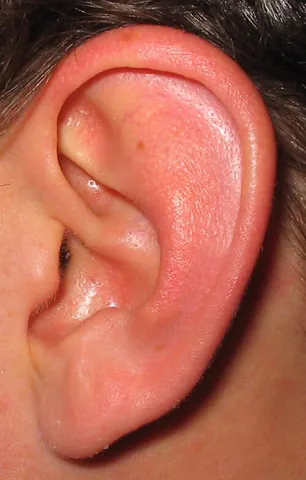

Noun (1)
ear (plural ears)
- The organ of hearing, consisting of the pinna or auricle, auditory canal, eardrum, malleus, incus, stapes and cochlea.
- The external part of the organ of hearing, the auricle.
- Judge Short had gone to town, and Farrar was off for a three days' cruise up the lake. I was bitterly regretting I had not gone with him when the distant notes of a coach horn reached my ear, and I descried a four-in-hand winding its way up the inn road from the direction of Mohair.1897 December (indicated as 1898), Winston Churchill, chapter IV, in The Celebrity: An Episode, New York, N.Y.: The Macmillan Company; London: Macmillan & Co., Ltd., →OCLC
- A police informant.
- No I'm not kidding, and if you don't give it to me I'll let it out that you’re an ear.1976, Stirling Silliphant, Dean Riesner, Gail Morgan Hickman, The Enforcer
- The sense of hearing; the perception of sounds; skill or good taste in listening to music.
- a good ear for music
- songs[…]not all ungrateful to thine ear1850, [Alfred, Lord Tennyson], “(please specify |part=Prologue or Epilogue, or |canto=I to CXXIX)”, in In Memoriam, London: Edward Moxon, […], →OCLC
- The privilege of being kindly heard; favour; attention.
- Dionysius[…]would give no ear to his suit.1625, Francis [Bacon], Apophthegmes New and Old. […], London: […] Hanna Barret, and Richard Whittaker, […], →OCLC
- Friends, Romans, countrymen, lend me your ears.1599 (first performance), William Shakespeare, “The Tragedie of Iulius Cæsar”, in Mr. William Shakespeares Comedies, Histories, & Tragedies […] (First Folio), London: […] Isaac Iaggard, and Ed[ward]...
- That which resembles in shape or position the ear of an animal; a prominence or projection on an object, usually for support or attachment; a lug; a handle; a foot-rest or step of a spade or a similar digging tool.
- the ears of a tub, skillet, or dish; The ears of a boat are outside kneepieces near the bow.
- When they got as far as the little valley north of Oppenhagen - where the land-slip took place - he thought he sat between the ears of a bucket; but shortly this vanished also, and it was only then he really came to himself again.1886, Peter Christen Asbjørnsen, translated by H.L. Brækstad, Folk and Fairy Tales, page 291
- An acroterium.
- A crossette.
- A space to the left or right of a publication's front-page title, used for advertising, weather, etc.
- In journalism, ears flank the title as boxes in the left and right top corners of a publication (generally a newspaper).2006, Richard Weiner, Charles M. Levine, The Skinny about Best Boys, Dollies, Green Rooms, Leads, and Other Media Lingo, page 26
- A curled ridge in the crust of a loaf of bread where the dough was slashed before going into the oven and expands during baking.
- The outer panels or flaps (protrusions) of a diaper upon which the fasteners are located, which are fastened around the wearer's waist.
- A path whose endpoints may coincide but in which otherwise there are no repetitions of vertices or edges.
Verb (1)
ear (third-person singular simple present ears, present participle earing, simple past and past participle eared)
- To take in with the ears; to hear.
- I eared her language.1613–1614 (date written), John Fletcher, William Shak[e]speare, The Two Noble Kinsmen: […], London: […] Tho[mas] Cotes, for Iohn Waterson; […], published 1634, →OCLC, (please specify the page)...
- To hold by the ears.
- Sometimes, the helper eared the horse down; and sometimes he used a blindfold.1964, John Hendrix, If I Can Do It Horseback: A Cow-Country Sketchbook, page 40
- The general technique was to rope the horse around the neck, and, while one or two men eared the horse down (held him by the ears), the rider saddled the animal and stepped above him.2013, Fay E. Ward, The Cowboy at Work
Noun (2)
ear (plural ears)
- The fruiting body of a grain plant.
- He is in the fields, harvesting ears of corn.
Verb (2)
ear (third-person singular simple present ears, present participle earing, simple past and past participle eared)
- To put forth ears in growing; to form ears, as grain does.
- This corn ears well.
Verb (3)
ear (third-person singular simple present ears, present participle earing, simple past and past participle eared)
- To plough.
- That power I have, discharge; and let them go
To ear the land that hath some hope to grow,
For I have none.1595 December 9 (first known performance), William Shakespeare, “The Life and Death of King Richard the Second”, in Mr. William Shakespeares Comedies, Histories, & Tragedies: Published According to... - And the elders of that city shall bring down the heifer unto a rough valley, which is neither eared nor sown, and shall strike off the heifer's neck there in the valley1611, The Holy Bible, […] (King James Version), London: […] Robert Barker, […], →OCLC, Deuteronomy 21:4
- That power I have, discharge; and let them go
Noun (3) capitalized: EAR
EAR (plural EARs)
- Initialism of Enterprise Application Archive, a file format used to package Java applications.
- Initialism of estimated average requirements.
ear meaning in Hindi, Tamil, Marathi and Urdu
ear in Hindi
- organ of hearing
- कान kān
ear in Tamil
- organ of hearing
- காது kātu, செவி cevi
ear in Marathi
- organ of hearing
- कान kān
ear in Urdu
- organ of hearing
- کان kān
More languagesFewer languages
- ear in Bengali
- কান kan, কর্ণ korno
- ear in Telugu
- చెవి cevi, కంకి kaṅki
- ear in Malayalam
- ചെവി cevi, കർണ്ണം kaṟṇṇaṁ
- ear in Kannada
- ಕಿವಿ kivi
- ear in Punjabi
- ਕੰਨ kann, کَنّ kann
- ear in Gujarati
- કાન kān
- ear in Odia
- କାନ kāna
- ear in Sanskrit
- कर्ण karṇa, श्रवण śravaṇa, श्रुति śruti
- ear in Sinhala
- කන kana
- ear in Assamese
- কাণ kan
- ear in Nepali
- कान kān
- ear in Pashto
- غوږ ǧwaẓ
- ear in Tagalog
- tainga, puso, uhay
- ear in Arabic
- أُذُن ʔuḏun, أُذْن ʔuḏn, سُنْبُلَة sunbula, حَرَثَ ḥaraṯa
- ear in Malay
- telinga, kuping
- ear in Indonesian
- telinga, kuping, bulir
- ear in Persian
- سنبله sonbole, خوشه xuše
- ear in Thai
- หู hǔu
- ear in Vietnamese
- tai, bông
- ear in Myanmar
- နား na:
- Sindhi
- ڪَنُ kanu
- Dhivehi
- ކަންފަތް kan̊fat̊
Examples of ear in a sentence
- Your definition of "elephant" needs to be more precise than "a big animal with large ears".
- The dog's ears pricked up at the sound of a whistle.
- He breathed the words into her ear, but she understood them all.
Synonyms of ear
Forms of ear
| Noun | |
|---|---|
| plural | ears |
| alternative form | ere |
| plural | EARs |
| alternative form (archaic) | eare |
| Verb | |
| third-person singular present | ears |
| present participle | earing |
| past participle | eared |
| past | eared |
Origin of ear
From Middle English eare, eere, ere, eyr, ire, yere, ȝhere, from Old English ēare (“ear”), from Proto-West Germanic *auʀā, from the voiced Verner alternant of Proto-Germanic *ausô (“ear”), from Proto-Indo-European *h₂ṓws (“ear”), from *h₂ew- (“to perceive”). Cognates Cognate with North Frisian uaar, uar, uur (“ear”), Saterland Frisian Oor (“ear”), West Frisian ear (“ear”), Alemannic German Oor (“ear”), Central Franconian Uhr (“ear”), Dutch oor (“ear”), German Ohr (“ear”), Low German Ohr, Oor, Or, our, Ur (“ear”), Luxembourgish Ouer (“ear”), Vilamovian ür (“ear”), Yiddish אויער (oyer, “ear”), Danish and Norwegian Bokmål øre (“ear”), Elfdalian ära (“ear”), Faroese oyra (“ear”), Icelandic eyra (“ear”), Jamtish ǿre (“ear”), Norwegian Nynorsk øra, øre, øyra, øyre (“ear”), Swedish öra (“ear”), Gothic 𐌰𐌿𐍃𐍉 (ausō, “ear”); also Old Irish áu, ó (“ear”), Latin auris, ōris (“ear”), Greek αφτί (aftí), αυτί (aftí, “ear”), Albanian vesh (“ear; handle”), Latvian auss (“ear”), Lithuanian ausis (“ear”), Belarusian ву́ха (vúxa, “ear”), Bulgarian ухо́ (uhó, “ear”), Czech, Polish, Silesian, and Slovak ucho (“ear”), Kashubian ùchò (“ear”), Lower Sorbian and Upper Sorbian wucho (“ear”), Macedonian уво...
From Middle English er, ere, from Old English ēar (Northumbrian dialect æhher), from Proto-West Germanic *ahaʀ, from Proto-Germanic *ahaz, from Proto-Indo-European *h₂eḱ- (“sharp”). Cognate with Dutch aar, German Ähre, and West Frisian ier; also Latin acus (“needle; husk”), Tocharian B āk (“ear, awn”), and Old Church Slavonic ость (ostĭ, “wheat spike, sharp point”). More at edge.
From Middle English eren, from Old English erian, from Proto-West Germanic *arjan, from Proto-Germanic *arjaną, from Proto-Indo-European *h₂erh₃- (“to plough”).
Words formed from ear
- corn earworm
- earshoot
- earable
- ass's-ear abalone
- bangle ear
- bat ear
- bear's ear
- behind the ear
- bend somebody's ear
- bend someone's ear
- between the ears
- bionic ear
- blow it out one's ear
- blue ear disease
- blue-ear disease
- blue-ear pig disease
- bunny ear cactus
- burnt ear
- button ear
- by ear
- cat's ear
- cauliflower ear
- closed-ear
- close-ear
- cloud ear
- crop-ear
- cuff on the ear
- cute as a bug's ear
- devil's ear
- dog ear
- dog-ear
- dog's-ear
- Dumbo ear
- earache
- ear-achingly
- earage
- earal
- earball
- earbanger
- earbash
- earbasher
- ear beer
- ear bob
- earbob
- earbone
- ear bone
- ear-bud
- ear bud
- earbud
- ear canal
- ear candle
- ear candling
- ear candy
- earcap
- ear chair
- earclip
- ear cockle
- earcockle
- earcon
- ear coning
Phrases with ear
- ear tag
- ear wax
- sea ear
- tin ear
- ear ball
- ear bobs
- ear buds
- ear drop
- ear drum
- ear hair
- ear lobe
- ear muff
157 more phrasesFewer phrases
- ear rape
- ear tags
- ear tuft
- ear worm
- gave ear
- give ear
- glue ear
- rose ear
- tree ear
- wood ear
- ear balls
- ear bones
- ear drops
- ear drums
- ear gauge
- ear hairs
- ear level
- ear lobes
- ear muffs
- ear prick
- ear range
- ear raped
- ear rapes
- ear rocks
- ear shell
- ear spoon
- ear tufts
- ear worms
- given ear
- gives ear
- inner ear
- jelly ear
- Jew's ear
- knife ear
- outer ear
- pig's ear
- thick ear
- ear canals
- ear chairs
- ear dagger
- ear finger
- ear gauges
- ear hustle
- ear jacket
- ear player
- ear pricks
- ear raping
- ear shells
- ear spoons
- ear toilet
- ear tunnel
- giving ear
- golden ear
- hare's ear
- hart's ear
- in the ear
- lamb's ear
- lion's ear
- middle ear
- mind's ear
- minds' ear
- mule's ear
- rabbit ear
- wooden ear
- ear candles
- ear daggers
- ear fatigue
- ear fingers
- ear hustled
- ear hustles
- ear jackets
- ear players
- ear speaker
- ear toilets
- ear trumpet
- ear tunnels
- lend an ear
- lent an ear
- Midas's ear
- play by ear
- ear defender
- ear hustling
- ear piercing
- ear plucking
- ear speakers
- ear training
- ear trumpets
- elephant ear
- external ear
- internal ear
- lends an ear
- plays by ear
- roasting ear
- surfer's ear
- ear defenders
- ear piercings
- played by ear
- swimmer's ear
- elephant's ear
- elephants' ear
- helicopter ear
- lending an ear
- playing by ear
- tickle the ear
- Wildermuth ear
- rabbit ear mite
- tickled the ear
- tickles the ear
- turn a deaf ear
- up on one's ear
- cuffs on the ear
- out on one's ear
- rabbit ear mites
- red ear syndrome
- tickling the ear
- turns a deaf ear
- Wildermuth's ear
- ear to the ground
- elephant ear tree
- flea in one's ear
- green ear disease
- had someone's ear
- has someone's ear
- turned a deaf ear
- bent someone's ear
- Bohemian ear spoon
- fleas in one's ear
- have someone's ear
- turning a deaf ear
- bends someone's ear
- Bohemian ear spoons
- made a pig's ear of
- make a pig's ear of
- grin from ear to ear
- having someone's ear
- makes a pig's ear of
- musical ear syndrome
- bending someone's ear
- grins from ear to ear
- making a pig's ear of
- smile from ear to ear
- talk out of one's ear
- smiled from ear to ear
- smiles from ear to ear
- talk someone's ear off
- talks out of one's ear
- grinned from ear to ear
- had the wolf by the ear
- has the wolf by the ear
- listen with half an ear
- pour honey in one's ear
- smiling from ear to ear
- talked out of one's ear
- talks someone's ear off
- get out of someone's ear
- got out of someone's ear
- grinning from ear to ear
Words that rhyme with ear
48 more rhymesFewer rhymes
- career
- fear
- here
- steer
- appear
- cavalier
- cheer
- leer
- pioneer
- queer
- volunteer
- adhere
- beer
- chandelier
- deer
- financier
- pier
- premier
- privateer
- sheer
- veer
- vizier
- austere
- bombardier
- brigadier
- cashmere
- commandeer
- disappear
- endear
- grenadier
- interfere
- mere
- mountaineer
- peer
- sear
- tear
- tier
- unclear
- arrear
- bier
- blear
- cameleer
- cashier
- chiffonier
- cohere
- fakir
- farseer
- frontier
Questions about ear
- What does ear mean?
- Ear means the organ of hearing, consisting of the pinna or auricle, auditory canal, eardrum, malleus, incus, stapes and cochlea.
- What is ear in Hindi?
- Ear in Hindi is कान (kān). See Ear meaning in Hindi.
- What part of speech is ear?
- Ear can be a noun or a verb.
- How do you pronounce ear?
- Ear is pronounced /ˈɪə̯/ (UK).
- What is the plural of ear?
- The plural of ear is ears.
Words near ear in the dictionary
Source and license
Adapted from Wiktionary: ear (page history and authors); EAR (page history and authors). Text available under the Creative Commons Attribution-ShareAlike 4.0 license. Word.ws reformatted the entry and added links. Wiktionary data of 2026-09-02.
Last updated:
Pronunciation audio from Wikimedia Commons, each file under its own free license: En-uk-ear.ogg, En-ca-ear.ogg, En-us-ear.ogg.
Cite this entry: “ear.” Word.ws, https://word.ws/ear. Based on Wiktionary, CC BY-SA 4.0.