
march
UK/mɑːtʃ//mɑɹt͡ʃ/
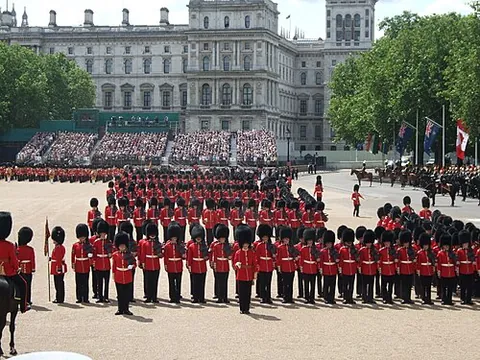
march noun: a formal, rhythmic way of walking, used especially by soldiers, by bands, and in ceremonies.

Noun (1)
march (plural marches)
- A formal, rhythmic way of walking, used especially by soldiers, by bands, and in ceremonies.
- A journey so walked.
- A political rally or parade.
- Mr. Nelson covered the Selma-to-Montgomery freedom marches, including Bloody Sunday, on March 7, 1965, when 600 marchers were attacked with billy clubs and tear gas.2009 October 21, Dennis Hevesi, “Jack Nelson, Journalist, Dies at 80”, in The New York Times, retrieved 12 Jun 2014
- Any song in the genre of music written for marching (see Wikipedia's article on this type of music)
- Steady forward movement or progression.
- the march of time
- Synonyms:
- process, advancement, progression
- The feat of taking all the tricks of a hand.
Verb (1)
march (third-person singular simple present marches, present participle marching, simple past and past participle marched)
- To walk with long, regular strides, as a soldier does.
- The column marching in double file, the instructor commands: […]1864, United States War Department, The 1864 Field Artillery Tactics, Stackpole Books, published 2005, →ISBN, page 120
- To cause someone to walk somewhere.
- The old man heaved himself from the chair, seized Jessamy by her pinafore frill and marched her to the house.1967, Barbara Sleigh, Jessamy, Sevenoaks, Kent: Bloomsbury, published 1993, →ISBN, page 84
- To go to war; to make military advances.
- The armies drawing constantly nearer to each other, the king advised with his council, whether he should march against the Britons, or sall upon the count of Gharolois.1746, Charles Pinot Duclos, The history of Lewis xi. king of France. Transl, page 169
- To make steady progress.
- Some say history repeats itself, that time is cyclical. Others cling to the notion of progress and change over time. Apparently Nancy Walker marches to a different drummer — marches backwards, that is. Her ideas on art and society seem quaint and odd on the one hand and, on the other, petty and...1981 December 27, Wade Nichols, “Victorian Imperialism”, in Gay Community News, volume 9, number 23, page 5
Noun (2)
march (plural marches)
- A border region, especially one originally set up to defend a boundary.
- Juan's companion was a Romagnole, / But bred within the March of old Ancona[…].1819, Lord Byron, Don Juan, section IV
- Synonyms:
- frontier, marchland, borderland
- A region at a frontier governed by a marquess.
Verb (2)
march (third-person singular simple present marches, present participle marching, simple past and past participle marched)
- To have common borders or frontiers
Noun (3)
march (plural marches)
Proper noun capitalized: March
March (usually uncountable, plural Marches)
- The third month of the Gregorian calendar, following February and preceding April, containing the northward equinox.
- Holonyms: calendar year; year
- And on March 21, Virginia passed a law banning colorants from school food, effective July 1, 2027.2025 March 29, Kristen Rogers, “Over half of US states are trying to eliminate food dyes. Here’s what you can do now”, in CNN
- Synonyms:
- Third Month
- A surname from Middle English for someone born in March, or for someone living near a boundary (marche).
- A male given name from English.
- “Kendall told me about a man named March Flack. A radio actor who disappeared years ago. I assumed that was here.”2001, John Dunning, Two O'Clock, Eastern Wartime: A Novel, →ISBN, page 82
- Alexander Garden Jr., the long-serving rector of South Carolina's St. Thomas parish, twice advertised in 1747 to offer a reward for the return of an enslaved Igbo man named March, who had run away from the parsonage house.2012, Travis Glasson, Mastering Christianity: Missionary Anglicanism and Slavery, →ISBN
- A locality in the Cabonne council area, central New South Wales, Australia.
- A market town and civil parish with a town council in Fenland district, Cambridgeshire, England (OS grid ref TL4196).
- A municipality near Freiburg im Breisgau, Baden-Württemberg, Germany.
- An unincorporated community in Marshall County, Minnesota, United States.
- An unincorporated community in Dallas County, Missouri, United States, named after the month.
march meaning in Hindi, Tamil, Marathi and Urdu
march in Hindi
- formal, rhythmic way of walking
- मार्च mārc, पदयात्रा padyātrā
- political rally or parade
- मार्च mārc, पदयात्रा padyātrā
march in Tamil
- மார்ச்சு மாதம், அணிவகுப்பு
march in Marathi
- March
- मार्च mārca
march in Urdu
- حد, کوچ, روانگی, سرحد, سرحدی علاقہ, بہ قطار چلنا
More languagesFewer languages
- march in Bengali
- মার্চ marco
- march in Telugu
- గమనము gamanamu
- march in Malayalam
- ഇംഗ്ലീഷ് മാസക്രമമനുസരിച്ച് മൂന്നാം മാസം, മാർച്ച് മാസം
- march in Kannada
- ಮಾರ್ಚ್ mārc
- march in Punjabi
- ਮਾਰਚ mārac
- march in Gujarati
- માર્ચ mārc
- march in Odia
- ମାର୍ଚ୍ଚ mārcca
- march in Sanskrit
- यात्रिक yātrika, यामन् yā́man, अज्मन् ájman
- march in Sinhala
- මාර්තු mārtu
- march in Assamese
- মাৰ্চ mars
- march in Nepali
- मार्च, पदयात्रा
- march in Tagalog
- martsa
- march in Arabic
- مَسِيرَة masīra, لَحْن السَّيْر laḥn as-sayr, مَارْش mārš, سَارَ sāra
- march in Thai
- มาร์ช
- march in Vietnamese
- hành khúc, hành quân
Examples of march in a sentence
- After the past week of forced marches, only half the men are fully able.
- The liquor nerved up several of the men after their icy march.
- With many flourishes of the captured banner, they marched down the avenue.
Synonyms of march
Forms of march
| Noun | |
|---|---|
| plural | marches |
| Verb | |
| third-person singular present | marches |
| present participle | marching |
| past participle | marched |
| past | marched |
| Proper noun | |
| plural | Marches |
| alternative abbreviation | Mar |
| alternative abbreviation | Mar. |
| alternative abbreviation | MAR |
Origin of march
From Middle English marchen, from Middle French marcher (“to march, walk”), from Old French marchier (“to stride, to march, to trample”), from Frankish *markōn (“to mark, mark out, to press with the foot”), from Proto-Germanic *markōną (“to mark”). Akin to Old English mearc, ġemearc (“mark, boundary”). Compare mark, from Old English mearcian. Compare typologically Russian сле́довать (slédovatʹ) (akin to след (sled)). Also compare пятно́ (pjatnó) (<~ пята́ (pjatá)).
From Middle English marche (“tract of land along a country's border”), from Old French marche (“boundary, frontier”), from Frankish *marku, from Proto-Germanic *markō, from Proto-Indo-European *mórǵs (“edge, boundary”).
From Middle English merche, from Old English merċe, mereċe, from Proto-West Germanic *marik, from Proto-Indo-European *móri (“sea”). Cognate Middle Low German merk, Old High German merc, Old Norse merki (“celery”). Compare also obsolete or regional more (“carrot or parsnip”), from Proto-Indo-European *mork- (“edible herb, tuber”).
Words formed from march
- Marchy
- countermarch
- dead march
- death march
- double march
- forced march
- force-march
- freedom march
- frog-march
- frog march
- frog's march
- funeral march
- gain a march on
- get a march on
- grand march
- hour of march
- in a full march
- in march
- Jacksonian march
- Jarvis march
- line of march
- loaded march
- long march through the institutions
- make a march
- march haemoglobinuria
- march hemoglobinuria
- marchlike
- march-movement
- march music
- march-on
- march-order
- march out
- march-past
- march-time
- march to a different drummer
- March to the Sea
- march tumor
- march tumour
- minute of march
- on a march
- on the march
- quick march
- rogue's march
- route march
- route-march
- routemarch
- slow march
- snowball marches
- steal a march
- wedding march
- outmarch
- an army marches on its stomach
- dismarch
- marching
- march off
- march on
- march past
- march to a different beat
- march to a different drum
- march to one's own drum
Phrases with march
- Long March
- Salt March
- march flies
- March breaks
- stole a march
- lines of march
- steals a march
- stolen a march
- stealing a march
- mad as a March hare
- march to one's own drummer
- march to the beat of one's own drum
3 more phrasesFewer phrases
Words that rhyme with march
Questions about march
- What does march mean?
- March means a formal, rhythmic way of walking, used especially by soldiers, by bands, and in ceremonies.
- What is march in Hindi?
- March in Hindi is मार्च (mārc), पदयात्रा (padyātrā). See March meaning in Hindi.
- What part of speech is march?
- March can be a noun, a verb or a proper noun.
- How do you pronounce march?
- March is pronounced /mɑːtʃ/ (UK).
- What is the plural of march?
- The plural of march is marches.
Words near march in the dictionary
Source and license
Adapted from Wiktionary: march (page history and authors); March (page history and authors); march (Tamil Wiktionary) (page history and authors); मार्च (Marathi) (page history and authors); march (Urdu Wiktionary) (page history and authors); মার্চ (Bengali) (page history and authors); గమనము (Telugu) (page history and authors); March (Malayalam Wiktionary) (page history and authors); ಮಾರ್ಚ್ (Kannada) (page history and authors); ਮਾਰਚ (Punjabi) (page history and authors); માર્ચ (Gujarati) (page history and authors); ମାର୍ଚ୍ଚ (Odia) (page history and authors); अज्मन् (Sanskrit) (page history and authors); මාර්තු (Sinhala) (page history and authors); মাৰ্চ (Assamese) (page history and authors); march (Nepali, IndicTrans2 machine translation) (model and license). Text available under the Creative Commons Attribution-ShareAlike 4.0 license. Word.ws reformatted the entry and added links. Wiktionary data of 2026-09-02.
Last updated:
Pronunciation audio from Wikimedia Commons, each file under its own free license: en-us-March.ogg.
Cite this entry: “march.” Word.ws, https://word.ws/march. Based on Wiktionary, CC BY-SA 4.0.