
raze
UK/ɹeɪz/
More pronunciations (1)Fewer pronunciations
Australia/ɹæɪz/
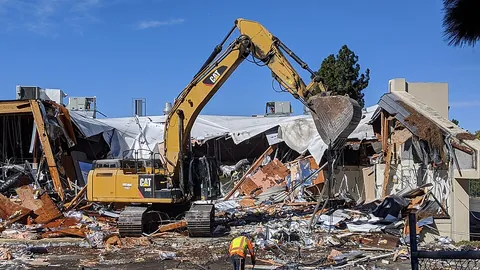
raze verb: to level or tear down (a building, a town, etc.) to the ground; to demolish. Also the obsolete spelling of race.

Verb
raze (third-person singular simple present razes, present participle razing, simple past and past participle razed)
- To level or tear down (a building, a town, etc.) to the ground; to demolish.
- The fortreſſe was raſed and beaten downe to the erthe⸝ whiche had coſt moche the makynge therof: […]1523 February 7 (Gregorian calendar), Johan Froyssart [i.e., Jean Froissart], “Howe the Frẽche Kyng Sent a Great Nauy to the See⸝ ⁊ howe Duyers Townes were Brent in Englande: ⁊ howe the Duke of...
- Theſe are his ſubſtance, ſinevves, armes, and ſtrength, / VVith vvhich he yoaketh your rebellious Neckes, / Razeth your Cities, and ſubuerts your Tovvnes, / And in a moment makes them deſolate.1591 (date written), William Shakespeare, “The First Part of Henry the Sixt”, in Mr. William Shakespeares Comedies, Histories, & Tragedies […] (First Folio), London: […] Isaac Iaggard, and Ed[ward]...
- To completely remove (someone or something), especially from a place, a situation, etc.; also, to remove from existence; to destroy, to obliterate.
- Yet at the laſt, caſting with my ſelf, that yͤ heat of thy loue might cleane be razed with yͤ coldnes of my letter, I thought it good to commit an inconuenience, that I might preuent a miſchiefe, chuſing rather to cut thée off ſhort by rigour, then to giue thée any iot of hope by ſilence.1580, Iohn Lyly [i.e., John Lyly], “To Philautus”, in Euphues and His England. […], London: […] [Thomas East] for Gabriell Cawood, […], →OCLC, folio 71, recto
- VVithout reſpect of ſex, degree or age. / He raceth all his foes vvith fire and ſvvord.c. 1587–1588 (date written), [Christopher Marlowe], Tamburlaine the Great. […] The First Part […], 2nd edition, part 1, London: […] [R. Robinson for] Richard Iones, […], published 1592, →OCLC...
- Synonyms:
- destroy, annihilate, aerosolize, atomize, benothing, bewreck, blot out, blotto, dash, decompose
- To erase (a record, text, etc.), originally by scraping; to rub out, to scratch out.
- Suppleyng to Fame, I besought her grace, / And that it wolde please her, full tenderly I prayd, / Owt of her bokis Apollo to rase.1523, John Skelton, “A Ryght Delectable Tratyse vpon a Goodly Garlande or Chapelet of Laurell, […]”, in Alexander Dyce, editor, The Poetical Works of John Skelton: […], volume I, London: Thomas Rodd...
- The wound alas happe in some other place, / From whence no toole away the skar can race.c. 1528–1541 (date written), Thomas Wyatt, “[Sonnets] Sonnet 31”, in A[gnes] K[ate] Foxwell, editor, The Poems of Sir Thomas Wiat […], volume I, London: Hodder and Stoughton [for the] University of...
- To wound (someone or part of their body) superficially; to graze.
- [T]he ſvvorde more mercifull then hee to himſelfe, vvith the ſlipping of the pommel, the point ſvvarued, and razed him but vpon the ſide: […]a. 1587, Philippe Sidnei [i.e., Philip Sidney], “[The Thirde Booke] Chapter 24”, in [Fulke Greville; Matthew Gwinne; John Florio], editors, The Countesse of Pembrokes Arcadia [The New Arcadia]...
- For vvas he not in the neareſt Neighbourhood to Death? And might not the Bullet, that perhaps raſed his Cheek, have as eaſily gone into his Head?1685 March 3 (date delivered; Gregorian calendar); first published 1692, Robert South, “A Sermon Preached at Westminster-Abbey, February 22. 168⁴⁄₅.”, in Twelve Sermons Preached upon Several...
- To alter (a document) by erasing parts of it.
- This indenture is raced all the worlde may ſe it: Ceſte indenture eſt faulcée tout le monde le peult veoyr.1530 July 28 (Gregorian calendar), Iohan Palsgraue [i.e., John Palsgrave], “The Table of Verbes”, in Lesclarcissement de la langue francoyse⸝ […], [London]: […] [Richard Pynson] fynnysshed by Iohan...
- But I vvill take another order novv, / And race th'eternall Regiſter of time: […]1594, Christopher Marlowe, Thomas Nash[e], The Tragedie of Dido Queene of Carthage: […], London: […] Widdowe Orwin, for Thomas Woodcocke, […], →OCLC, Act III, signature A3, recto
- To carve (a line, mark, etc.) into something; to incise, to inscribe; also, to carve lines, marks, etc., into (something); to engrave.
- Generally, Barbarous People, that goe Naked, doe not onely paint Themſelues, but they povvnce and raze their Skinne, that the Painting may not be taken forth; And make it into VVorks.1627 (indicated as 1626), Francis [Bacon], “VIII. Century. [Experiment Solitary, Touching Paintings of the Body.]”, in Sylua Syluarum: Or A Naturall Historie. In Ten Centuries. […], London: […]...
- [Y]ou muſt mark the out-lines of your intended Hinge, […] either vvith Chalk, or elſe raſe upon the Plate vvith the corner of the Cold-Chiſſel, or any other hardned Steel that vvill ſcratch a bright ſtroke upon the Plate: […]1678 January 11 – February 11 (Gregorian calendar), Joseph Moxon, “Numb[er] II. Applied to the Making of Hinges, Locks, Keys, Screws and Nuts Small and Great.”, in Mechanick Exercises, or The...
- To remove (something) by scraping; also, to cut or shave (something) off.
- To rub lightly along the surface of (something); brush against, to graze.
- And novv [the Rhine] by this time augmented vvith ſnovv, melted and reſolved into vvater, and raſing as it goes the high bankes vvith their curving reaches, entreth into a round and vaſt lake (vvhich the Rhætians dvvelling thereby, call Brigantia) […]1609, Ammianus Marcellinus, “[The XV. Booke.] Chapter III. Warre against the Lentienses, a People of Alemaine. The Description of the Lake Brigantia. The Romane Armie Discomfited and Put to Flight...
- Sometimes, his feet raſed the ſurface of the water; and, at others, the ſkylight almoſt flattened his noſe.1786, [William Beckford], translated by [Samuel Henley], An Arabian Tale, from an Unpublished Manuscript: […] [Vathek], London: […] J[oseph] Johnson, […], →OCLC, page 103
- To scrape (something), with or as if with a razor, to remove things from its surface; also, to reduce (something) to small pieces by scraping; to grate.
- And you are a ſoule, ſo vvhite, and ſo chaſte, / A table ſo ſmooth, and ſo nevvly ra'ſte, / As nothing cald foule, / Dare approach vvith a blot, / Or any leaſt ſpot; […]1621 August 13 (first performance; Gregorian calendar), Ben Jonson, “The Masque of the Gypsies”, in Q. Horatius Flaccus: His Art of Poetry. […], London: […] J[ohn] Okes, for John Benson […]...
- To shave (someone or part of their body) with a razor, etc.
- [A] ſharpe worde moued thée, when other whiles a ſworde will not, then a friendly checke killeth thée, when a raſor cannot raſe thée.1580, Iohn Lyly [i.e., John Lyly], “Euphues to Him, that was His Philautus”, in Euphues and His England. […], London: […] [Thomas East] for Gabriell Cawood, […], →OCLC, folio 82, verso
- Do you fancy him retir'd that […] conſumes his time trifling amongſt Barbers, razing and ſprucing himſelf, Povvdering, Combing, and ſummoning a Council upon every Hair?1667, J[ohn] Evelyn, Publick Employment and an Active Life, with Its Appanages, such as Fame, Command, Riches, Conversation, &c. Preferred to Solitude: […], London: […] J. M. for H[enry] Herringman...
- To cut, scratch, or tear (someone or something) with a sharp object; to lacerate, to slash.
- Buckles and agglettes at vnwares, ſhall race his bowe, a thinge both euill for the fight, ⁊ perillous for freatinge.1545, Roger Ascham, “The Seconde Booke”, in Toxophilus, the Schole, or Partitions of Shooting […], [new] edition, London: […] Thomas Marshe, published 1571, →OCLC, folio 38, recto
- His death did raze hir heart.1569 (date written), [Giovanni Boccaccio], “The Tenth Historie”, in Tragicall Tales […], London: […] Abell Ieffs, […], published 1587, →OCLC, folio 140, recto
- To carve lines, marks, etc., into something.
Show 3 more meaningsShow fewer meanings
- To graze or rub lightly along a surface.
- Betwene theſe Ilandes and the continente, he entered into ſoo narowe ſtreyghtes, that he coulde ſcarſely turne backe the ſhippes: And theſe alſo ſo ſhalowe, that the keele of the ſhyps ſumtyme raſed on the ſandes.1555, Peter Martyr of Angleria [i.e., Peter Martyr d’Anghiera], “The Thyrde Booke of the Fyrst Decade, to Lodouike Cardinall of Aragonye and Neuie to the Kynge”, in Rycharde Eden [i.e., Richard...
- Rádere, […] to raze or go along the ſhore as a ſhip doth, or to flye leuell to the ground as ſome birds do.1598, John Florio, “Rádere”, in A Worlde of Words, or Most Copious, and Exact Dictionarie in Italian and English, […], London: […] Arnold Hatfield for Edw[ard] Blount, →OCLC, page 308, column 1
- To penetrate through something; to pierce.
- [O]ne Robert Dutch of Ipſvvith, having been ſorely vvounded by a Bullet that raſed to his skull, and then mauled by the Indian Hatchets, left for dead by the Salvages,^([sic – meaning Savages]) and ſtript by them of all but his skin; […]1677, W[illiam] Hubbard, The Present State of New-England. Being a Narrative of the Troubles with the Indians in New England, […], London: […] Tho[mas] Parkhurst […], →OCLC, page 39
- Of a horse: to wear down its corner teeth as it ages, losing the black marks in their crevices.
Noun (1)
raze (plural razes)
- A slight wound; a scratch; also, a cut, a slit.
- And verely the Emperour Nero vvas ſo greatly enamoured vpon one image of Alexander [the Great], that hee commaunded it to be guilded all over: but aftervvards, ſeeing that the more coſt vvas beſtovved upon it by laying on gold, the leſſe vvas the art ſeene of the firſt vvorkman [Lysippos], ſo that...1601, C[aius] Plinius Secundus [i.e., Pliny the Elder], “[Book XXXIV.] Of 366 Excellent Peeces of Worke in Brasse, and as Many Cunning Artificers in that Kind.”, in Philemon Holland, transl., The...
- [I]f you make tvvo razes on each ſide [of the horse's hoof], it ſhall bee ſo much the better, and inlarge the hoofe the more; […]1610, Gervase Markham, “Of the Hoofe-bound”, in Markhams Maister-peece. Or, What doth a Horse-man Lacke. Containing All Possible Knowledge whatsoeuer which doth Belong to any Smith, Farrier, or...
Noun (2)
raze (plural razes)
- A swinging fence in a watercourse to prevent cattle passing through.
Also used as
raze is also the obsolete spelling of race.
Examples of raze in a sentence
- The fortifications vvere razed to the ground; and not a veſtige vvas left, that the city of Maogamalcha had ever existed.1781, Edward Gibbon, “Residence of Julian at Antioch—His Successful Expedition against the Persians— […]”, in The History of the Decline...
- [I]t seemed his desire to raze every trace of sorrow from the memory of his child; and to conceal the ravages of death under the appearance at least of wild and unceasing gaiety.1816, [Caroline Lamb], chapter VIII, in Glenarvon. […], volume I, London: […] [Schulze and Dean] for Henry Colburn, →OCLC, page 69:
- [D]rowſie drouping Age, / incroaching on apace, / With penſiue Plough will raze your hue / and Beauties beames deface.1567, George Turbervil[l]e, “The Louer Exhorteth His Ladie to Take Time, while Time is”, in Epitaphes, Epigrams, Songs and Sonets, with a...
- Thy goods are confiscate unto the state, / Thy name is razed from out her records, […]1821, Lord Byron, Marino Faliero, Doge of Venice. An Historical Tragedy, in Five Acts. […], London: John Murray, […], →OCLC, Act V, scene...
Synonyms of raze
30 more synonymsFewer synonyms
Forms of raze
| Verb | |
|---|---|
| third-person singular present | razes |
| present participle | razing |
| past participle | razed |
| past | razed |
| alternative form | race |
| alternative form | rase |
| second-person singular present (archaic) | razest |
| second-person singular past (archaic) | razedst |
| third-person singular present (archaic) | razeth |
| Noun | |
| plural | razes |
Origin of raze
The verb is derived from Middle English rasen, racen, rase (“to scrape; to shave; to erase; to pull; to strip off; to pluck or tear out; to root out (a tree, etc.); to pull away, snatch; to pull down; to knock down; to rend, tear apart; to pick clean, strip; to cleave, slice; to sever; to lacerate; to pierce; to carve, engrave; to dig; (figurative) to expunge, obliterate; to alter”), from Anglo-Norman raser, rasere, rasser, Middle French raser, and Old French raser (“to shave; to touch lightly, graze; to level off (grain, etc.) in a measure; to demolish, tear down; to erase; to polish; to wear down”), from Vulgar Latin *raso (“to shave; to scrape; to scratch; to touch lightly, graze”), from Latin rāsus (“scraped; shaved”), the perfect passive participle of rādō (“to scrape, scratch; to shave; to rub, smooth; to brush along, graze”). Doublet of rash (etymology 2 and etymology 7). The noun is derived from the verb.
Words formed from raze
Words that rhyme with raze
48 more rhymesFewer rhymes
- appraise
- craze
- fraise
- gaze
- phrase
- mayonnaise
- ablaze
- braise
- chaise
- lase
- liaise
- malaise
- maze
- peise
- baize
- bayes
- bolognese
- braize
- braze
- days
- daze
- emprise
- laze
- overglaze
- praise
- reyse
- ukase
- upraise
- abbes
- abrase
- acraze
- affrays
- arrays
- assays
- bays
- bayze
- blays
- bordelaise
- borrowing days
- brays
- cays
- chays
- clays
- conveys
- crays
- crème anglaise
- decays
- delays
Questions about raze
- What does raze mean?
- Raze means to level or tear down (a building, a town, etc.) to the ground; to demolish.
- How do you use raze in a sentence?
- The fortifications vvere razed to the ground; and not a veſtige vvas left, that the city of Maogamalcha had ever existed.
- What part of speech is raze?
- Raze can be a verb or a noun.
- How do you pronounce raze?
- Raze is pronounced /ɹeɪz/ (UK).
- What is the past tense of raze?
- The past tense of raze is razed.
Words near raze in the dictionary
Source and license
Adapted from Wiktionary: raze (page history and authors). Text available under the Creative Commons Attribution-ShareAlike 4.0 license. Word.ws reformatted the entry and added links. Wiktionary data of 2026-09-02.
Last updated:
Pronunciation audio from Wikimedia Commons, each file under its own free license: en-us-raise.ogg, en-au-raze.ogg.
Cite this entry: “raze.” Word.ws, https://word.ws/raze. Based on Wiktionary, CC BY-SA 4.0.