
defile
Syllables: de·file/dɪˈfaɪl/US/dəˈfaɪl/
defile verb: to make (someone or something) physically dirty or unclean; to befoul, to soil.
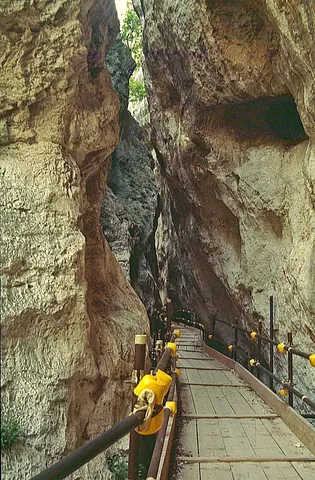

Verb (1)
defile (third-person singular simple present defiles, present participle defiling, simple past and past participle defiled)
- To make (someone or something) physically dirty or unclean; to befoul, to soil.
- […] It is an euil birde that defiles his owne neſt, […]1549 April 22 (Gregorian calendar), Hughe Latymer [i.e., Hugh Latimer], Augustine Bernher, compiler, “[27 Sermons Preached by the Ryght Reuerende Father in God and Constant Matir of Iesus Christe...
- I have ſowed ſackcloth vpon my ſkin, and defiled my horne in the duſt.1611, The Holy Bible, […] (King James Version), London: […] Robert Barker, […], →OCLC, Job 16:15, column 1
- To make (someone or something) morally impure or unclean; to corrupt, to tarnish.
- [T]here is no thynge with outt a man that can diffyle hym when hitt entreth in to hym⸝ but thoo thyngꝭ [things] which procede out of a mã [man] are thoſe which defyle a mã.1526, [William Tyndale, transl.], The Newe Testamẽt […] (Tyndale Bible), [Worms, Germany: Peter Schöffer], →OCLC, The Gospell off S. Marke vij:[15], folio liiij, recto
- Chr[istian]. VVhy, I tro you did not conſent to her deſires? / Faith[full]. No, not to defile my ſelf; for I remembred an old vvriting that I had ſeen, vvhich ſaith, Her ſteps take hold of Hell. [Proverbs 5:5] So I ſhut mine eyes, becauſe I vvould not be bevvitched with her looks: [Job 31:1] then...1678, John Bunyan, The Pilgrim’s Progress from This World, to That which is to Come: […], London: […] Nath[aniel] Ponder […], →OCLC, pages 89–90
- To act inappropriately towards or vandalize (something sacred or special); to desecrate, to profane.
- To urinate on someone’s grave is an example of a way to defile it.
- And all yͤ chiefe amonge the preſtes, and the people, multiplyed their ſynnes, acordinge to all the abhominacions of the Heythen, and dyfyled the houſe of the LORDE, which he had ſanctified at Jeruſalem.1535 October 14 (Gregorian calendar), Myles Coverdale, transl., Biblia: The Byble, […] (Coverdale Bible), [Cologne or Marburg]: [Eucharius Cervicornus and Johannes Soter?], →OCLC, II. Cronicles...
- Antonyms:
- hallow, sanctify, avow, behallow, bless, canonize, consecrate, dedicate, inaugurate, martyr
- To cause (something or someone) to become ritually unclean.
- What ſo euer crepeth vpon earth, ſhall be an abhominacion vnto you, and ſhal not be eaten. […] Make not youre ſoules abhominable, and defyle you not in them, to ſtayne youre ſelues: for I am the LORDE youre God. Therfore ſhal ye ſanctifie youre ſelues, that ye maye be holy, for I am holy. And ye...1535 October 14 (Gregorian calendar), Myles Coverdale, transl., Biblia: The Byble, […] (Coverdale Bible), [Cologne or Marburg]: [Eucharius Cervicornus and Johannes Soter?], →OCLC, Leuiticus xj:[41...
- That which dieth of it ſelfe, or is torne with beaſts, hee ſhall not eate to defile himſelfe therewith: I am the Lord.1611, The Holy Bible, […] (King James Version), London: […] Robert Barker, […], →OCLC, Leviticus 22:8, column 2
- To deprive (someone) of their sexual chastity or purity, often not consensually; to deflower, to rape.
- The serial rapist kidnapped and defiled a six-year-old girl.
- And when Shechem the ſonne of Hamor the Hiuite, prince of the countrey ſaw her [Dinah], he tooke her, and lay with her, and defiled her.1611, The Holy Bible, […] (King James Version), London: […] Robert Barker, […], →OCLC, Genesis 34:2, column 2
- To dishonour (someone).
- Come recreant, come thou childe, / Ile vvhippe thee vvith a rodde. He is defil'd, / That dravves a ſvvord on thee.c. 1595–1596 (date written), William Shakespeare, A Midsommer Nights Dreame. […] (First Quarto), London: […] [Richard Bradock] for Thomas Fisher, […], published 1600, →OCLC, [Act III, scene ii]
- [H]is Character may be Defiled by ſuch Men and dirty Hands as thoſe of the Obſervator, or ſuch as employ him, […]1708 December 15 (Gregorian calendar; date written), [Jonathan Swift], A Letter from a Member of the House of Commons in Ireland to a Member of the House of Commons in England, Concerning the...
- To become dirty or unclean.
- [Y]ou vvill find if you do not daily ſvveep you houſes, they vvill defile; and the cob-vvebs they vvill grovv; the Spiders vvill be at vvork; and though your hearts be never ſo pure, Spiders vvill creep into them, […]1672 January 16 (Gregorian calendar), Joseph Caryl, “Sermon II”, in The Nature and Principles of Love, as the End of the Commandment. […], London: […] John Hancock, Senior and Junior, […], published...
- To cause uncleanliness; specifically, to pass feces; to defecate.
- There is a thing Harry, vvhich thou haſt often heard of, and it is knovvne to many in our land by the name of pitch. This pitch (as ancient vvriters do report) doth defile, ſo doth the companie thou keepeſt: […]c. 1597 (date written), [William Shakespeare], The History of Henrie the Fourth; […], quarto edition, London: […] P[eter] S[hort] for Andrew Wise, […], published 1598, →OCLC, [Act II, scene v]
Verb (2)
defile (third-person singular simple present defiles, present participle defiling, simple past and past participle defiled)
- To march in a single file or line; to file.
- Without delay, he briſkly attacked them, as they were defiling from a lane and forming themſelves.1754, David Hume, “[Charles I.] Chapter II.”, in The History of Great Britain, under the House of Stuart, 2nd edition, volume I, London: […] A[ndrew] Millar, […], published 1759, →OCLC, page 332
- Several bodies of troops defiled towards the frontiers under various pretences; and the whole being ſuddenly aſſembled, formed an army with which the duke of Guiſe [Francis, Duke of Guise] made an unexpected march towards Calais.1762, David Hume, “[John.] Chapter VII.”, in The History of England, from the Invasion of Julius Cæsar to the Accession of Henry VII, volume I, London: […] A[ndrew] Millar, […], →OCLC, page 393
- To march across (a place) in files or lines.
Noun (1)
defile (plural defiles)
- A narrow passage or way (originally (military), one which soldiers could only march through in a single file or line), especially a narrow gorge or pass between mountains.
- VVe had one dangerous Place to paſs, vvhich our Guide told us, if there vvere any more VVolves in the Country, vve ſhould find them there; and this vvas in a ſmall Plain, ſurrounded vvith VVoods on every Side, and a long narrovv Defile or Lane, vvhich vve vvere to paſs to get through the VVood, and...1719 May 6 (Gregorian calendar), [Daniel Defoe], The Life and Strange Surprizing Adventures of Robinson Crusoe, […], London: […] W[illiam] Taylor […], →OCLC, page 353
- Conſtantine had taken poſt in a defile about half a mile in breadth, between a ſteep hill and a deep moraſs, and in that ſituation he ſteadily expected and repulſed the firſt attack of the enemy.1776, Edward Gibbon, chapter XIV, in The History of the Decline and Fall of the Roman Empire, volume I, London: […] W[illiam] Strahan; and T[homas] Cadell, […], →OCLC, page 437
- An act of marching in files or lines.
- A single file of soldiers; (by extension) any single file.
Verb (3)
defile (third-person singular simple present defiles, present participle defiling, simple past and past participle defiled)
- Synonym of defilade (“to fortify (something) as a protection from enfilading fire”).
- Synonyms:
- defilade
Noun (2)
defile (plural defiles)
defile meaning in Tamil, Urdu, Bengali and Malayalam
defile in Tamil
- அசுத்தப்படுத்து, குறுகிய வழி, கணவாய்
defile in Urdu
- آلودہ کرنا, بٹا لگانا, خراب کرنا, ساننا
defile in Bengali
- অপবিত্র করা, কলঙ্কিত করা
defile in Malayalam
- മലിനപ്പെടുത്തുക, അപകീർത്തിപ്പെടുത്തുക, വൃഭിചരിപ്പിക്കുക, അണിയായി നടന്നുനീങ്ങുക
More languagesFewer languages
- defile in Kannada
- ಕೊಳೆ ಮಾಡು, ಹೊಲೆಗೆಲಸ, ಮಲಿನಗೊಳಿಸು, ಕಲುಷಿತಗೊಳಿಸು
- defile in Tagalog
- banawag
- defile in Persian
- لگدمال کردن lagadmâl kardan
Examples of defile in a sentence
- Spain might now boast that the stain of heresy no longer defiled the hem of her garment.1855, William H[ickling] Prescott, “Protestantism in Spain”, in History of the Reign of Philip the Second, King of Spain, volume I, Boston...
- At mankind's feast, I take my place / In solemn, sanctimonious state, / And have the air of saying grace / While I defile the dinner plate.1887, Robert Louis Stevenson, “A Portrait”, in Underwoods, London: Chatto and Windus, […], →OCLC, book I (In English), page 63:
- Remember them, O my God, becauſe they haue defiled the Prieſthood, and the couenant of the Prieſthood, and of the Leuites.1611, The Holy Bible, […] (King James Version), London: […] Robert Barker, […], →OCLC, Nehemiah 13:29, column 2:
- As the multitude defiled into the square, the inquisitors took their place on the seats prepared for their reception.1855, William H[ickling] Prescott, “Protestantism in Spain”, in History of the Reign of Philip the Second, King of Spain, volume I, Boston...
Synonyms of defile
30 more synonymsFewer synonyms
Antonyms
Forms of defile
| Verb | |
|---|---|
| third-person singular present | defiles |
| present participle | defiling |
| past participle | defiled |
| past | defiled |
| Noun | |
| plural | defiles |
| alternative form | defilé |
| alternative form | defilee |
| alternative form | défilé |
Origin of defile
From Late Middle English defilen (“to make dirty, befoul; rape; abuse; destroy; injure; oppress”) [and other forms], a variant of defoulen (“to make dirty, defile, pollute; have sexual intercourse with; rape; etc.”) (compare also defoilen). Defoulen is a blend of Middle English foulen (“to make dirty, soil, pollute”) (from the adjective foul (“dirty, rotten, stinking, corrupt, sinful, guilty”) and Old English fūlian (“to decay”)), and Old French defoler, defouler (“to trample, crush; destroy”), from de- (intensifying prefix) + foler, fouler, fuller (“to trample, tread on; mistreat, oppress, destroy”) (from Vulgar Latin fullāre (“to full (make cloth denser and firmer by soaking, beating, and pressing)”), from Latin fullō (“person who fulls cloth, fuller”); further etymology uncertain, possibly from Proto-Indo-European *bʰleh₃- (“to blow; to inflate, swell; to bloom, flower”) or Etruscan 𐌘𐌖𐌋𐌖 (φulu)). The English word is analysable as de- + file (“to corrupt; defile”). The Middle English word defilen was probably formed from defoulen on the analogy of befilen (“to make dirty, befoul; corrupt; violate one's chastity; desecrate; slander”) and befoulen (“to make dirty, befoul; violate...
PIE word *dwís The verb is borrowed from French défiler (“to march; to parade”), from dé- (prefix indicating actions are done more strongly or vigorously) + one or both of the following: * filer (“to thread through (a crowd)”) (from Late Latin filāre, from Latin fīlum (“fibre, filament, string, thread”), ultimately from Proto-Indo-European *gʷʰiH-(s-)lo-). * file (“line of objects placed one after the other, file”), from filer (see above), or fil (“thread, yarn; wire”), from Old French fil, from Latin fīlum (see above). The noun is borrowed from French défilé (“parade, procession”), a noun use of the past participle of défiler (verb); see above.
The verb is borrowed from French défiler (“to arrange soldiers or fortify (something) as a protection from enfilading fire; to unthread”) (compare Middle French desfilher (“to unthread”)), from dé- (prefix meaning ‘not’) + enfiler (“to rake with gunfire, enfilade; to string on to a thread; to thread (a needle)”) (from en- (prefix meaning ‘in, into; on, on to’) + filer (verb) or file (noun); see etymology 2). The noun is derived from the verb.
Words formed from defile
Words that rhyme with defile
48 more rhymesFewer rhymes
- kyle
- reptile
- sile
- smile
- Lyle
- tile
- while
- beguile
- bile
- Nile
- spile
- argyll
- awhile
- enisle
- guile
- gyle
- I'll
- last mile
- nubile
- resile
- restyle
- rile
- senile
- stile
- vile
- autogynephile
- bewile
- chile
- chyle
- Cnile
- District of Argyle
- heil
- ile
- interfile
- isle
- Japanophile
- Kabyle
- kile
- like it's going out of style
- Persophile
- redial
- refile
- revile
- Styal
- thyle
- tickler file
- wile
- worthwhile
Questions about defile
- What does defile mean?
- Defile means to make (someone or something) physically dirty or unclean; to befoul, to soil.
- What is defile in Tamil?
- Defile in Tamil is அசுத்தப்படுத்து, குறுகிய வழி, கணவாய். See Defile meaning in Tamil.
- How do you use defile in a sentence?
- Spain might now boast that the stain of heresy no longer defiled the hem of her garment.
- What part of speech is defile?
- Defile can be a verb or a noun.
- How do you pronounce defile?
- Defile is pronounced /dɪˈfaɪl/ (UK).
- What is the past tense of defile?
- The past tense of defile is defiled.
Words near defile in the dictionary
Source and license
Adapted from Wiktionary: defile (page history and authors); defile (Tamil Wiktionary) (page history and authors); defile (Urdu Wiktionary) (page history and authors); Defile (Bengali Wiktionary) (page history and authors); defile (Malayalam Wiktionary) (page history and authors); defile (Kannada Wiktionary) (page history and authors). Text available under the Creative Commons Attribution-ShareAlike 4.0 license. Word.ws reformatted the entry and added links. Wiktionary data of 2026-09-02.
Last updated:
Pronunciation audio from Wikimedia Commons, each file under its own free license: LL-Q1860 (eng)-Vealhurl-defile.wav.
Cite this entry: “defile.” Word.ws, https://word.ws/defile. Based on Wiktionary, CC BY-SA 4.0.