
dress
/dɹes//dɹɛs/
dress verb: to put clothes (or, formerly, armour) on (oneself or someone, a doll, a mannequin, etc.); to clothe. Also the ellipsis of cross-dress.

Verb
dress (third-person singular simple present dresses, present participle dressing, simple past dressed, past participle dressed or (obsolete) drest)
- To put clothes (or, formerly, armour) on (oneself or someone, a doll, a mannequin, etc.); to clothe.
- He was dressed in the latest fashions.
- My kids are old enough to dress themselves now.
- To attire (oneself or someone) for a particular (especially formal) occasion, or in a fashionable manner.
- [A]ll the men there shoulde dresse themselves like the poorest sorte of the people in Arcadia, having no banners, but bloudie shirtes hanged upon long staves, […]c. 1580 (date written), Philippe Sidnei [i.e., Philip Sidney], “(please specify the folio)”, in [Fulke Greville; Matthew Gwinne; John Florio], editors, The Countesse of Pembrokes Arcadia [The New...
- […] Anthony [i.e., Mark Antony] himſelfe was quite beſotted with Cleopatra’s ſweete ſpeeches, philters, beauty, pleaſing tires: for when ſhe ſailed along the riuer Cydnus, with ſuch incredible pompe in a guilded ſhip, her ſelfe dreſſed like Venus, her maides like the Graces, her Pages like ſo many...1624, Democritus Junior [pseudonym; Robert Burton], “Artificiall Allurements of Loue, Causes and Provocations to Lust. Gestures, Cloathes, Dowre &c.”, in The Anatomy of Melancholy: […], 2nd edition...
- To design, make, provide, or select clothes (for someone).
- The fashion designer was proud to have dressed the queen for the charity event.
- To arrange or style (someone's hair).
- [Domitian] after his manner, with a cheerfull countenance and grieved heart, received the newes: being inwardly pricked, to think that his later counterfet triumph of Germany, wherin certain ſlaves bought for mony were attired and their haire dreſſed as captives of that country, was had in deriſion...1610, William Camden, “Romans in Britaine”, in Philémon Holland, transl., Britain, or A Chorographicall Description of the Most Flourishing Kingdomes, England, Scotland, and Ireland, […], London: […]...
- By and by the King and Queen, who looked in this dress (a white laced waistcoat and a crimson short pettycoat, and her hair dressed à la negligence) mighty pretty; and the King rode hand in hand with her.1663 July 22 (date written; Gregorian calendar), Samuel Pepys, Mynors Bright, transcriber, “July 13th, 1663 (Lord’s Day)”, in Henry B[enjamin] Wheatley, editor, The Diary of Samuel Pepys […], volume...
- To adorn or ornament (something).
- It was time to dress the windows for Christmas again.
- But at night I would roam abroad and play / With the mermaids in and out of the rocks, / Dressing their hair with the white sea-flower, / And holding them back by their flowing locks […]1842, Alfred Tennyson, “The Merman”, in Poems. […], volume I, London: Edward Moxon, […], →OCLC, pages 68–69
- To apply a dressing to or otherwise treat (a wound); (obsolete) to give (a wounded person) medical aid.
- [T]he Mayd / His readie vvound with better ſalues new dreſt, / Daily ſhe dreſſed him, and did the beſt / His grieuous hurt to guariſh, that ſhe might, […]1590, Edmund Spenser, “Book III, Canto V”, in The Faerie Queene. […], London: […] [John Wolfe] for William Ponsonbie, →OCLC, stanza 41, page 473
- [H]e was deadly pale, and the blood-stained bandage round his head told that he had recently been wounded, and still more recently dressed.1881–1882, Robert Louis Stevenson, “In the Enemy’s Camp”, in Treasure Island, London; Paris: Cassell & Company, published 14 November 1883, →OCLC, part VI (Captain Silver), page 227
- Synonyms:
- bandage, put a bandage on
- To fit or prepare (something) for use; to render (something) suitable for an intended purpose; to get ready.
- Now when the towne his ſommonds did diſdain, / To conquer it perforce he plyde his pain: / And their, th’Inginers haue the Trepan dreſt, / And reared vp the Ramme for batterie beſt: […]1584, [Guillaume de Salluste] Du Bartas, “[The Historie of Iudith, in Forme of a Poeme. […].] The Third Booke of Iudith.”, in Tho[mas] Hudson, transl., Du Bartas His Deuine Weekes and Workes […], 3rd...
- And Aaron ſhall burne thereon [i.e., on the altar of incense] ſweet incenſe euery morning: when he dreſſeth the lamps he ſhal burn incenſe vpon it.1611, The Holy Bible, […] (King James Version), London: […] Robert Barker, […], →OCLC, Exodus 30:7, column 1
- To prepare, treat, or curry (animal hide or leather).
- The ſkinnes of Dogges are dreſſed for gloues, and cloſe Bootes, the vvhich are vſed by ſuch as haue vicerous and ſvvelling Legges or Limbes, for by them the aflicted place receiueth a double reliefe; firſt, it reſiſteth the influent humors, and ſecondly, it is not exaſperated with VVoollen.1607, Conradus Gesnerus [i.e., Conrad Gessner]; Edward Topsell, “Of the Dogge”, in The Historie of Foure-footed Beastes. […], London: […] William Iaggard, →OCLC, page 143
- Very little buſineſs appeared to be going forward in Lichfield. I found however two ſtrange manufactures for ſo inland a place, ſail-cloth and ſtreamers for ſhips; and I obſerved them making ſome ſaddle-cloths, and dreſſing ſheepſkins; but upon the whole, the buſy hand of induſtry ſeemed to be...1791, James Boswell, “[1776]”, in James Boswell, editor, The Life of Samuel Johnson, LL.D. […], volume II, London: […] Henry Baldwin, for Charles Dilly, […], →OCLC, page 35
- To prepare by any of many types of physical processing (e.g., breaking, crushing, sorting, sieving, controlled burning or heating).
- in mining and metallurgy, to dress ores by sorting and separating them
- To prepare the surface of (a material, such as lumber or stone; a grindstone or grinding wheel).
- To remove chaff or impurities from (flour, grain, etc.) by bolting or sifting, winnowing, and other methods.
- To prepare (an artificial fly) to be attached to a fish hook.
- To cultivate or tend to (a garden, land, plants, etc.); especially, to add fertilizer or manure to (soil); to fertilize, to manure.
- Gard[ener]. Oh what pitie is it that he had not ſo trimde, / And dreſt his land as vve this garden at time of yeare / Do vvound the barke, the skinne of our fruit trees, […] Queene. Oh I am preſt to death through vvant of ſpeaking / Thou old Adams likeneſſe ſet to dreſſe this garden, / How dares...1595 December 9 (first known performance), [William Shakespeare], The Tragedie of King Richard the Second. […] (First Quarto), London: […] Valentine Simmes for Androw Wise, […], published 1597...
- To cut up (an animal or its flesh) for food.
- "I'll be with you," said Coo, "never fear me." Jack went home and dressed a noble fish dinner, and got out plenty of his best foreign spirits, enough for that matter to make twenty men drunk.1850, Thomas Keightley, The Fairy Mythology, London: H.G. Bohn, page 534
- But as he dressed the carcass—cutting it up to bring home—Borg’s gratitude gave way to revulsion. When he tried to extract the liver, which should have been firm and meaty, it deliquesced into a bloody sludge, sliding goopily through his fingers.December 2020, Tim Folger, “North America’s most valuable resource is at risk”, in National Geographic Magazine
- To prepare (food) for cooking or eating, especially by seasoning it; specifically, to add a dressing or sauce (to food, especially a salad).
- Old vvom[an]: [O]nce vppon a time his daughter was ſtollen avvay, and hee ſent ſo long, that he ſent all his men out of his Land. / Frol[icke]: VVho dreſt his dinner then?c. 1590 (date written), G[eorge] P[eele], The Old Wiues Tale. […], London: […] Iohn Danter, for Raph Hancocke, and Iohn Hardie, […], published 1595, →OCLC, [lines 142–143]
- Heere Loue, thou ſeeſt how diligent I am, / To dreſſe thy meate my ſelfe, and bring it thee.c. 1590–1592 (date written), William Shakespeare, “The Taming of the Shrew”, in Mr. William Shakespeares Comedies, Histories, & Tragedies […] (First Folio), London: […] Isaac Iaggard, and Ed[ward]...
- To design, make, or prepare costumes (for a play or other performance); also, to present (a production) in a particular costume style.
- To prepare (a set) by installing the props, scenery, etc.
- Mallory, all night long, single-handedly painted and dressed the set so that at eight o'clock Sunday morning when we arrived to make breakfast in the kitchen, there she was sound asleep on the davenport in the set, every prop in place.2012, Marvin Silbersher, chapter 22, in A Fistful of Stars, [Bloomington, Ind.]: Xlibris, →ISBN, page 106
- To arrange (soldiers or troops) into proper formation; especially, to adjust (soldiers or troops) into straight lines and at a proper distance from each other; to align.
- to dress the ranks
Show 9 more meaningsShow fewer meanings
- To treat (someone) in a particular manner; specifically, in an appropriate or fitting manner; (by extension, ironic) to give (someone) a deserved beating; also, to give (someone) a good scolding; to dress down.
- [...] I say, bid come before vs Angelo:
What figure of vs thinke you, he will beare.
For you must know, we haue with speciall soule
Elected him our absence to supply;
Lent him our terror, drest him with our loue,
And giuen his Deputation all the Organs
Of our owne powre: What thinke you of it?c. 1603–1604 (date written), William Shakespeare, “Measure for Measure”, in Mr. William Shakespeares Comedies, Histories, & Tragedies […] (First Folio), London: […] Isaac Iaggard, and Ed[ward]...
- [...] I say, bid come before vs Angelo:
- To break in and train (a horse or other animal) for use.
- Oh how it ernd my hart when I beheld, / In London ſtreetes, that Coronation day, / VVhen Bullingbroke rode on Roane Barbarie. / That horſe, that thou ſo often haſt beſtride. / That horſe, that I ſo carefully haue dreſt.1595 December 9 (first known performance), [William Shakespeare], The Tragedie of King Richard the Second. […] (First Quarto), London: […] Valentine Simmes for Androw Wise, […], published 1597...
- To prepare (oneself); to make ready.
- [S]yr Gawayns ſpere brak ⸝ but ſir marhaus ſpere helde ⸝ And therwith ſyre Gawayne and his hors ruſſhed doune to the erthe ⸝ And lyghtly ſyre Gawayne roſe on his feet ⸝ and pulled out his ſwerd ⸝ and dreſſyd hym toward syr Marhaus on foote ⸝ […][1470–1485 (date produced), Thomas Malory, “Capitulum xviij”, in [Le Morte Darthur], book IV (in Middle English), [London: […] by William Caxton], published 31 July 1485, →OCLC, leaf 222, recto...
- To put on clothes.
- I rose and dressed before daybreak. It’s very cold out. Dress warm.
- Synonyms:
- get dressed
- To attire oneself for a particular (especially formal) occasion, or in a fashionable manner.
- They returned home early to dress for dinner.
- The three Gentlemen rode out, and returned juſt Time enough to dreſs for dinner.1742, [Samuel Richardson], “Letter XXX”, in Pamela: Or, Virtue Rewarded. […], volume III, London: […] S[amuel] Richardson; and sold by C[harles] Rivington, […]; and J. Osborn, […], →OCLC, page 184
- Of a thing: to attain a certain condition after undergoing some process or treatment to fit or prepare it for use.
- To allow one's penis to fall to one side or the other within one's trousers.
- While measuring him for his trousers, the tailor asked him if he dressed to the left or the right.
- Of an animal carcass: to have a certain quantity or weight after removal of the internal organs and skin; also, to have a certain appearance after being cut up and prepared for cooking.
- Of soldiers or troops: to arrange into proper formation; especially, to form into straight lines and at a proper distance from each other.
- Right, dress!
- Of a sportsperson: to put on the uniform and have the equipment needed to play a sport.
- Due to a left ankle sprain, the basketball player did not dress for the game against Indiana.
Noun (1)
dress (countable and uncountable, plural dresses)
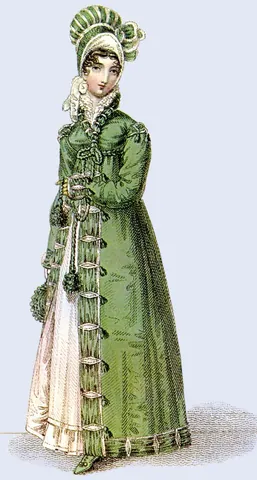
- An item of clothing (usually worn by a woman or young girl) which both covers the upper part of the body and includes a skirt below the waist.
- Amy and Mary looked very pretty in their dresses.
- She looked cool in a grey tailored cotton dress with a terracotta scarf and shoes and her hair a black silk helmet.1963, Margery Allingham, “Dangerous Lady”, in The China Governess: A Mystery, London: Chatto & Windus, →OCLC, page 36
- Synonyms:
- frock
- An item of outer clothing or set of such clothes (worn by people of all sexes) which is generally decorative and appropriate for a particular occasion, profession, etc.
- I have been thinking, George, of changing our travelling dreſſes in the morning. I am grown confoundedly aſhamed of mine.1773, [Oliver] Goldsmith, She Stoops to Conquer: Or, The Mistakes of a Night. A Comedy. […], London: […] F[rancis] Newbery, […], →OCLC, Act II, page 23
- No good historical painting ever yet existed, or ever can exist, where the dresses of the people of the time are not beautiful: […]1857, John Ruskin, “Lecture I”, in The Political Economy of Art: Being the Substance (with Additions) of Two Lectures Delivered at Manchester, July 10th and 13th, 1857, London: Smith, Elder and Co....
- Apparel or clothing, especially when appropriate for a particular occasion, profession, etc.
- military dress
- He came to the party in formal dress.
- The act of putting on clothes, especially fashionable ones, or for a particular (especially formal) occasion.
- The external covering of an animal (for example, the feathers of a bird) or an object.
- When the adults [i.e., birds] of both sexes have a distinct winter and summer plumage, whether or not the male differs from the female, the young resemble the adults of both sexes in their winter dress or much more rarely in their summer dress, or they resemble the females alone; or the young may...1871, Charles Darwin, “Birds—concluded”, in The Descent of Man, and Selection in Relation to Sex. […], volume II, London: John Murray, […], →OCLC, Part II (Sexual Selection), page 187
- The appearance of an object after it has undergone some process or treatment to fit or prepare it for use; finish.
- The external appearance of something, especially if intended to give a positive impression; garb, guise.
- Sir, although / VVe may be ſaid to vvant the guilt, and trappings, / The dreſſe of Honor; yet vve ſtriue to keepe, / The ſeedes, and the Materialls.1610 (first performance), Ben[jamin] Jonson, The Alchemist, London: […] Thomas Snodham, for Walter Burre, and are to be sold by Iohn Stepneth, […], published 1612, →OCLC, Act IV, scene i
- […] Eloquence, the Dreſs of our Thoughts, like the Dreſs of our Bodies, differs not only in ſeveral Regions, but in ſeveral Ages.1663, Robert Boyle, Some Considerations Touching the Style of the H[oly] Scriptures. […], London: […] Henry Herringman, […], →OCLC, pages 163–164
- The system of furrows on the face of a millstone.
- The act of applying a dressing to or otherwise treating a wound; also, the dressing so applied.
Noun (2) capitalized: DRESS
DRESS (uncountable)
- acronym of drug reaction with eosinophilia and systemic symptoms or drug rash with eosinophilia and systemic symptoms.
Also used as
dress is also the ellipsis of cross-dress.
dress is also the ellipsis of dress rehearsal.
dress meaning in Hindi, Marathi, Urdu and Telugu
dress in Hindi
- transitive: to put clothes on — see also clothe
- पेहनाना pehnānā
- intransitive: to put on clothes — see also get dressed, wear, put on
- पहन्ना pahannā
- item of clothing which both covers the upper part of the body and includes a skirt below the waist
- परिधान paridhān, लिबास libās
- apparel or clothing
- वस्त्र vastra, कपड़ा kapṛā
dress in Marathi
- पोशाख, वेशभूषा
dress in Urdu
- item of clothing which both covers the upper part of the body and includes a skirt below the waist
- لِباس libās, پوشاک pośāk
- apparel or clothing
- لِباس libās, کَپْڑَا kapṛā
dress in Telugu
- transitive: to put clothes on — see also clothe
- ధరింపజేయు dharimpajēyu
- intransitive: to put on clothes — see also get dressed, wear, put on
- ధరించు dhariñcu
- item of clothing which both covers the upper part of the body and includes a skirt below the waist
- దుస్తులు dustulu, బట్టలు baṭṭalu
More languagesFewer languages
- dress in Kannada
- ಬಟ್ಟೆ baṭṭe, ವಸ್ತ್ರಾಭರಣ vastrābharaṇa
- dress in Nepali
- लगाउनु lagāunu
- dress in Pashto
- ور اغوستل wər aγustəl, اغوستل aγustəlb
- dress in Tagalog
- damtan
- dress in Arabic
- لَبِسَ labisa, ثَوْب ṯawb, لِبَاس libās, فُسْتَان fustān
- dress in Thai
- แต่งตัว dtɛ̀ng-dtuua, เสื้อชุด sʉ̂ʉa-chút
- dress in Vietnamese
- sửa soạn, nêm, áo đầm, quần áo
Examples of dress in a sentence
- O rich! rich! vvhere ſhould I get clothes to dreſſe her in?1606 (date written), [Francis Beaumont; John Fletcher], The Woman Hater. […], London: […] [Robert Raworth], and are to be sold by John...
- He was dressed out in broad gaiters and bright tweeds, like an English tourist, and his face might have belonged to Dagon, idol of the Philistines.1897 December (indicated as 1898), Winston Churchill, chapter II, in The Celebrity: An Episode, New York, N.Y.: The Macmillan Company...
- Lowther and his wife and mine, and into a box, forsooth, neither of them being dressed, which I was almost ashamed of.1667 April 3 (date written; Gregorian calendar), Samuel Pepys, Mynors Bright, transcriber, “March 25th, 1667 (Lady day) (Lord’s Day)”, in...
- Weſtern now drew ſo near, that he had barely Time left to dreſs himſelf.1749, Henry Fielding, “The History Draws Nearer to a Conclusion”, in The History of Tom Jones, a Foundling, volume VI, London: A[ndrew]...
Synonyms of dress
11 more synonymsFewer synonyms
Antonyms
Forms of dress
| Verb | |
|---|---|
| third-person singular present | dresses |
| present participle | dressing |
| past | dressed |
| past participle | dressed |
| past participle | drest |
| past participle (obsolete) | drest |
| Noun | |
| plural | dresses |
Origin of dress
PIE word *dwís The verb is from Middle English dressen, dresse (“to arrange, put in order”), from Anglo-Norman, Old French dresser, drecier (modern French dresser), from Late Latin *dīrēctiāre (“to guide, direct”), from Classical Latin dīrēctus, whence English direct. Further akin to Latin regō. The noun is derived from the verb. Compare typologically adorn (<< Latin ōrnō < ōrdō, whence also ōrdinō, English order, ornament); Russian наряжа́ть (narjažátʹ), наря́д (narjád) (akin to ряд (rjad), поря́док (porjádok)).
Words formed from dress
- bride dress
- dressable
- dress down
- dressed
- dresser
- dressing
- dressing down
- dressing-down
- dress off
- dress out
- dress the part
- dress up
- field dress
- hairdresser
- outdress
- overdress
- redress
- undress
- undresser
- undressing
- xdress
- hairdress
- underdress
- Aboyne dress
- baby-doll dress
- balldress
- bandage dress
- bathing dress
- battledress
- bedressed
- Bo Peep dress
- carriage dress
- coatdress
- cocktail dress
- dinner dress
- dress circle
- dress clothes
- dresscoat
- dress coat
- dress code
- dress fan
- dress form
- dressful
- Dressgate
- dress-goods
- dress guard
- dressish
- dressless
- dresslike
- dressmaker
- dressmaking
- dress-out
- dress pants
- dress parade
- dress rehearsal
- dress sense
- dress shield
- dress shirt
- dress shoe
- dress shorts
Phrases with dress
- nap dress
- tea dress
- the dress
- dress fans
- dress suit
- dress tape
- full dress
- gala dress
- head dress
- mess dress
- sack dress
- slip dress
57 more phrasesFewer phrases
- tear dress
- wrap dress
- dress coats
- dress codes
- dress forms
- dress shoes
- dress suits
- fancy dress
- naked dress
- party dress
- patio dress
- plain dress
- shift dress
- squaw dress
- trade dress
- dress guards
- dress senses
- dress shirts
- fiesta dress
- granny dress
- reform dress
- riding dress
- sheath dress
- skater dress
- tennis dress
- trench dress
- wiggle dress
- dress circles
- dress shields
- evening dress
- morning dress
- sweater dress
- T-shirt dress
- trapeze dress
- wedding dress
- babydoll dress
- macaroni dress
- magazine dress
- national dress
- peekaboo dress
- princess dress
- rational dress
- baby doll dress
- maternity dress
- princesse dress
- spaghetti dress
- dress rehearsals
- going away dress
- travelling dress
- full dress uniform
- little black dress
- full dress uniforms
- wet dress rehearsal
- Little Bo Peep dress
- wet dress rehearsals
- off like a prom dress
- dress for the slide, not the ride
Words that rhyme with dress
48 more rhymesFewer rhymes
- success
- compress
- largesse
- ness
- profess
- confess
- distress
- regress
- depress
- excess
- guess
- prepossess
- undress
- CBS
- ingress
- oppress
- redress
- transgress
- assess
- cess
- duress
- fess
- fluoresce
- Hesse
- less
- mayoress
- obsess
- tress
- unless
- yes
- accresce
- acquiesce
- aggress
- BESS
- caress
- clothes press
- congress
- defervesce
- digress
- ess
- foulness
- Hess
- intumesce
- jess
- lazy S
- liquesce
- repress
- second-guess
Questions about dress
- What does dress mean?
- Dress means to put clothes (or, formerly, armour) on (oneself or someone, a doll, a mannequin, etc.); to clothe.
- What is dress in Hindi?
- Dress in Hindi is पेहनाना (pehnānā), पहन्ना (pahannā), परिधान (paridhān). See Dress meaning in Hindi.
- How do you use dress in a sentence?
- O rich! rich! vvhere ſhould I get clothes to dreſſe her in?
- What part of speech is dress?
- Dress can be a verb or a noun.
- How do you pronounce dress?
- Dress is pronounced /dɹes/ (UK).
- What is the past tense of dress?
- The past tense of dress is dressed.
Words near dress in the dictionary
Source and license
Adapted from Wiktionary: dress (page history and authors); DRESS (page history and authors); dress (Marathi, IndicTrans2 machine translation) (model and license). Text available under the Creative Commons Attribution-ShareAlike 4.0 license. Word.ws reformatted the entry and added links. Wiktionary data of 2026-09-02.
Last updated:
Pronunciation audio from Wikimedia Commons, each file under its own free license: En-uk-dress.ogg, En-us-dress.ogg.
Cite this entry: “dress.” Word.ws, https://word.ws/dress. Based on Wiktionary, CC BY-SA 4.0.