
inflame
Syllables: in·flame/ɪnˈfleɪm/
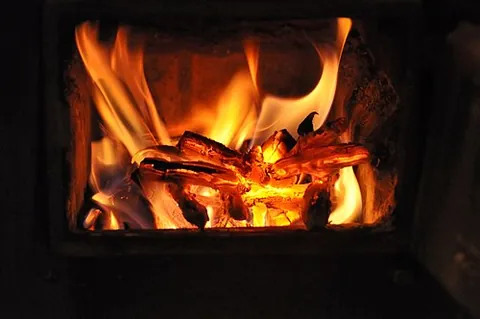
inflame verb: to set (someone or something) on fire; to cause (someone or something) to burn, flame, or glow; to kindle.

Verb
inflame (third-person singular simple present inflames, present participle inflaming, simple past and past participle inflamed)
- To set (someone or something) on fire; to cause (someone or something) to burn, flame, or glow; to kindle.
- [Jesus, you] art the eternal Orator, vvhich both outvvardlie talkeſt to mankinde by thy Goſpel, and invvardlie in our harts inflameſt thy light vvhich is true confeſſion, faith, and comfort in thee: […]1579, Iohn Auenar [i.e., Johann Habermann], “A Praier against Desperation”, in Thomas Rogers, transl., The Enimie of Securitie or A Dailie Exercise of Godly Meditations, […], [London], →OCLC, page 281
- Novv keep your holy vvord, go meet the French, / And from his holineſſe vſe all your povver / To ſtop their marches 'fore vve are enflam'd: / Our diſcontented Counties doe reuolt: / Our people quarrell vvith obedience, / Svvearing allegiance, and the loue of ſoule / To ſtranger-bloud, to forren...c. 1596 (date written), William Shakespeare, “The Life and Death of King Iohn”, in Mr. William Shakespeares Comedies, Histories, & Tragedies […] (First Folio), London: […] Isaac Iaggard, and Ed[ward]...
- To cause (something) to appear bright or red, as if on fire; to brighten, to redden.
- I vvill my ſelf conduct thee on thy VVay, / VVhen next the Southing Sun inflames the Day; / VVhen the dry Herbage thirſts for Devvs in vain, / And Sheep, in Shades, avoid the parching Plain.1697, Virgil, “The Fourth Book of the Georgics”, in John Dryden, transl., The Works of Virgil: Containing His Pastorals, Georgics, and Æneis. […], London: […] Jacob Tonson, […], →OCLC, page 138...
- Even now we see the redness of the torches / Inflame the night to the eastward, and the clarions / Gasp (?) to us on the wind's wave.a. 1823 (date written), Percy Bysshe Shelley, “Charles the First. A Fragment.”, in William Michael Rossetti, editor, The Poetical Works of Percy Bysshe Shelley: […], revised edition, volume II...
- Synonyms:
- irritate
- To cause (the body or a body part) to feel abnormally or unusually hot; specifically (medicine), to cause inflammation, including abnormal heat, pain, redness, swelling, etc., in (the body or a body part).
- to inflame the eyes by overwork
- His lyver is al enflamed with drinkyng of hote wynes: […]1530 July 28 (Gregorian calendar), Iohan Palsgraue [i.e., John Palsgrave], “The Table of Verbes”, in Lesclarcissement de la langue francoyse⸝ […], [London]: […] [Richard Pynson] fynnysshed by Iohan...
- Synonyms:
- irritate
- To cause (someone, or their heart, mind, etc.) to feel strong desire or other feelings; to excite (someone) to great passion; specifically, to cause (someone) to feel anger or rage; to anger, to enrage, to incense.
- You are not VVood, you are not Stones, but men: / And being men, hearing the VVill of Cæſar, / It vvill inflame you, it vvill make you mad; […]1599 (first performance), William Shakespeare, “The Tragedie of Iulius Cæsar”, in Mr. William Shakespeares Comedies, Histories, & Tragedies […] (First Folio), London: […] Isaac Iaggard, and Ed[ward]...
- Honour, Revenge, Contempt and Shame, / Did equally their breaſts enflame.1662 (indicated as 1663), [Samuel Butler], “Canto III”, in Hudibras. The First Part. […], London: […] J. G. for Richard Marriot, […], →OCLC, page 87
- Synonyms:
- exasperate, irritate, affront, aggravate, anger, antagonize, awrath, burn up, cheese off, cross
- Antonyms:
- disinflame
- To excite or intensify (a feeling, such as an appetite or passion), especially to an excessive or unnatural level.
- to inflame desire
- Yet ſome report, by caſualtie of riding, or like accident, his bodie in ſome ſort became imperfect. VVhich notvvithſtanding quenched not, but rather inflamed his daring courage, maliciously looking vpon the vertue and perfections of other mens minds and bodies.1634, T[homas] H[erbert], “A Later Tragicall History of the Georgians, Christians”, in A Relation of Some Yeares Trauaile, Begunne Anno 1626. into Afrique and the Greater Asia, […], London: […]...
- To cause (something intangible, such as a dispute or violence, or hunger or thirst) to become more serious or worse; to aggravate, to exacerbate.
- They often drank of this stream, which had such a particular quality in it, that though it refreshed them for a time, it rather inflamed than quenched their thirst.1709 January 31 (Gregorian calendar), Isaac Bickerstaff [et al., pseudonyms; Joseph Addison], “Thursday, January 21, 1708–09”, in The Tatler, number 123; republished in [Richard Steele], editor, The...
- A friend exaggerates a man's virtues, an enemy inflames his crimes.1712 June 17 (Gregorian calendar), [Joseph Addison], “FRIDAY, June 7, 1712”, in The Spectator, number 399; republished in Alexander Chalmers, editor, The Spectator; a New Edition, […], volume IV, New...
- To increase (the price or quantity of something).
- [T]his new corporation of druggists had inflamed the bills of mortality, and puzzled the college of physicians with diseases, for which they neither knew a name or cure.1710 February 19 (Gregorian calendar), Isaac Bickerstaff [et al., pseudonyms; Richard Steele et al.], “Wednesday, February 9, 1709–10”, in The Tatler, number 131; republished in [Richard Steele]...
- As you ſay, vve paſſengers are to be taxed to pay all theſe fineries. I have often ſeen a good ſideboard, or a marble chimney-piece, tho' not actually put in the bill, enflame a reckoning confoundedly.1773, [Oliver] Goldsmith, She Stoops to Conquer: Or, The Mistakes of a Night. A Comedy. […], London: […] F[rancis] Newbery, […], →OCLC, Act II, page 20
- To burst into flames, to catch fire.
- [A]s the Oile vvaſteth, and deſcendeth, ſo the Top of the Turret, by little and little, filleth vvith Aire; vvhich is cauſed by the Rarefaction of the Oile by the Heat. It vvere vvorthy the Obſeruation, to make a Hole, in the Top of the Turret, and to trie, vvhen the Oile is almoſt conſumed...1627 (indicated as 1626), Francis [Bacon], “IV. Century. [Experiment in Consort, Touching the Continuance of Flame.]”, in Sylua Syluarum: Or A Naturall Historie. In Ten Centuries. […], London: […]...
- Of a person's body or body part: to feel abnormally or unusually hot; specifically (medicine), to be affected by inflammation.
- [S]ometime the liuer of the Fox inflameth, and then it is not cured but by the vlcerous blood flovving to the skin, and that euill blood cauſeth the Alopecia, or falling avvay of the haire, for vvhich cauſe (as is already ſaid) a Foxes skin is little vvorth that is taken in the ſummer time.1607, Conradus Gesnerus [i.e., Conrad Gessner]; Edward Topsell, “Of the Fox [The Crvcigeran Foxe]”, in The Historie of Foure-footed Beastes. […], London: […] William Iaggard, →OCLC, page 224
- To become very hot.
- The vvind vvas favourable a vvhile; but ere long becalmed, vvhereby the ayre inflam'd, and Sea gave a fierie reflection; […]1634, T[homas] H[erbert], “[Choul. Mangalor.]”, in A Relation of Some Yeares Trauaile, Begunne Anno 1626. into Afrique and the Greater Asia, […], London: […] William Stansby, and Jacob Bloome, →OCLC...
- To feel strong desire or other feelings; to be passionate; specifically, to feel anger or rage.
- I fled, but he [Death] purſu'd (though more, it ſeems, / Inflam'd vvith luſt then rage) and ſvvifter far, […]1667, John Milton, “Book II”, in Paradise Lost. […], London: […] [Samuel Simmons], and are to be sold by Peter Parker […]; [a]nd by Robert Boulter […]; [a]nd Matthias Walker, […], →OCLC, signature...
- [W]hen the ſeruants of the King had ſeene, / Their fell diſdaine, mixt vvith an enuious ſpleene, / Inflam'd; They queſtion'd hovv he durſt vvithſtand / The iuſt performance of the Kings Command: […]1621, Fra[ncis] Quarles, “Sect[ion] 7. Meditatio sexta.”, in Hadassa: Or The History of Queene Ester: With Meditations thereupon, Diuine and Morall, London: […] Richard Moore, […], →OCLC, signature...
inflame meaning in Hindi, Urdu, Bengali and Malayalam
inflame in Hindi
- (transitive) to set (someone or something) on fire
- प्रज्वलित करना prajvalit karnā
- (transitive) to cause (the body or a body part) to feel abnormally or unusually hot; to cause inflammation in (the body or a body part); (intransitive) to put in a state of inflammation
- प्रज्वलन prajvalan
inflame in Urdu
- to inflame, excite
- جلانا jalānā
inflame in Bengali
- প্রজ্বলিত করা, উত্তেজিত করা, প্রদাহ সৃষ্টি করা
inflame in Malayalam
- തീകത്തിക്കുക, ജ്വലിപ്പിക്കുക, പ്രകോപിപ്പിക്കുക, തപിപ്പിക്കുക
More languagesFewer languages
- inflame in Sanskrit
- संतापयति saṃtāpayati, लिप् lip
Examples of inflame in a sentence
- [W]e ſhould haue made retreate, / By light of the inflamed fleet, vvith all the Greeks eſcheate; […][1611?], Homer, “The Eighth Booke of Homers Iliads”, in Geo[rge] Chapman, transl., The Iliads of Homer Prince of Poets. […], London: […]...
- [T]hou [Jesus] on a ſoudaine inflamedſt the rude mynds of the Apoſtles vvith the fire of the holy Ghoſt; […]1664, Thomas of Kempis [i.e., Thomas à Kempis], “Of the Apostles Preaching, and Publishing the Most Holy Name of Our Sauiour Iesus Christ...
- VVo vnto them, that riſe vp early to follovve drunkennes, and to them that cõtinue [continue] vntil night, til the vvine do inflame them.1560, [William Whittingham et al., transl.], The Bible and Holy Scriptures Conteyned in the Olde and Newe Testament. […] (the Geneva...
- There be alſo hearbes vvhich increaſe in cattell diuers diſeaſes, as […] VVolfe-bane, vvhich is that graſſe in cilicia, vvhich inflameth oxen, […]1607, Conradus Gesnerus [i.e., Conrad Gessner]; Edward Topsell, “Of the Oxe and Cow”, in The Historie of Foure-footed Beastes. […], London...
Synonyms of inflame
30 more synonymsFewer synonyms
Antonyms
Forms of inflame
| third-person singular present | inflames |
|---|---|
| present participle | inflaming |
| past participle | inflamed |
| past | inflamed |
| alternative form | enflame |
| second-person singular present (archaic) | inflamest |
| second-person singular past (archaic) | inflamedst |
| third-person singular present (archaic) | inflameth |
Origin of inflame
From Middle English inflammen, enflamen, enflaumen (“to set (something) on fire; to be on fire; (figurative) to enrage (someone); to become enraged; to incite (someone) to do evil; to inspire (someone); (medicine) to cause inflammation of (a body part)”), from Old French enflamer, enflammer (“to set (something) on fire, inflame; to be on fire; (figurative) to fuel (a debate, hatred, etc.)”) (modern French enflammer), from Latin inflammāre, the present active infinitive of inflammō (“to set (something) on fire, inflame; (figurative) to excite (someone)”), from in- (prefix meaning ‘into; to, towards’) + flammō (“to set (something) on fire; to be on fire; (figurative) to incite (someone)”) (from flamma (“flame, fire; (figurative) passion”) (ultimately from Proto-Indo-European *bʰel-, *bʰl̥g- (“to blaze, burn; to glow, shine; bright flame, fire”)) + -ō (suffix forming regular first-conjugation verbs)). By surface analysis, in- (prefix meaning ‘into; to, towards’) + flame.
Words formed from inflame
- disinflame
- inflamed
- inflamer
- inflaming
- misinflame
- reinflame
- uninflamed
Words that rhyme with inflame
37 more rhymesFewer rhymes
- same
- blame
- declaim
- disclaim
- squame
- aflame
- came
- defame
- fame
- rame
- ashame
- became
- crame
- exclaim
- mechanical game
- misname
- overcame
- proclaim
- second name
- BAME
- by name
- cyberfame
- deadname
- enflame
- file names
- good game
- hame
- herostratic fame
- maim
- Markush claim
- reclame
- rename
- run game
- sejm
- succame
- two can play this game
- video game
Questions about inflame
- What does inflame mean?
- Inflame means to set (someone or something) on fire; to cause (someone or something) to burn, flame, or glow; to kindle.
- What is inflame in Hindi?
- Inflame in Hindi is प्रज्वलित करना (prajvalit karnā), प्रज्वलन (prajvalan). See Inflame meaning in Hindi.
- How do you use inflame in a sentence?
- [W]e ſhould haue made retreate, / By light of the inflamed fleet, vvith all the Greeks eſcheate; […]
- What part of speech is inflame?
- Inflame is a verb.
- How do you pronounce inflame?
- Inflame is pronounced /ɪnˈfleɪm/ (UK).
- What is the past tense of inflame?
- The past tense of inflame is inflamed.
Words near inflame in the dictionary
Source and license
Adapted from Wiktionary: inflame (page history and authors); جلانا (Urdu) (page history and authors); Inflame (Bengali Wiktionary) (page history and authors); inflame (Malayalam Wiktionary) (page history and authors); लिप् (Sanskrit) (page history and authors). Text available under the Creative Commons Attribution-ShareAlike 4.0 license. Word.ws reformatted the entry and added links. Wiktionary data of 2026-09-02.
Last updated:
Pronunciation audio from Wikimedia Commons, each file under its own free license: LL-Q1860 (eng)-Vealhurl-inflame.wav.
Cite this entry: “inflame.” Word.ws, https://word.ws/inflame. Based on Wiktionary, CC BY-SA 4.0.