
bane
/beɪn/
bane noun: a cause of misery or ruin. Also the alternative spelling of bone.
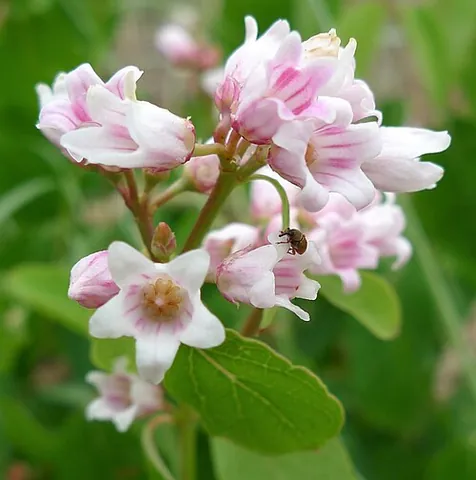

Noun
bane (countable and uncountable, plural banes)
- A cause of misery or ruin.
- the bane of one’s existence
- Money, thou bane of bliſſe, & ſourſe of vvo, / VVhence com'ſt thou, that thou art ſo freſh and fine? / I knovv thy parentage is baſe and lovv: / Man found thee poore and dirtie in a mine.[1633], George Herbert, “Avarice”, in [Nicholas Ferrar], editor, The Temple. Sacred Poems, and Private Ejaculations, Cambridge, Cambridgeshire: […] Thomas Buck and Roger Daniel; and are to be sold by...
- Chiefly in the names of poisonous plants or substances: a poison.
- For my part I would rather counſell you to deſtroy your Rattes and Miſe with Traps, Banes, or Weeſels: for beſides the ſluttiſhneſſe & lothſomeneſſe of the Catte (you know what ſhe layes in the Malt heape) ſhe is moſt daungerous and pernicious among children, as I mee ſelf haue had good experience.1577, Conradus Heresbachius [i.e., Konrad Heresbach], compiler, “The Third Booke, of Feeding, Breeding, and Curing of Cattell”, in Barnabe Googe, transl., Fovre Bookes of Husbandry, […]: Conteyning...
- In dairie no cat, / Laie bane for a rat. / […] / Take heede how thou laieſt, the bane for the rats, / for poiſoning ſeruant, thy ſelfe and thy brats.1580, Thomas Tusser, “Dairie”, in Fiue Hundred Pointes of Good Husbandrie: […], London: […] Henrie Denham [beeing the assigne of William Seres] […], →OCLC, stanza 6, folio 71, recto
- Misery, woe; also, doom, ruin; or physical injury, harm.
- Hath ſome fond lover tic'd [i.e., enticed] thee to thy bane? / And vvilt thou leave the Church, and love a ſtie?[1633], George Herbert, “The Forerunners”, in [Nicholas Ferrar], editor, The Temple. Sacred Poems, and Private Ejaculations, Cambridge, Cambridgeshire: […] Thomas Buck and Roger Daniel; and are to be...
- He finds out, soon enough for his weal and his bane, that he is stronger than Nature: and right tyrannously and irreverently he lords it over her, clearing, delving, dyking, building, without fear or shame.1866, C[harles] Kingsley, “Prelude. Of the Fens.”, in Hereward the Wake, “Last of the English.” […], volume I, London; Cambridge, Cambridgeshire: Macmillan and Co., →OCLC, page 4
- A disease of sheep in which breakdown of tissue occurs; rot.
- A person or thing that causes death or destruction; a killer, a murderer, a slayer.
- We haue alſo had experience yͭ the deſire of a kingdõe [kingdome] knoweth no kindred. The brother hath bene the brothers bane.c. 1513 (date written), Thomas More, “The History of King Richard the Thirde (Vnfinished) […]”, in Wyllyam Rastell [i.e., William Rastell], editor, The Workes of Sir Thomas More Knyght, […], London...
- Let Rome her ſelfe bee bane vnto her ſelfe, / And ſhee vvhome mightie kingdomes curſie [curtsey] too, / Like a forlorne and deſperate caſt avvay, / Doe ſhamefull execution on her ſelfe.c. 1588–1593 (date written), [William Shakespeare], The Most Lamentable Romaine Tragedie of Titus Andronicus: […] (First Quarto), London: […] Iohn Danter, and are to be sold by Edward White & Thomas...
- Death; destruction; (countable) an instance of this.
- I vvill not be affraid of Death and Bane, / Till Birnane Forreſt come to Dunſinane.c. 1606 (date written), William Shakespeare, “The Tragedie of Macbeth”, in Mr. William Shakespeares Comedies, Histories, & Tragedies […] (First Folio), London: […] Isaac Iaggard, and Ed[ward] Blount...
- [I]f now again intoxicated and moaped with theſe royal, and therefore ſo delicious becauſe royal rudiments of bondage, the cup of deception, ſpiced and tempered to their bane, they ſhould deliver up themſelves to theſe glozing words and illuſions of him, vvhoſe rage and utmoſt violence they have...1650, [John Milton], “Intitled to the Prince of Wales”, in ΈΙΚΟΝΟΚΛΑΣΤΗΣ [Éikonoklastēs]. […], new (2nd) edition, London: […] G. Kearsly, […], published 1770, →OCLC, pages 272–273
Verb
bane (third-person singular simple present banes, present participle baning, simple past and past participle baned)
- To physically injure (someone or something); to harm, to hurt.
- Think when thou ſéeſt the baite whereon is thy delite, / That hidden Hookes are hard at hande to bane thee when thou bite.1567, George Turbervil[l]e, “Disprayse of Women that Allure and Loue Not”, in Epitaphes, Epigrams, Songs and Sonets, with a Discourse of the Friendly Affections of Tymetes to Pyndara His Ladie. […]...
- Novv if a ſhepherd knovv not vvhich graſs vvill bane, or vvhich not, hovv is he fit to be a ſhepherd? VVherefore the Parſon hath throughly canvaſſed al the particulars of humane actions, at leaſt thoſe vvhich he obſerveth are moſt incident to his Pariſh.a. 1634 (date written), Geo[rge] Herbert, “The Parsons Accessary Knowledges”, in A Priest to the Temple, or, The Countrey Parson His Character, and Rule of Holy Life. […], London: […] T[homas] Maxey...
- To cause (someone) misery or ruin; to socially or spiritually injure (someone).
- It [covetousness] annoyeth our Phiſitions, it infecteth our Diuines, it choaketh our Lawiers, it woundeth our Farmers, it baneth our Gentlemen, it murdereth our Tradeſmen, it bewitcheth our Merchants, it ſtingeth our Marriners. Oh couetouſneſſe, couetouſneſſe: it is the poyſon of all things, the...1601, Arthur Dent, The Plaine Mans Path-way to Heauen. […], London: […] Robert Dexter, […], →OCLC, page 80
- To cause (sheep) a disease, especially the rot (“a disease in which breakdown of tissue occurs”).
- To kill (a person or animal), especially by poison.
- Aconit is of two ſortes (as Dioſcorides writeth) the one is named Aconitum Pardalianches, that is to ſay, Aconite that baneth, or killeth Panthers.1578, Rembert Dodoens, “Of Aconitum”, in Henry Lyte, transl., A Niewe Herball, or Historie of Plantes: […], London: […] [Henry [i.e., Hendrik van der] Loë for] Gerard Dewes, […], →OCLC, 3rd part...
- VVhat if my houſe be troubled vvith a Rat, / And I be pleas'd to giue ten thouſand ducats / To have it baind?c. 1596–1598 (date written), W[illiam] Shakespeare, The Excellent History of the Merchant of Venice. […] (First Quarto), [London]: […] J[ames] Roberts [for Thomas Heyes], published 1600, →OCLC, [Act...
Proper noun capitalized: Bane
Bane (plural Banes)
- A surname.
Also used as
bane is also the alternative spelling of bone.
bane meaning in Persian
bane in Persian
- cause of misery or ruin — see also affliction, nightmare, hardship
- یمان yamân
Examples of bane in a sentence
- This is the great bane and ſcandal of the Church, that ſuch Livings as more immediately belong to it ſhould be the vvorſt ſupplyed, […]1673, Andrew Marvel[l], The Rehearsall Transpros’d: The Second Part. […], London: […] Nathaniel Ponder […], →OCLC, page 148:
- At Barking, previously the bane of L.T.S. operating staff, the new works have now simplified the working of traffic from four converging routes in the area.1961 September, B. Perren, “The Tilbury Line Serves Industrial North Thameside”, in Modern Railways, Shepperton, Surrey: Ian Allan...
- [H]e traueld through the vvatrie dreads, / For bane to poiſon his ſharpe arrovves heads, / That death, but toucht, cauſde; […]1614–1615, Homer, “The First Booke of Homers Odysses”, in Geo[rge] Chapman, transl., Homer’s Odysses. […], London: […] Rich[ard] Field [and...
- Thus am I doubly arm'd; my Death and Life, / My Bane and Antidote are both before me: […]1712 (date written), [Joseph] Addison, Cato, a Tragedy. […], London: […] J[acob] Tonson, […], published 1713, →OCLC, Act V, scene i, page...
Synonyms of bane
Antonyms
Forms of bane
| Noun | |
|---|---|
| plural | banes |
| Verb | |
| third-person singular present | banes |
| present participle | baning |
| past participle | baned |
| past | baned |
| second-person singular present (archaic) | banest |
| second-person singular past (archaic) | banedst |
| third-person singular present (archaic) | baneth |
| Proper noun | |
| plural | Banes |
Origin of bane
The noun is derived from Middle English bane (“person or thing that destroys life, murderer, slayer; person who destroys the soul; destruction of life, death, doom; poison”), from Old English bana (“person or thing that causes death, murderer”), from Proto-West Germanic *banō, from Proto-Germanic *banô (“killer, murderer, slayer; death, bane”), probably ultimately from Proto-Indo-European *gʷʰen- (“to slay, kill; to strike”). The verb is derived from the noun. cognates * Gothic 𐌱𐌰𐌽𐌾𐌰 (banja, “wound”) * Old Frisian bona (“death; murder”) * Old Norse bani (Danish bane (“death; murder”), Icelandic bani (“bane, death”), Swedish bane (“death; murder”)), Old Norse ben (“(moral) wound”) * Old English ben, benn (“mortal injury; wound”) * Old High German bano (“death”) (Middle High German ban, bane) * Old Saxon bano (“death; murder”), beni (“mortal injury; wound”)
From Northern Middle English ban, from bon (“bone”), from Old English bān, from Proto-West Germanic *bain (“bone; leg”), from Proto-Germanic *bainą (“bone; leg”), from *bainaz (“straight”); further etymology uncertain, possibly from Proto-Indo-European *bʰeh₂- (“to glow, shine”) (in the sense of a straight beam of light), or *bʰeyh₂- (“to hit, strike”) (in the sense of an object for striking), or *bʰeyH-n- (“pole; straight line”).
* As an English surname, from the archaic noun bane (“murderer”). * As an English, Scottish, and Irish surname, variant of Bain. * As a French surname, from the noun banne (“wicker basket”).
Words formed from bane
- Austrian leopard's bane
- baneberry
- banewort
- bollan bane
- bugbane
- common dogbane
- fly-trap dogbane
- spreading dogbane
- counter-bane
- cowbane
- dogbane
- dog bane
- dogs-bane
- fleabane
- flybane
- fool-bane
- foxbane
- goat's-bane
- goosebane
- hare's-bane
- hog's bane
- horsebane
- leopard's bane
- leopardsbane
- libbard's bane
- oxbane
- panthersbane
- ratsbane
- sowbane
- tippler's bane
- wolfsbane
- wolf's bane
- a boon and a bane
- a boon or a bane
- baneful
- bane of someone's existence
- bane of someone's life
- boon and bane
- boon or bane
- embane
Words that rhyme with bane
48 more rhymesFewer rhymes
- drain
- pane
- gain
- main
- sustain
- vein
- entertain
- skein
- Wayne
- abstain
- campaign
- champagne
- crane
- entrain
- fain
- insane
- maine
- pain
- plane
- stain
- wane
- Aquitaine
- ascertain
- chicane
- contain
- detain
- explain
- maintain
- mundane
- obtain
- refrain
- remain
- vane
- amain
- arcane
- Blaine
- complain
- deign
- detrain
- distrain
- kane
- ordain
- pertain
- profane
- public domain
- reign
- swain
- terrain
Questions about bane
- What does bane mean?
- Bane means a cause of misery or ruin.
- What is bane in Persian?
- Bane in Persian is یمان (yamân). See Bane meaning in Persian.
- How do you use bane in a sentence?
- This is the great bane and ſcandal of the Church, that ſuch Livings as more immediately belong to it ſhould be the vvorſt ſupplyed, […]
- What part of speech is bane?
- Bane can be a noun, a verb or a proper noun.
- How do you pronounce bane?
- Bane is pronounced /beɪn/ (UK).
- What is the plural of bane?
- The plural of bane is banes.
Words near bane in the dictionary
Source and license
Adapted from Wiktionary: bane (page history and authors); Bane (page history and authors). Text available under the Creative Commons Attribution-ShareAlike 4.0 license. Word.ws reformatted the entry and added links. Wiktionary data of 2026-09-02.
Last updated:
Pronunciation audio from Wikimedia Commons, each file under its own free license: LL-Q1860 (eng)-Vealhurl-bane.wav, LL-Q1860 (eng)-Naomi Persephone Amethyst (NaomiAmethyst)-bane.wav.
Cite this entry: “bane.” Word.ws, https://word.ws/bane. Based on Wiktionary, CC BY-SA 4.0.